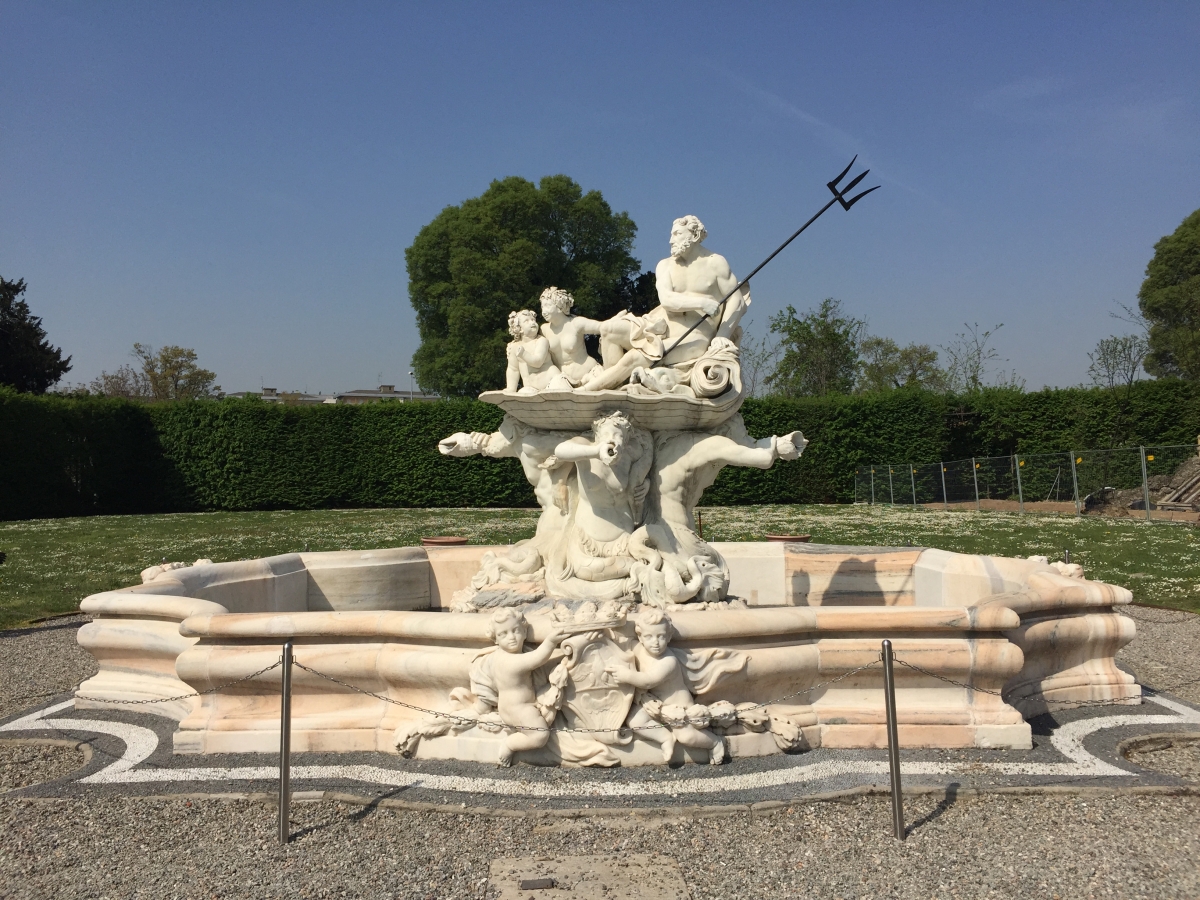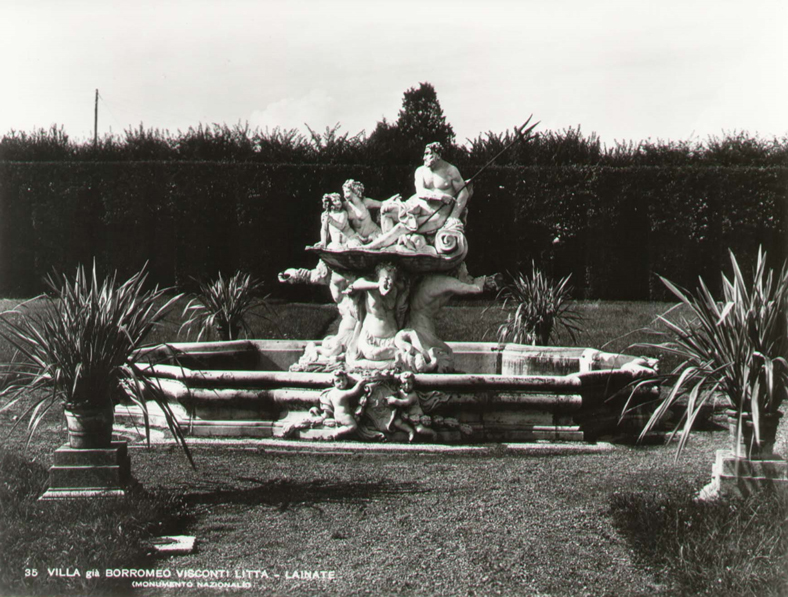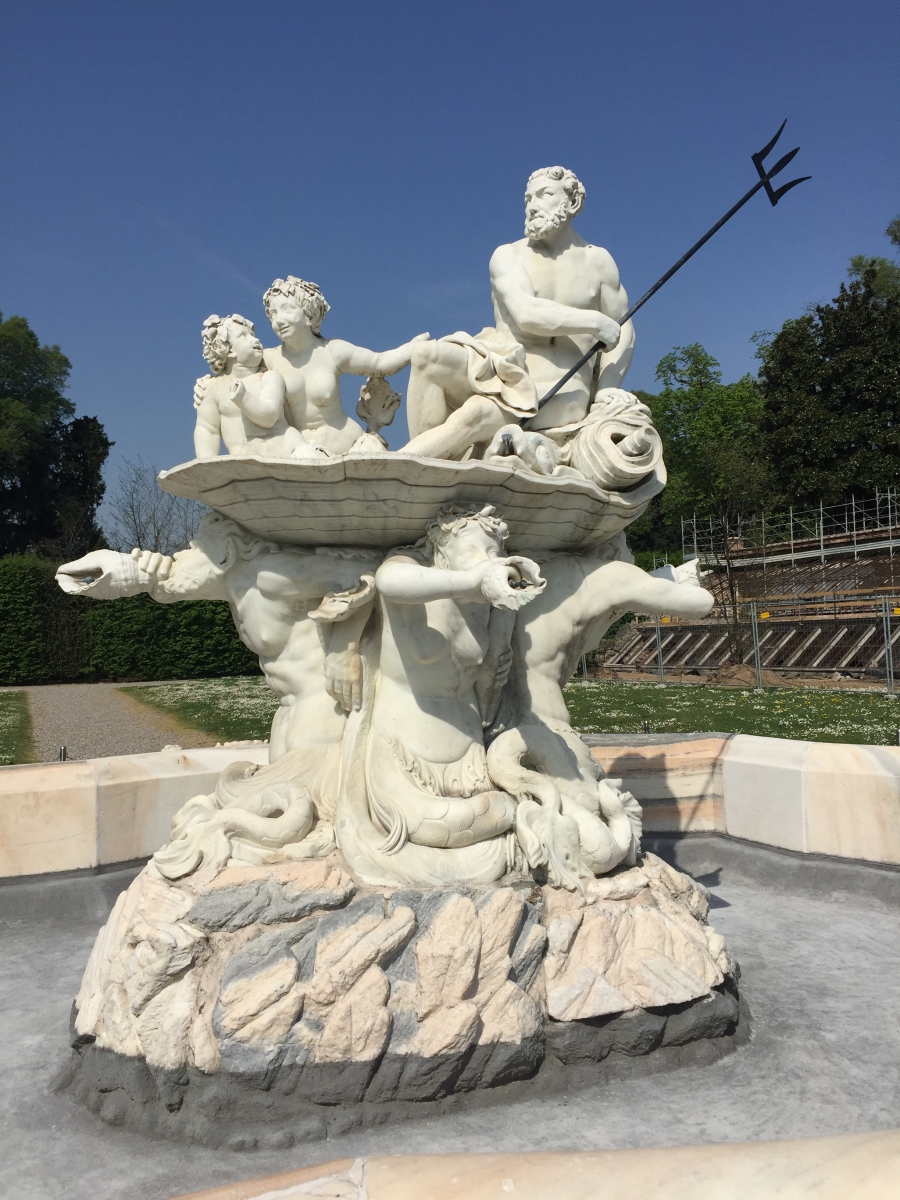
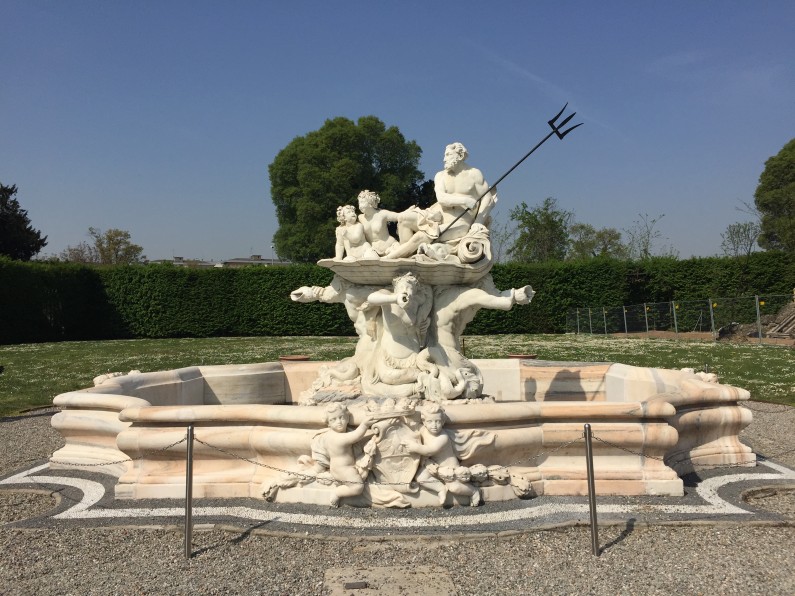
La fontana in marmo, realizzata dallo scultore Donato Carabelli (1760-1840), fu collocata intorno alla metà del XVIII secolo nel luogo in cui originariamente si trovava il “Giardino delle Esperidi”.
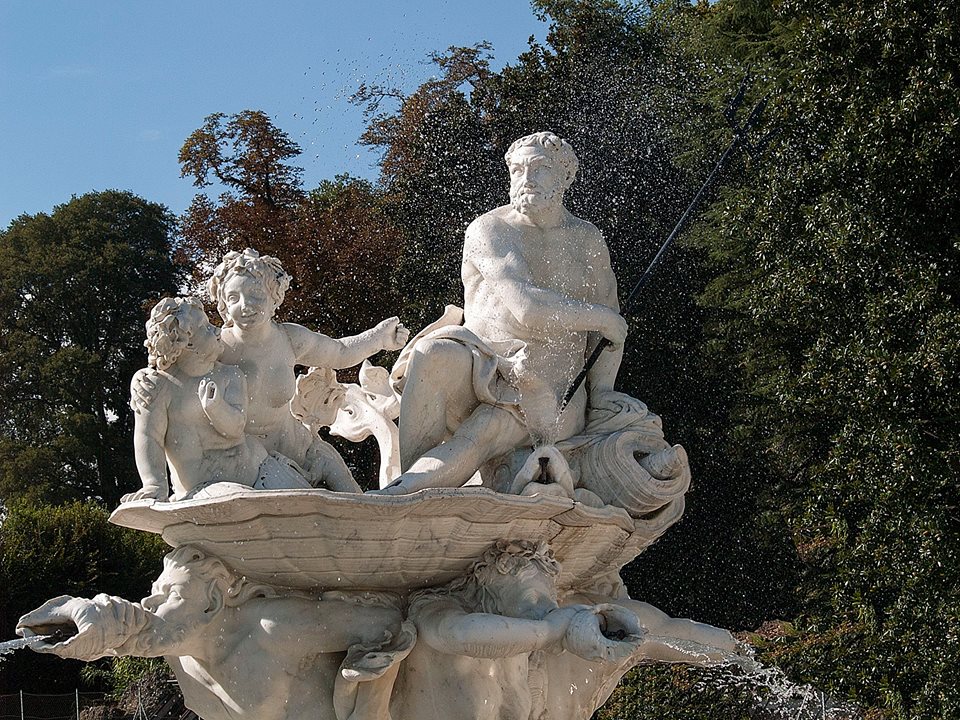
L’opera è costituita da un bacino circolare posizionato a livello del prato ornato sui lati da coppie di amorini che sostengono gli stemmi nobiliari della famiglia Litta. Al centro di tale vasca si ergono quattro figure mitologiche marine, due sirene e due tritoni, intenti a soffiare all’interno di conchiglie. Sulle loro spalle poggia la grande conchiglia su cui è adagiato il dio Nettuno, accompagnato da due piccoli tritoni coronati di alghe marine.
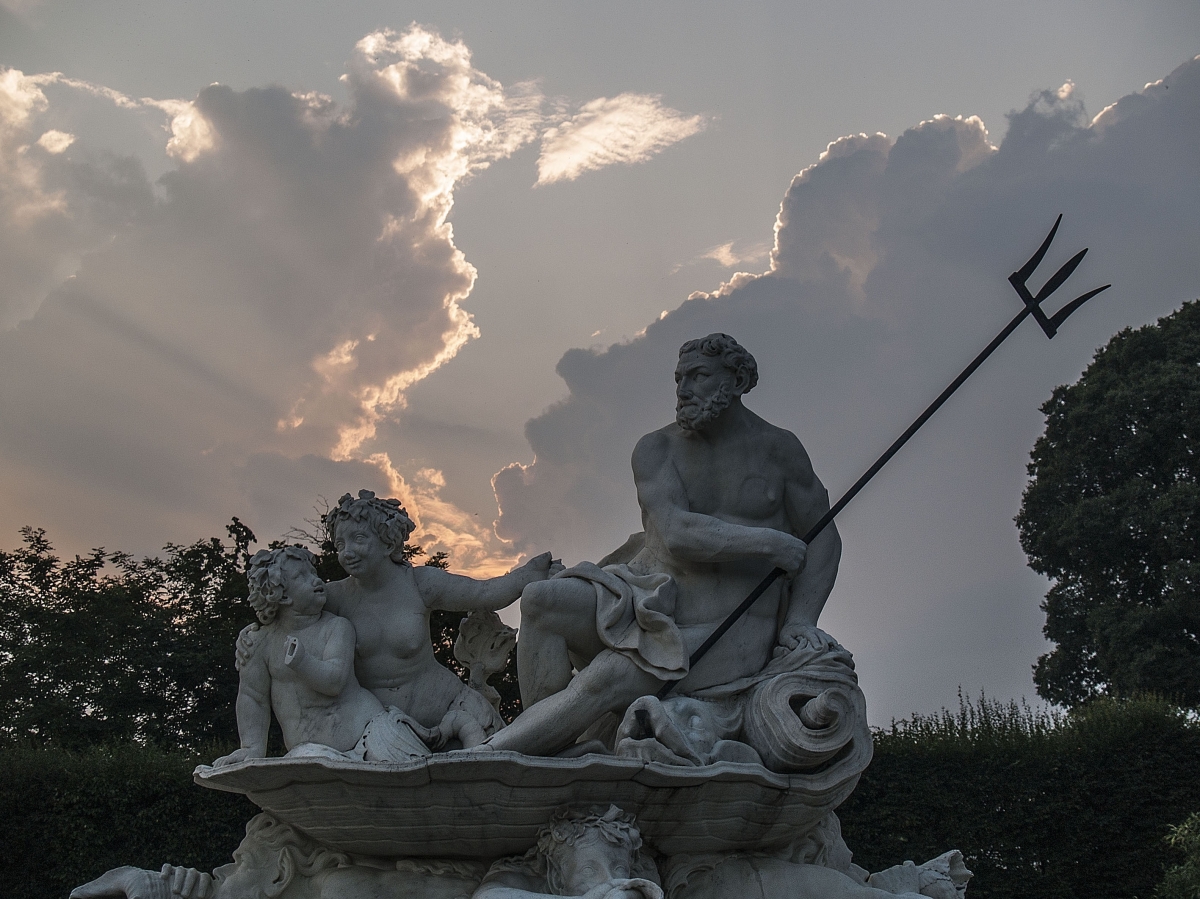
Nella religione romana antica, Nettuno era la divinità delle acque correnti ed in seguito divenne anche il dio del mare, sovrapponendosi all’equivalente greco Poseidone. Secondo l’iconografia tradizionale derivata dai vasi e dalla grande statuaria ellenica, viene qui rappresentato come un uomo barbuto, seminudo, coperto solo sul ventre da un ampio mantello, e dotato di tridente, suo caratteristico scettro nonché attributo. Non di rado, come in questo caso, veniva rappresentato anche a capo di cortei marini, circondato da tritoni e nereidi, oppure seduto su un carro trainato da ippocampi. La sua particolare connessione con il tema delle acque lo rese un soggetto particolarmente adatto per le raffigurazioni a mosaico collocate all’interno delle Terme, poi riprese nella scultura manierista e barocca come ornamento a monumentali fontane.
The marble fountain, sculpted by Donato Carabelli (1760-1840), was placed in the mid-18th century on the site where the “Garden of the Hesperides” was originally located.
The work consists of a circular basin positioned at the level of the lawn adorned with a pair of cherubs which support the coats of arms of the Litta family. At the centre of this basin are four mythological marine figures, two mermaids and two newts, intent on blowing into shells. On their shoulders rests the large shell on which lies the god, Neptune, accompanied by two small newts crowned with seaweed.
In ancient Roman religion, Neptune was the god of water and later became the god of the sea; Poseidon was his Greek counterpart. According to the traditional iconography derived from the vases and the great Hellenic statuary, he is depicted as a bearded half-naked man, covered only on the belly by a large cloak and holding a trident and his characteristic sceptre. He was frequently represented, as in this case, at the head of sea processions surrounded by Tritons and Nereids or sitting on a chariot drawn by sea horses. His special connection with the water theme made him a particularly suitable subject for mosaic depictions inside the Roman baths and then in the Mannerist and Baroque sculpture as decoration on monumental fountains.