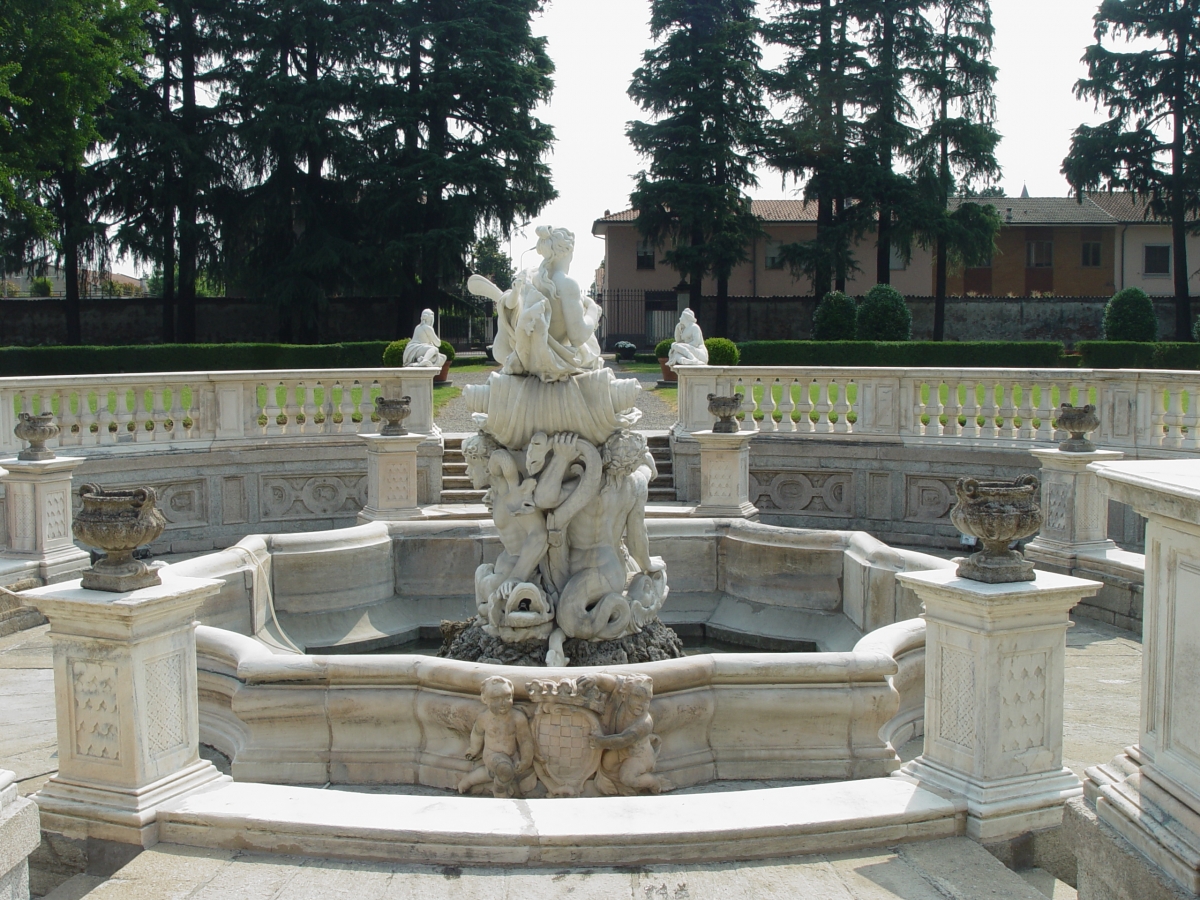
La fontana è collocata al centro del giardino, in corrispondenza del punto d’intersezione tra l’asse costruttivo principale del complesso (sud-nord) e l’asse stradario (est-ovest) dei viali che conducevano ai vasti possedimenti della famiglia Visconti Borromeo Litta, oggi nel territorio di Nerviano.
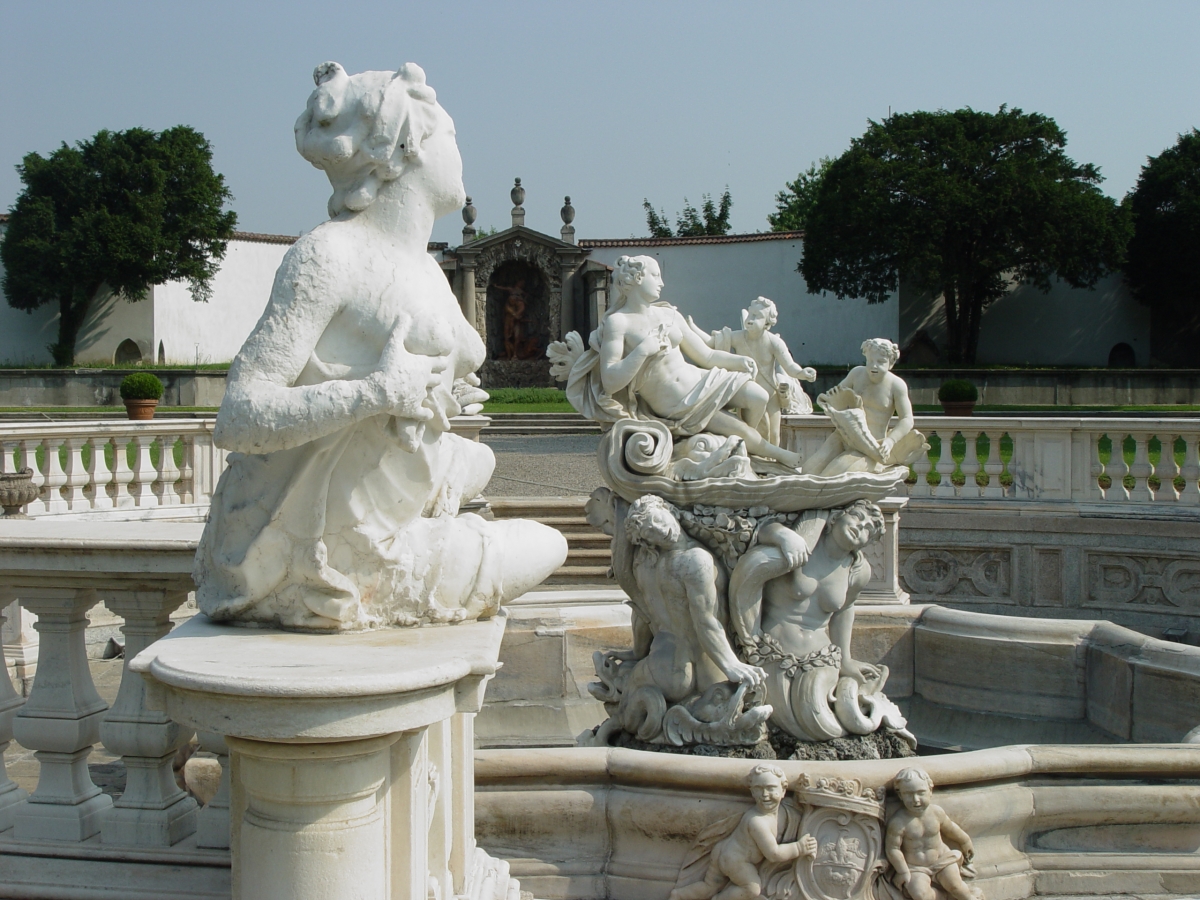
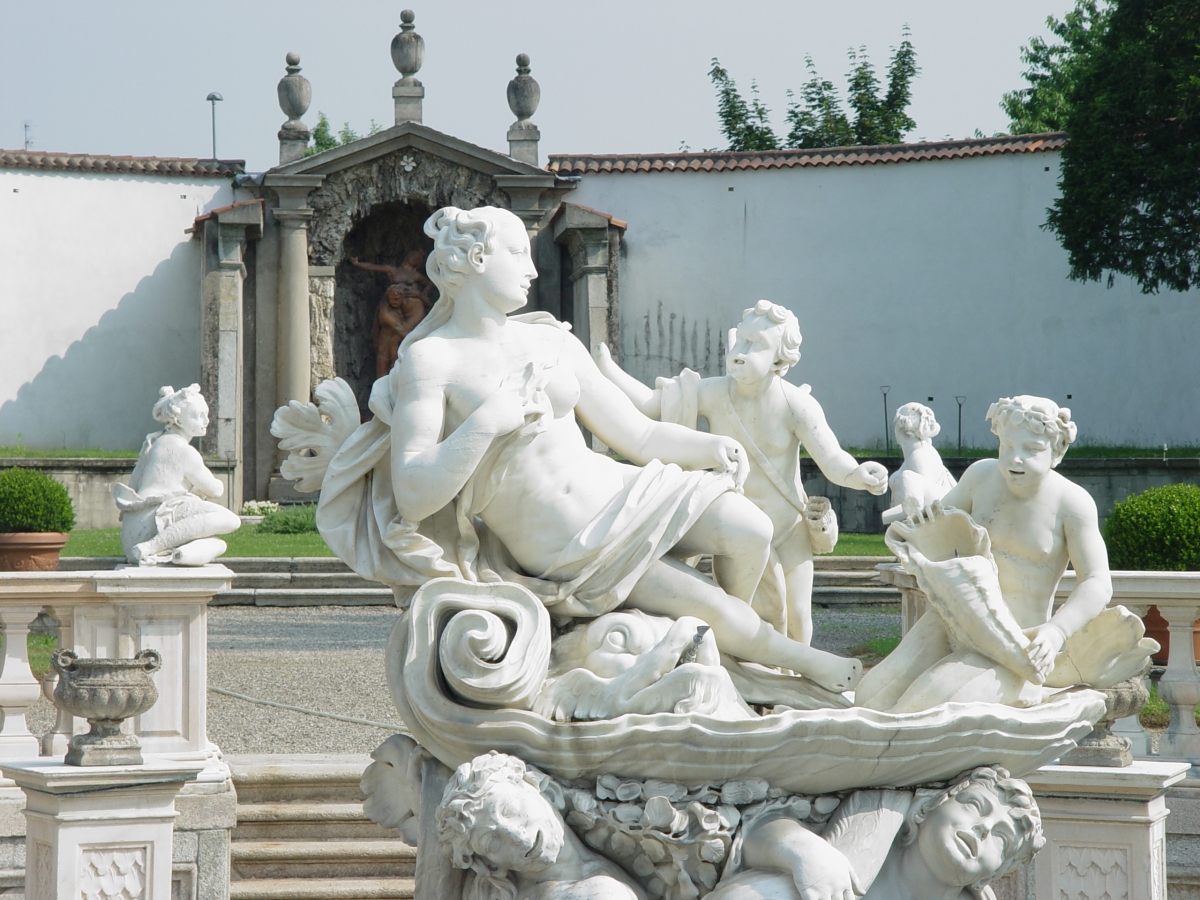
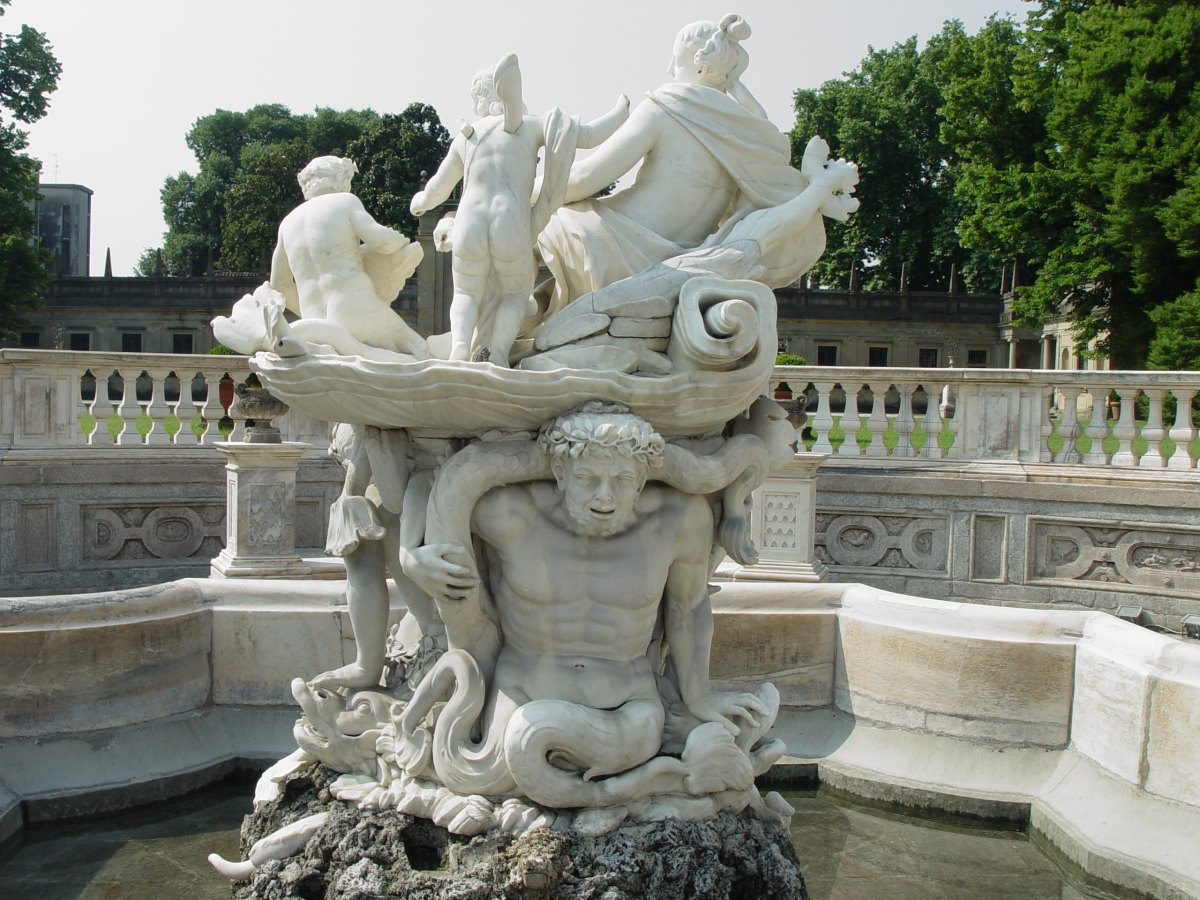
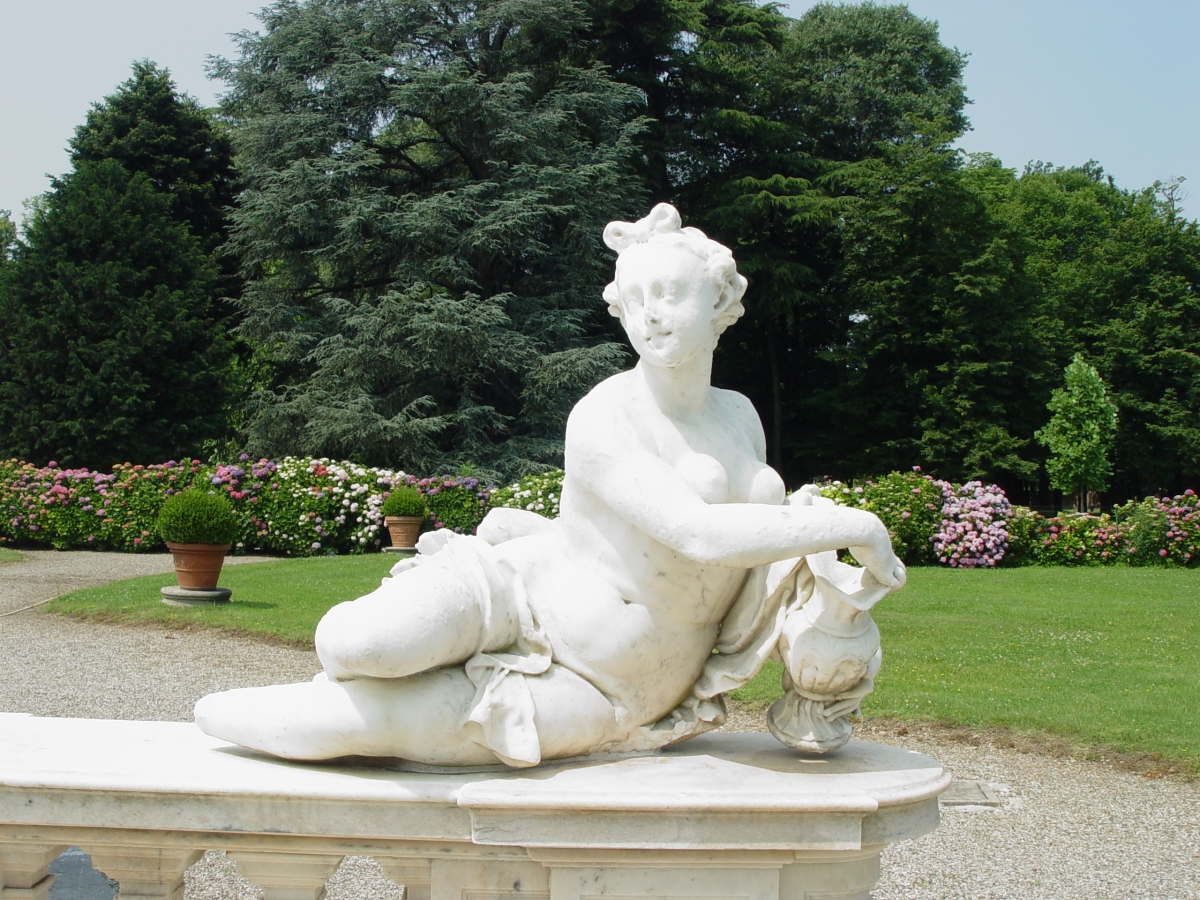
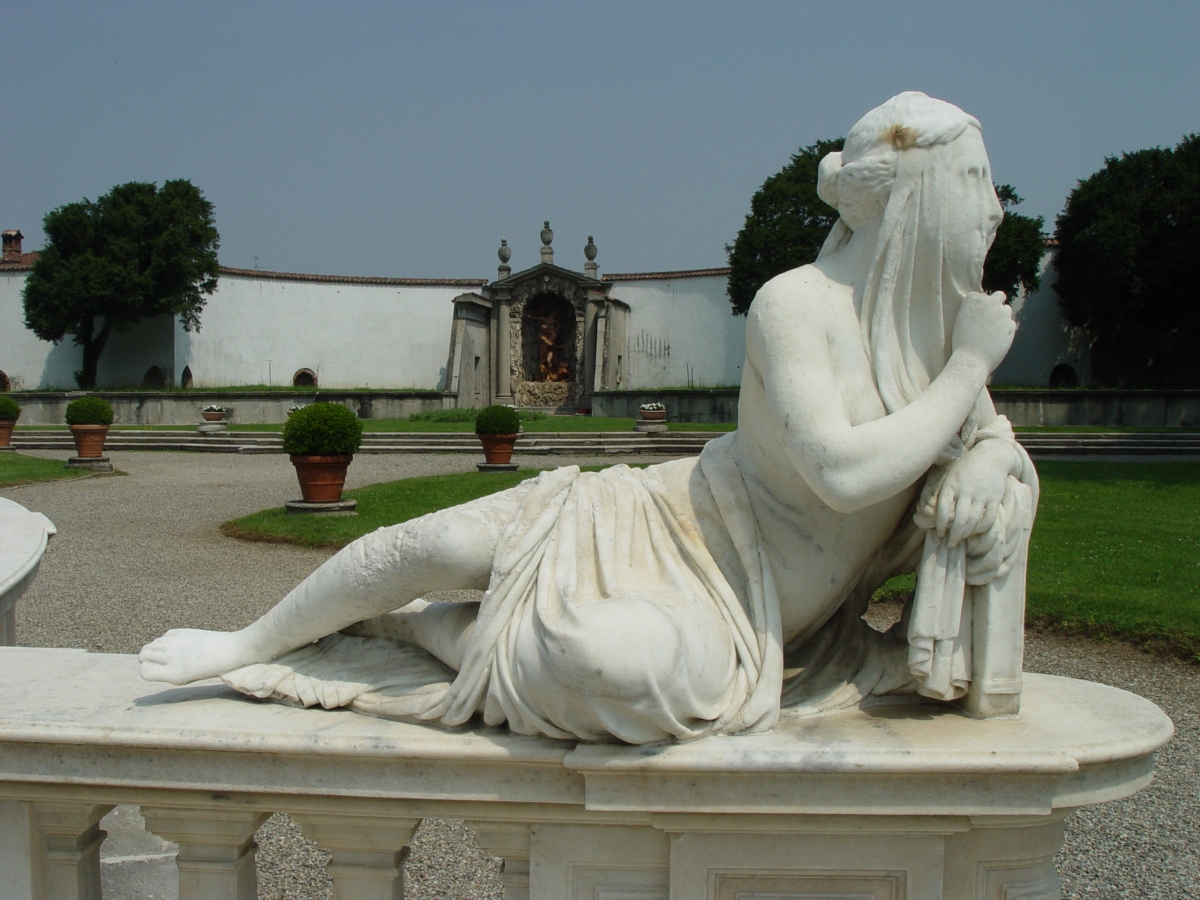
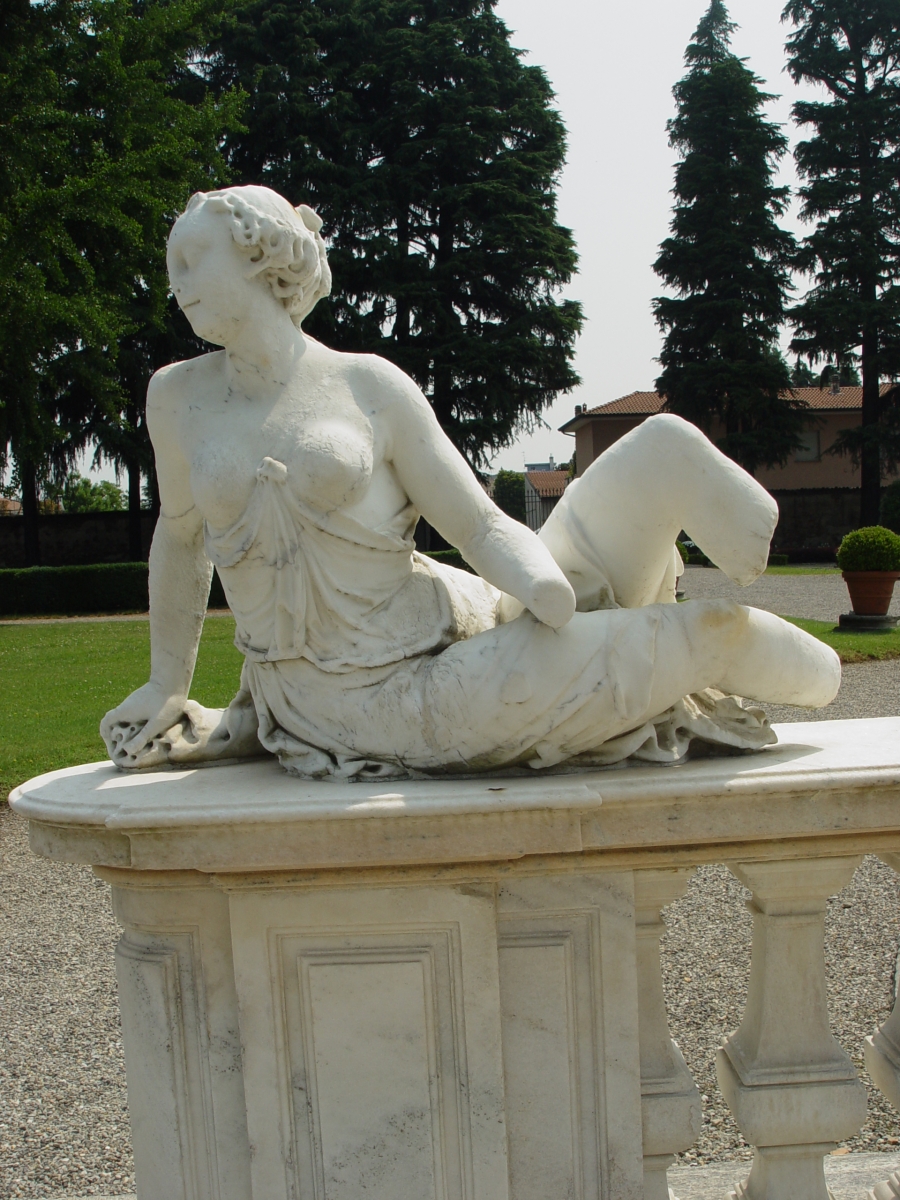
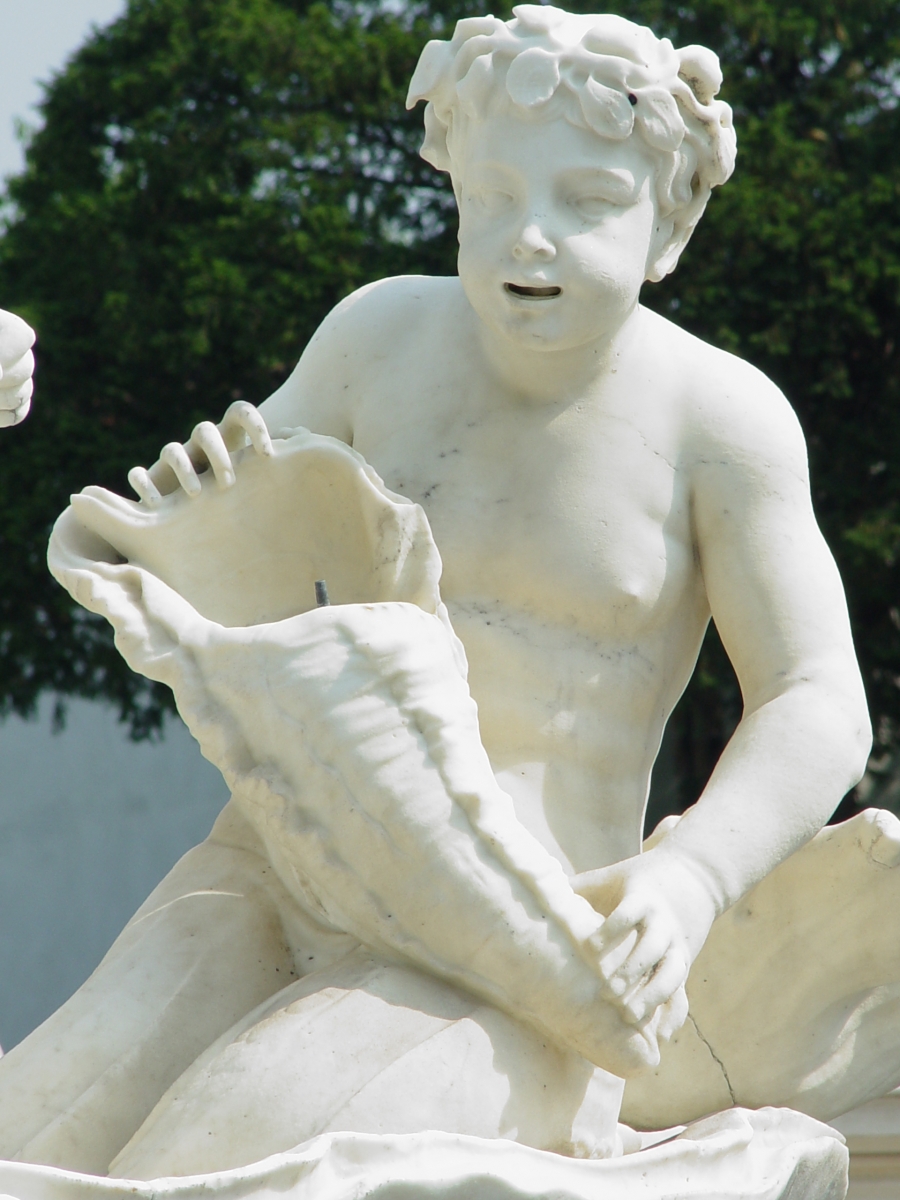
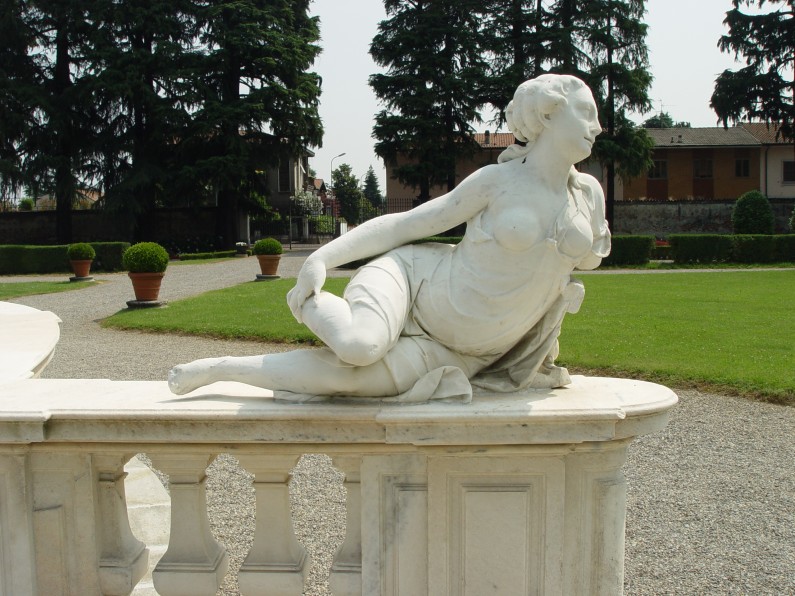
Al bacino centrale si accede da quattro scale a gradoni delimitate da una balaustra in marmo di Candoglia, decorata agli accessi da otto supporti che reggono altrettanti vasi in pietra. Ogni scalinata è arricchita ai lati da coppie di statue di ninfe raffiguranti Flora e Pomona, Imeneo ed Euterpe, il Sonno e il Silenzio (rappresentati rispettivamente da una donna coricata e da una donna velata), e due ignote divinità campestri. La vasca centrale, in marmo bianco di Carrara, è sorretta da coppie di putti che reggono gli stemmi nobiliari delle famiglie Borromeo, Visconti, Arese e Litta. Dal bacino emergono due tritoni e una sirena avvolti tra le spire di un serpente marino, che sostengono la conchiglia centrale, operazione non priva di sforzo fisico come si evince dalle espressioni dei loro volti. Al di sopra di tale supporto sono adagiati la ninfa Galatea con al fianco Cupido, dotato di ali e faretra, e un altro piccolo tritone che regge tra le mani una conchiglia.
Secondo il racconto mitologico, citato nell'"Iliade" di Omero e nelle "Metarmofosi" di Ovidio, Galatea era una delle cinquanta ninfe del mare, figlia di Nereo e Doride. Dolce e amabile, nonché bellissima (il suo nome in greco significa “colei che ha la pelle bianco-latte”), ella si innamorò di un giovane pastore siciliano di nome Aci e fu da lui ricambiata. Tuttavia si invaghì di lei anche il ciclope Polifemo che cercò in tutti i modi di conquistare il suo cuore, esibendosi addirittura in una sinuosa melodia con il flauto. La giovane nereide resistette però al corteggiamento del mostro, scatenando così l’ira del ciclope che per separare i due giovani colpì Aci con un sasso uccidendolo. Galatea allora, disperata per la perdita dell’amato, trasformò il sangue di Aci nel corso di un fiume, affinché lo scorrere delle acque potesse rimanere ad imperituro ricordo del giovane, la cui vita era stata bruscamente interrotta. Il “Trionfo di Galatea” divenne uno dei soggetti iconografici prediletti dagli artisti del Rinascimento, che rappresentavano la ninfa seduta su una conchiglia o a cavallo di un animale marino, circondata da amorini.
Questo monumentale gruppo scultoreo fu realizzato a più riprese tra il 1720 e il 1786: iniziato da Stefano Sanpietro (m. 1715), fu ultimato alla sua morte da Carlo Beretta (m. 1764), e infine arricchito in età neoclassica dallo scultore Donato Carabelli (1760-1840) con l’aggiunta della ricca balaustra esterna e delle relative otto statue che la ornano.
The fountain is located at the centre of the garden, at the point of intersection between the axis of the main building of the complex (south-north) and the axis of the street map (east-west), avenues that led to the vast possessions of the Borromeo Visconti Litta family, now in the territory of Nerviano.
Four stairs access the central fountain with steps delineated by Candoglia marble balustrades, decorated with eight supports that hold just as many stone vases. Each staircase is embellished on the sides by three pairs of statues of nymphs depicting Flora and Pomona, Hymen and Euterpe, Sleep and Silence (represented respectively by a woman lying down and a veiled woman), and two unknown agrarian gods.
Cherub couples holding the coats of arms of the Borromeo, Visconti, and Arese Litta families support the central basin of white Carrara marble. From the fountain basin emerge two newts and a mermaid wrapped in the coils of a sea serpent, which support the central shell. A lot of physical effort was needed for this as reflected in the expressions of their faces. On top of this support is the nymph, Galatea, alongside Cupid with wings that quiver, and another small newt holding a shell.
According to myth cited in the ‘”Iliad” by Homer and the “Metarmophosis” by Ovid, Galatea, daughter of Nereus and Doris, was one of the 50 sea nymphs. Sweet, lovely and beautiful (her name in Greek means “one who has milk-white skin”), she fell in love with a young Sicilian shepherd called Acis and was also loved in return. However, the cyclops, Polyphemus, also fell in love with her and tried in every way to win her heart, even playing a sinuous melody with the flute. The young Nereid resisted the courtship of the monster which unleashed his wrath. He hit Acis with a stone while trying to separate the two young lovers, and killed him. Desperate for the loss of the beloved, Galatea then transformed Acis’ blood in the course of a river, so that the flow of water could remain as an imperishable memory of the young man whose life was cut short. The “Triumph of Galatea” became one of the iconographic subjects chosen by artists of the Renaissance, representing the nymph sitting on a shell or riding a marine animal, surrounded by cupids.
This monumental sculpture was built in stages between 1720 and 1786: it was started by Stefano Sanpietro (d. 1715), and after his death was completed by Carlo Beretta (d. 1764), and finally embellished by the neoclassical sculptor, Donato Carabelli (1760-1840) who added the rich external balustrade and the eight statues that adorn it.