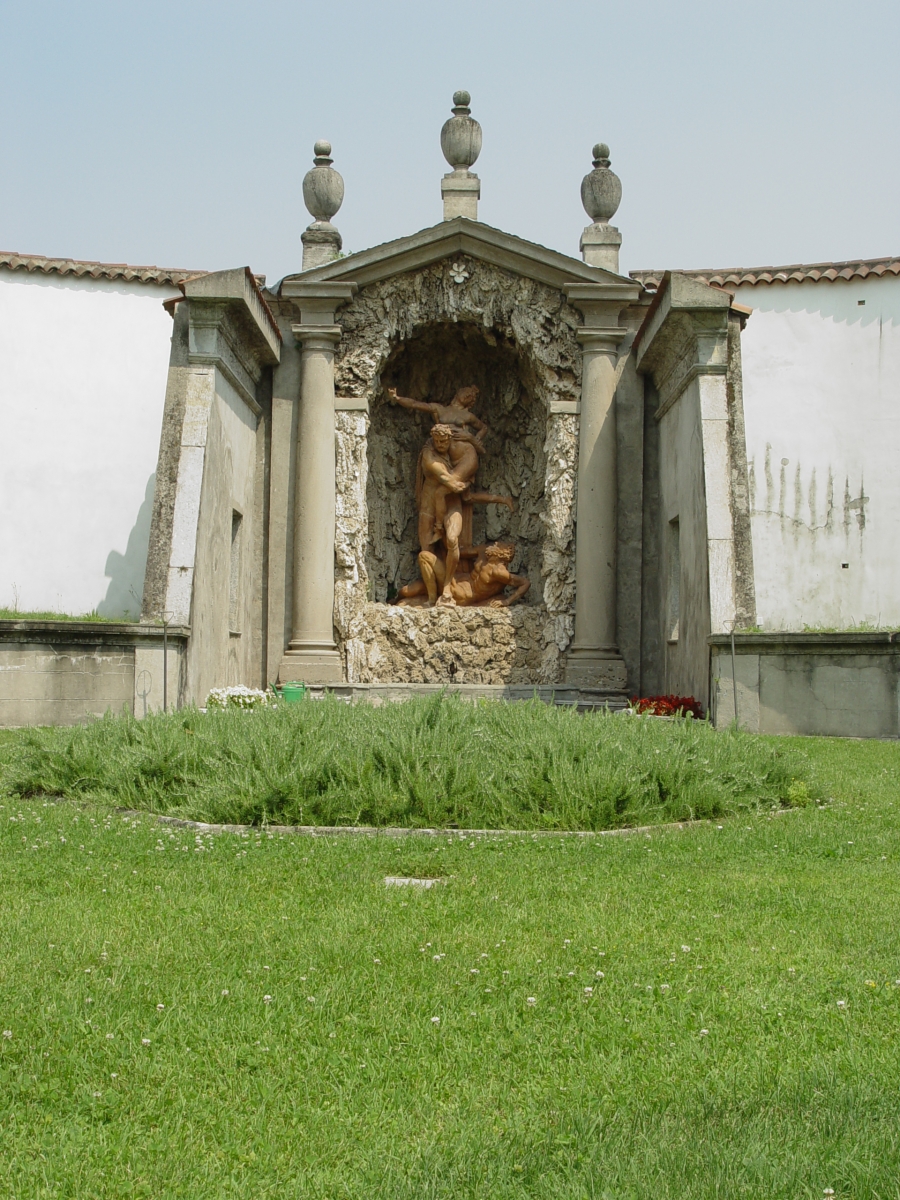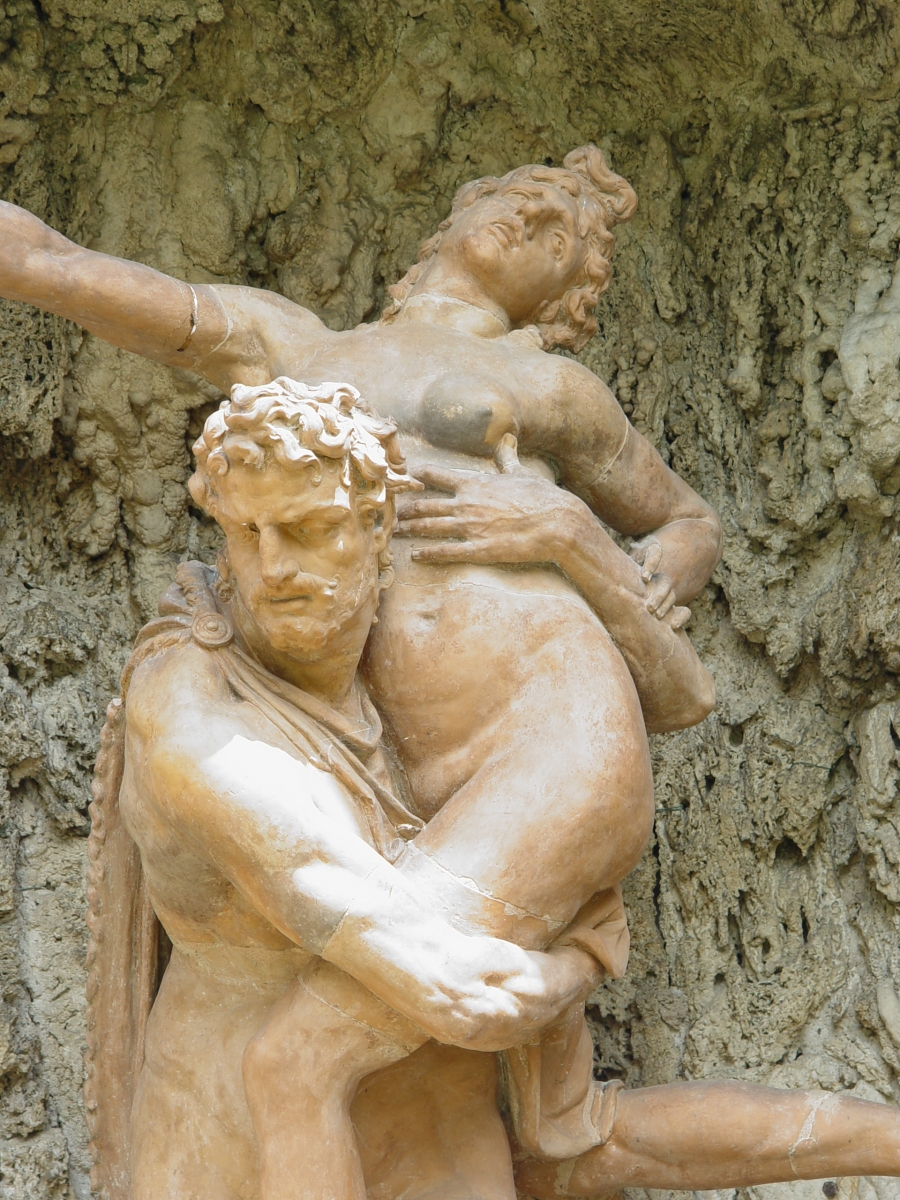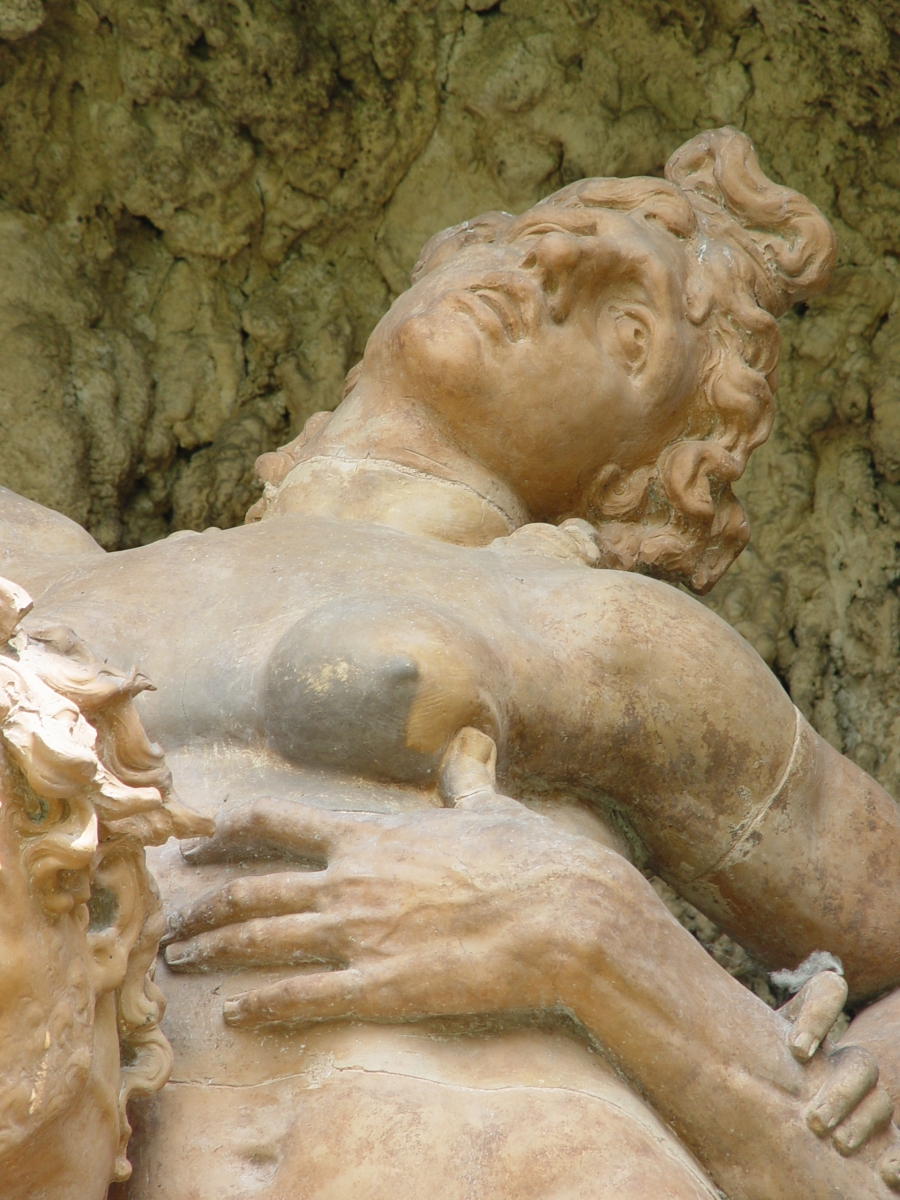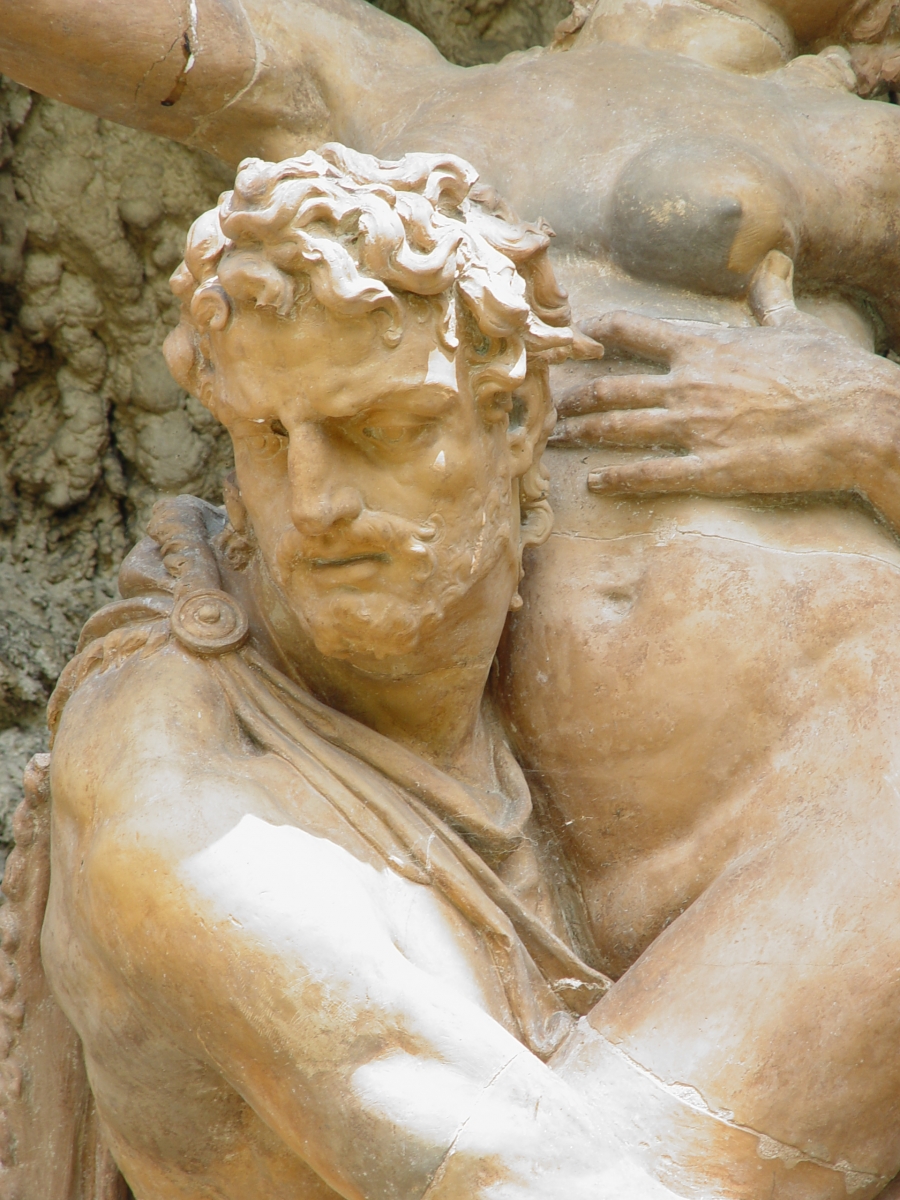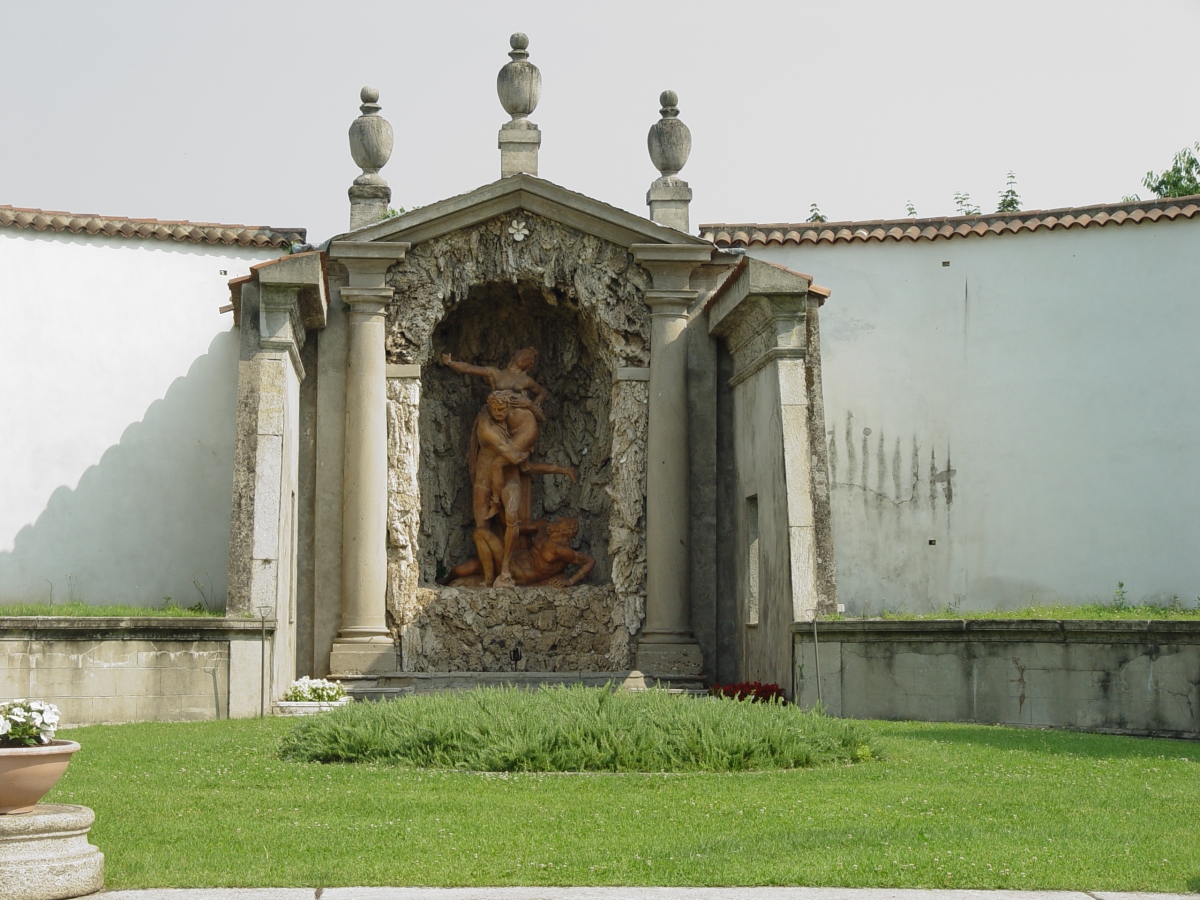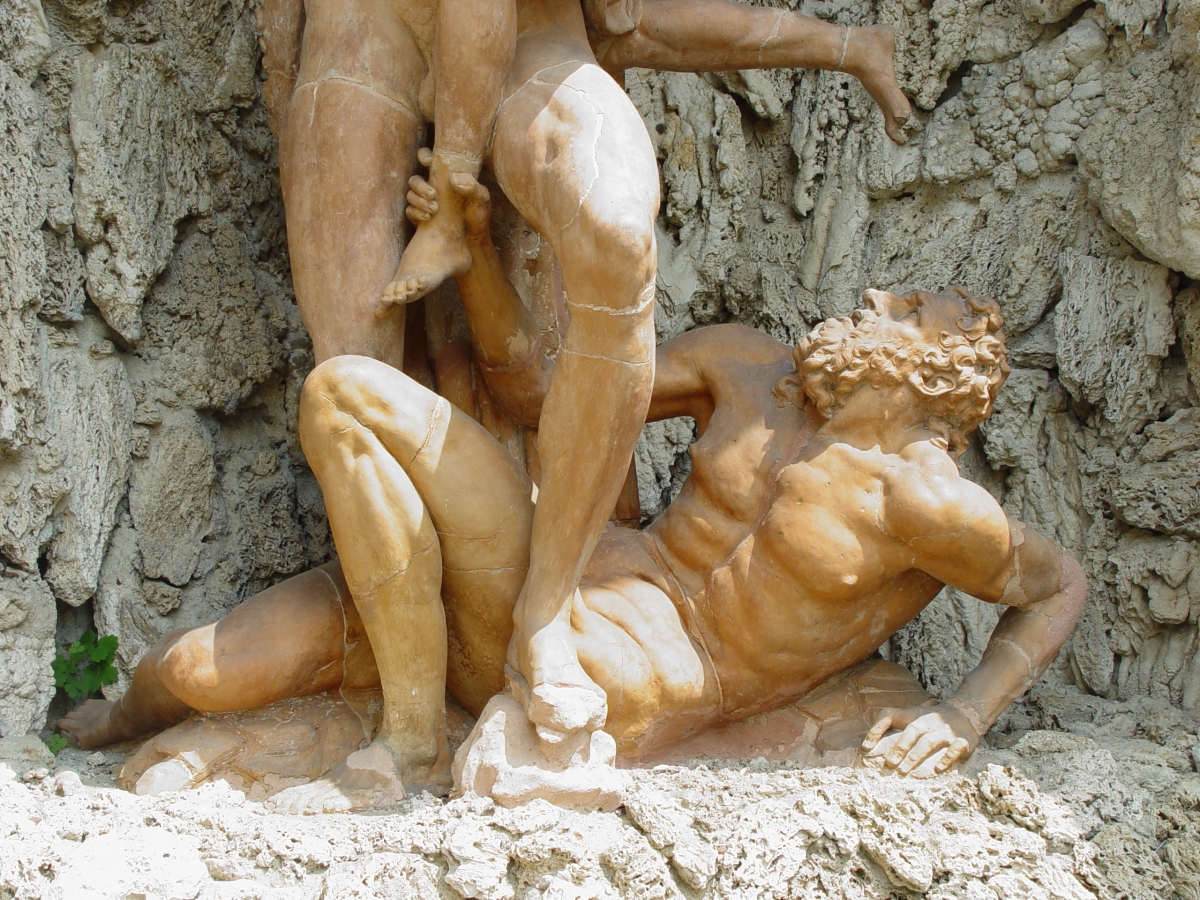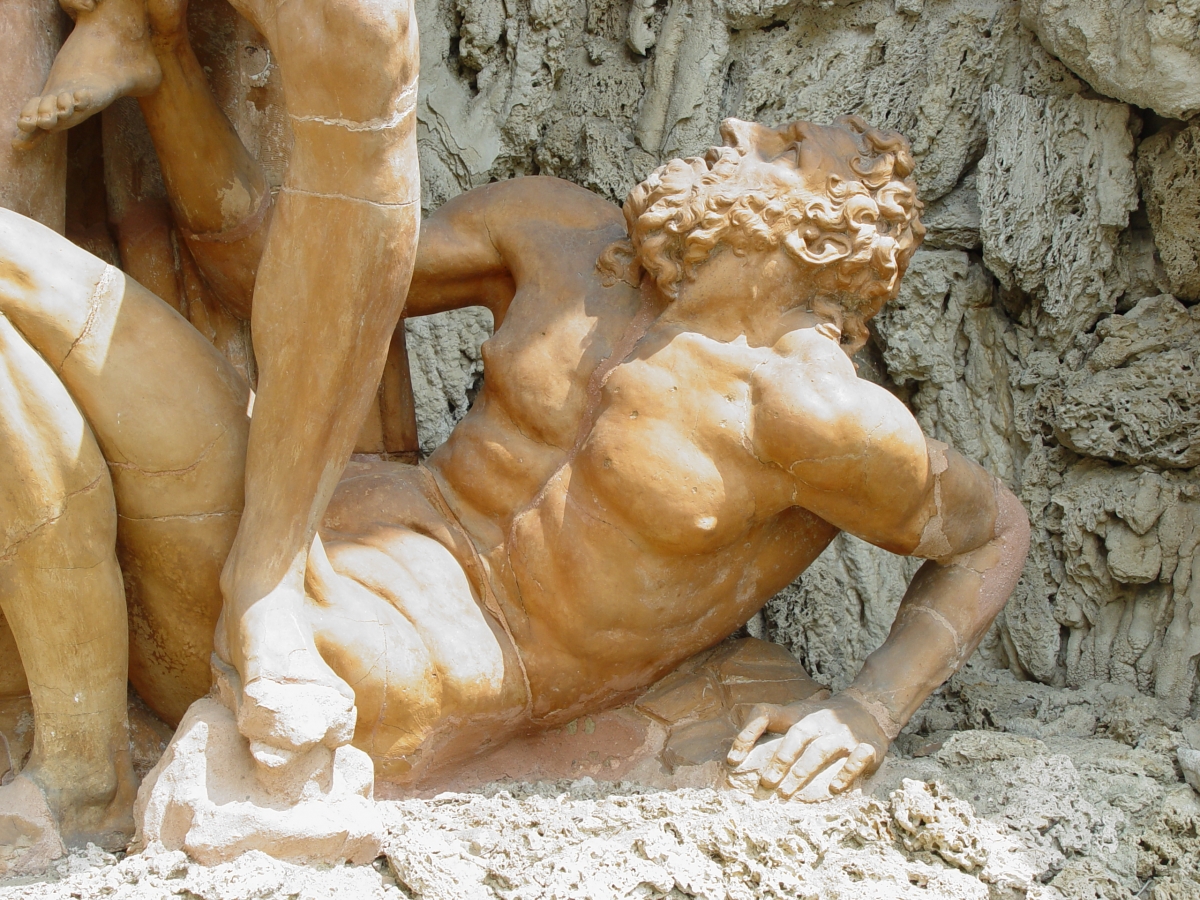
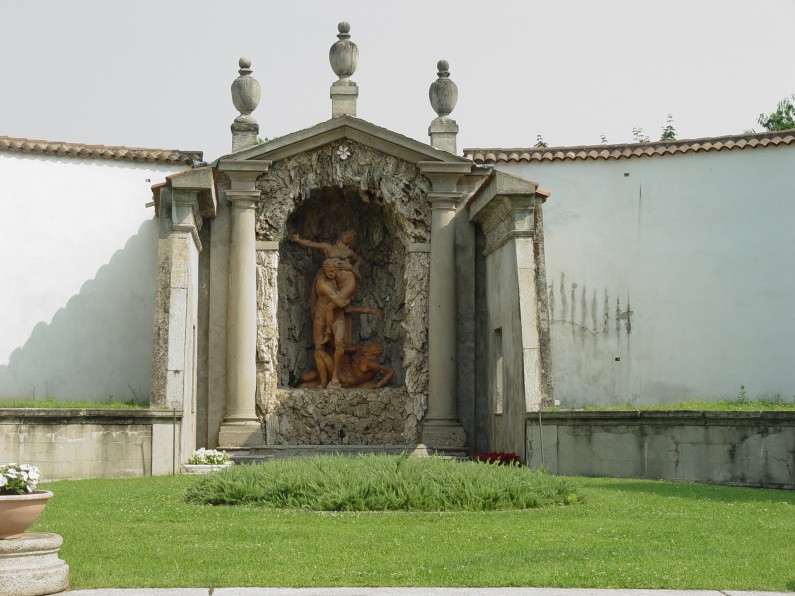
L'opera in terracotta è collocata all'interno di una grande nicchia in travertino, ricavata in una finta edicola in calcare grigio e posta in fondo al giardino del Ninfeo, quale punto terminale dell’asse sud-nord che orienta l’intero complesso della villa. Essa rappresenta un giovane che solleva sopra la sua testa una fanciulla nuda, la quale cerca di divincolarsi buttando all’indietro il capo e levando un braccio in aria, mentre con l’altro tenta di allentare la stretta del suo rapitore. Accovacciato a terra, sotto le gambe dell’uomo, un’altra figura maschile cerca di trattenere la ragazza stringendole una caviglia.
Il gruppo scultore raffigura il "Ratto delle Sabine", una fra le leggende più antiche legate alla storia di Roma, secondo la quale Romolo si rivolse alle popolazioni vicino a Roma per stringere alleanze e ottenere in matrimonio le donne con cui popolare la nuova città. Ottenendo un rifiuto, egli decise allora di organizzare un grande spettacolo per attirare in città gli abitanti del Lazio, durante il quale catturò le donne e scacciò gli uomini, che abbandonarono Roma giurando vendetta. La guerra che ne derivò, in particolare con la popolazione dei Sabini, venne poi fermata dalle stesse donne rapite, le quali supplicarono gli uomini di interrompere il sanguinoso scontro e mettere le basi per la pace, varando l’unione tra i due popoli con comunanza di potere e cittadinanza. L’identificazione dei personaggi qui rappresentati con questo episodio spiegherebbe la presenza di un uomo ai piedi del rapitore, apparentemente più anziano, che potrebbe identificarsi con il padre della fanciulla. Secondo Plutarco infatti, Romolo e i suoi rapirono soltanto donne non maritate, mentre lo storico Tito Livio sostiene che non venne usata su di loro alcuna violenza e che Romolo offrì alle fanciulle pieni diritti civili e di proprietà nella neonata città.
La scultura appare fortemente in debito, a livello di impianto compositivo, della celebre ed omonima opera del Giambologna collocata sotto la Loggia dei Lanzi in Piazza della Signoria a Firenze, databile 1583, tuttavia il carattere espressivo e il naturalismo accentuato delle figure richiamano anche alla tradizione scultorea lombarda. La critica ha proposto in questo senso due diverse ipotesi attributive. Una prima si muove a favore del poco noto scultore pavese Ruggero Bascapè (m. 1600), allievo di quel Francesco Brambilla che viene considerato il “regista” di tutte le invenzioni scultoree presenti in Villa. Una seconda, sposta invece l’attenzione sullo scultore francese Pierre Francheville (1553-1616), che apprese a Firenze lo stile manierista proprio presso la bottega del maestro fiammingo Giambologna.
Indipendentemente dalla provenienza dell’autore, è comunque assai probabile che Pirro I Visconti Borromeo si fosse assicurato la presenza nella sua raccolta artistica anche di qualche scultura di piccolo formato, in marmo o bronzo patinato, che testimoniasse l’importanza dei modelli del Giambologna e che dunque l’autore del "Ratto delle Sabine" abbia avuto direttamente a che fare con le opere dello scultore.
The terracotta work is positioned inside a large travertine niche, housed in a faux aedicule in gray limestone and placed at the end of the garden of the Nymphaeum, which is the endpoint of the south-north axis orienting the whole complex of the Villa.
It portrays a young man raising above his head, a naked girl who tries to wriggle her way out by throwing her head back and raising her arm in the air, while the other hand tries to loosen the hold of her captor. Squatting on the ground, under the man’s legs, is another male figure that tries to hold the girl by squeezing her ankle. The group sculpture depicts the “Rape of the Sabine Women,” one of the oldest legends related to the history of Rome; according to the legend, Romulus turned to the people who lived close to Rome to form alliances and obtain women with whom to populate the new city. He was rejected, so he decided to organize a great show to attract the inhabitants of the city in Lazio, during which the women were captured. The men were driven away and they left Rome vowing revenge.
The same women who were kidnapped later stopped the war that ensued, particularly with the population of the Sabines; they begged the men to stop the bloody confrontation and lay the foundations for peace, launching the union between the two peoples with common power and citizenship. The identification of the characters represented here in this episode would explain the presence of an apparently older man at the foot of the kidnapper, and who could have been identified as the father of the girl. In fact, according to Plutarch, Romulus and his troops only kidnapped unmarried women, while the historian, Livy, says that violence was not used on them and that Romulus offered to girls full civil and property rights in the fledgling city.
This sculpture seems to have borrowed heavily from the more celebrated sculpture with the same name of Giambologna collocated under the Loggia dei Lanzi in the Piazza della Signoria/Signoria Square in Florence dated 1583; however, the characters and their accentuated expressive naturalism also refers to the sculptural tradition of Lombardy. Because of this way of thinking, critics have given two different attributive hypotheses. A first moves towards the little-known sculptor from Pavia, Roger Bascapè (d. 1600), a pupil of Francesco Brambilla who is considered the “director” of all sculptural creations present in the Villa. The second shifts the focus on the French sculptor, Pierre Francheville (1553-1616), who learned the Mannerist style in Florence right at the workshop of the Flemish master, Giambologna.
Whatever the origin of the sculptor, it is very likely that Pirro I Visconti Borromeo wanted to make sure that his artistic collection included smaller sculptures in marble or glazed bronze, which gave witness to the importance of Giambologna’s works. Therefore, the sculptor of this “Rape of the Sabine Women” had direct contact with the works of the master.