La Liquidambar è un albero a grande fusto che appartiene alla famiglia delle Altingiaceae, che cresce piuttosto lentamente durante i primi anni della sua vita. Le foglie sono simili a quelle alcune specie di aceri e in autunno presentano tonalità che variano dal rosso, al color giallo limone, al violetto e al rosa. In Europa questa pianta venne introdotta nel 1681 a scopo ornamentale divenendo subito apprezzata dai botanici e dagli architetti paesaggisti per i suoi colori accesi autunnali. Anche per questa ragione la Liquidambar costituisce un’essenza decorativa ampiamente diffusa nei parchi e nei giardini delle ville gentilizie.
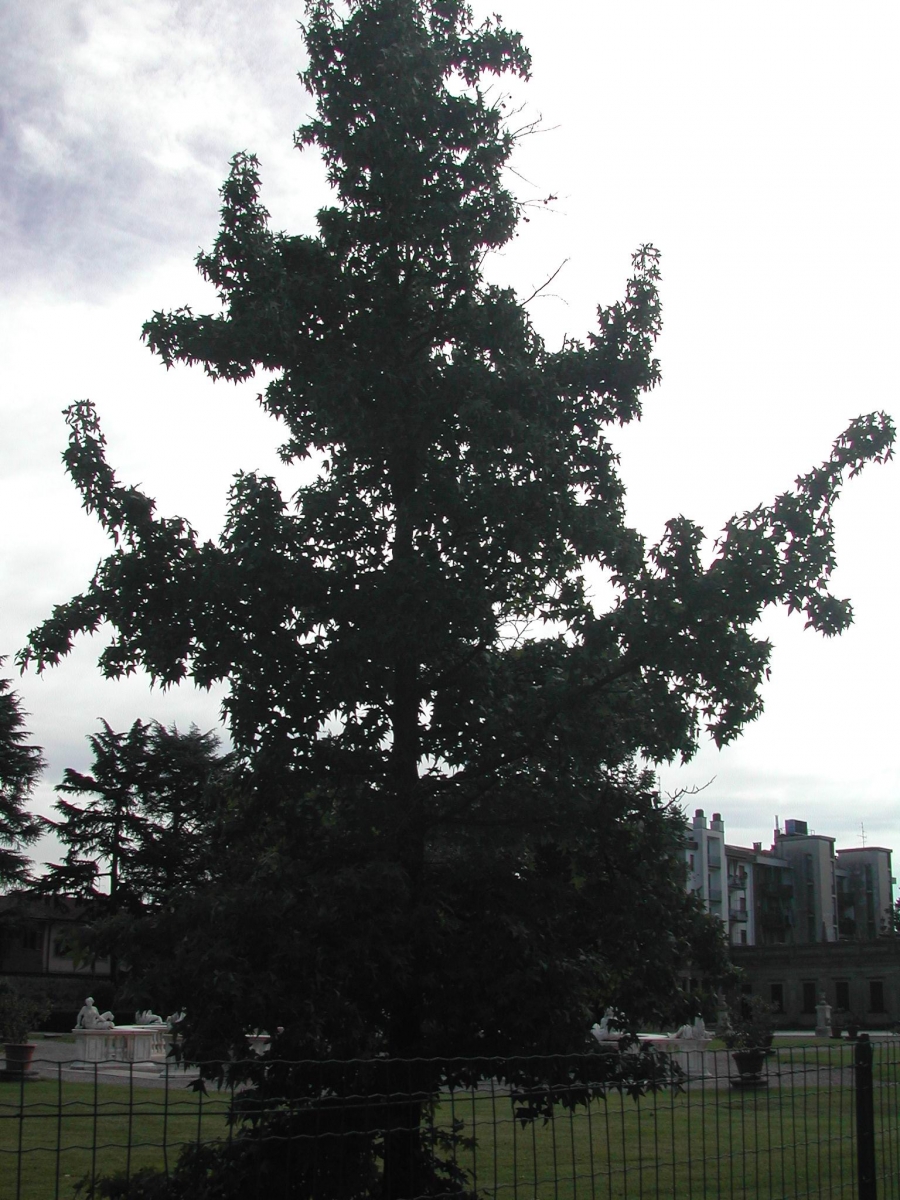
Nel giardino romantico di Villa Visconti Borromeo Litta a Lainate, passeggiando tra i sentieri allietati da leggere pendenze del terreno e dall’ombra degli alberi ad alto fusto, si può ammirare in tutta la sua maestosità un esemplare di liquidambar dall’ampia chioma arrotondata che si è sviluppata con l’avanzare dell’età.
Le foglie a cinque lobi, semplici e acuminate, con il margine seghettato, a differenza di quelle degli aceri, sono alterne sui rami e di colore verde brillante.
La corteccia dapprima è grigia e liscia e poi, con il passare dei decenni, appare brunastra e rugosa, mentre il fusto è diritto e slanciato.
La fioritura avviene tra marzo e aprile con infiorescenze poco appariscenti e a sessi separati, contemporaneamente presenti sulla stessa pianta (monoica). I fiori maschili sono rotondi e gialli e crescono in grappoli, mentre quelli femminili sono piccoli e riuniti in una fitta infiorescenza.
Il nome ricorda “l’ambra liquida” per il fatto che, se si incide la sua corteccia, fuoriesce una resina detta storace che bruciata produce un aroma molto persistente. Essa è utilizzata anche per produrre adesivi, unguenti, profumi e incenso.
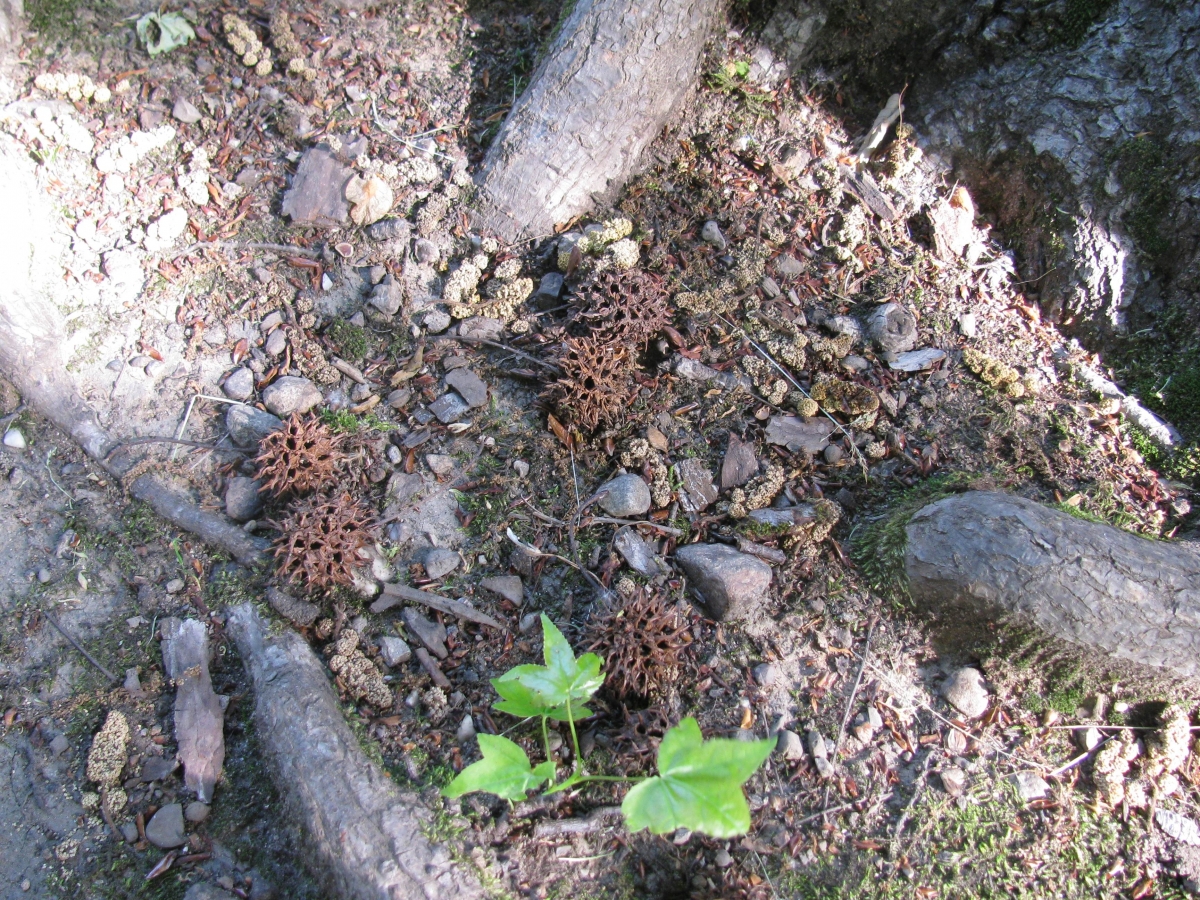
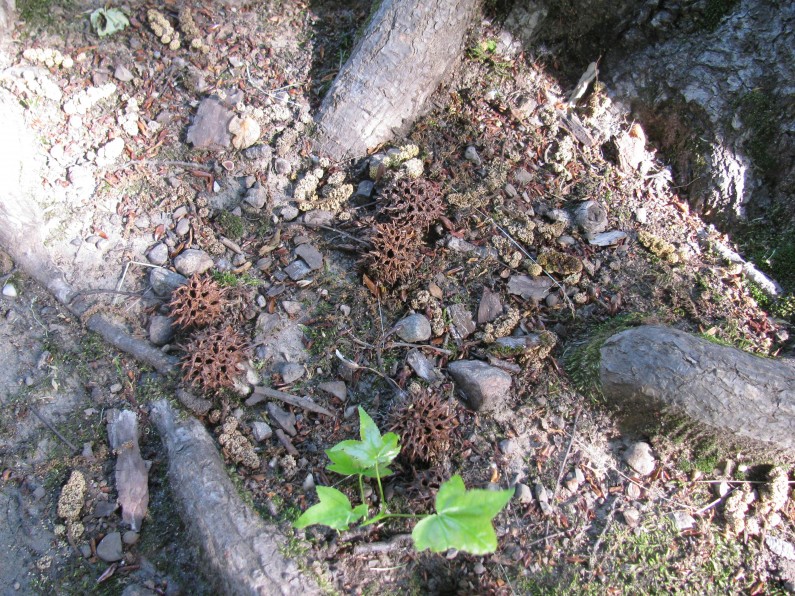
In una delle aiuole ai lati della vasca della “Fontana di Galatea” si può ammirare un giovane e promettente Liquidambar dai brillanti colori autunnali e dall’infruttescenza arrotondata e irta che, maturando, da verde diventa bruna e legnosa. Una volta secche, dalle capsule compaiono dei fori dai quali escono uno o due semi scuri. Esso ha sostituito l’esemplare maestoso della stessa specie recentemente abbattuto da un fulmine.
The sweet gum tree has a large trunk and belongs to the Altingiaceae family. It grows rather slowly in the early years of its life. The leaves are similar to those of some species of maples and in autumn turn into shades ranging from red to lemon yellow, violet and pink.
In Europe, this plant was introduced in 1681 as an ornamental tree but it immediately became popular with botanists and landscape architects for its bright colours of autumn. For this reason, the sweet gum is widely used in parks and gardens of noble villas as decorative trees.
In the romantic garden of Villa Visconti Borromeo Litta in Lainate, strolling along the rolling paths and under the shade of tall trees, one can observe the sweet gum tree in all its majesty with its large rounded crown that has developed with age.
The simple and sharp leaves with five lobes and serrated outline, unlike those of the maple trees, are alternate on the branches and bright green in colour.
The bark is grey in colour and smooth at first, then with the passing of decades, looks brownish and wrinkled, while the trunk is straight and slender.
Flowers bloom in March and April with inconspicuous inflorescences and separate sexes, present contemporarily in the same plant (monoecious). The male flowers are round and yellow and grow in clusters, while the female flowers are small and grouped in a dense inflorescence.
The name recalls “liquid amber” for the simple fact that if an incision is made on the bark, a resin called burnt styrax comes out and produces a very persistent aroma. It is also used to produce adhesives, ointments, perfumes and incense.
In one of the flowerbeds on the side of the basin of the fountain of Galatea one can admire a young and promising sweet gum tree with brilliant autumn colours and rounded prickly infructescence which turns from green to brown and becomes woody upon maturing. Once dry, some capsules release one or two dark seeds. This young sweet gum replaced the original majestic tree of the same species recently struck by lightning.