Significativa sala del piano terra, la “Sala degli Specchi” prende il nome dalle due grandi specchiere collocate nelle pareti di minori e, come altri ambienti del piano inferiore, presenta un pavimento in terrazzo alla veneziana al quale si contrappone la grande decorazione ad affresco che si estende sul soffitto. Questa mostra la medesima impostazione della “Sala Enea”, collocata sull’altro lato della “Rotonda del Mercurio”.
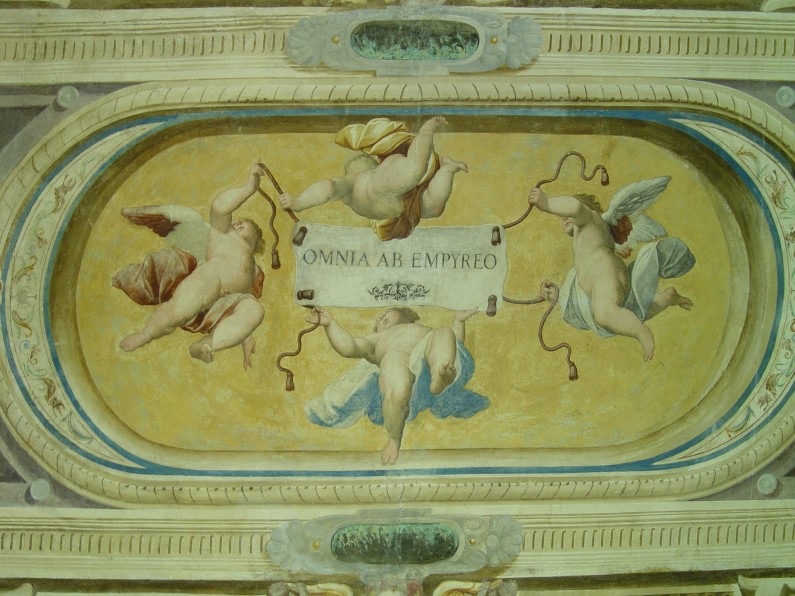
Al centro della volta compare infatti un cartiglio recante la scritta latina “Omnia ab empyreo” (“Tutto scende dal cielo”), sostenuto ai lati da quattro putti fortemente scorciati che sembrano visti dal sottinsù su un brillante fondale dorato. La due frasi fanno riferimento alla devozione del mecenate e padrone della villa Pirro I Visconti Borromeo, ricordando che tutte le cose discendono dal Cielo e vi fanno ritorno, richiamando ai nobili ospiti di Lainate, più o meno subliminalmente, che il potere raggiunto dai padroni di casa corrispondeva al volere divino dal quale discendeva anche la legittimazione al governo. Opporsi alla casata della villa lainatese, dunque, coincideva con l’opporsi al disegno salvifico di Dio.
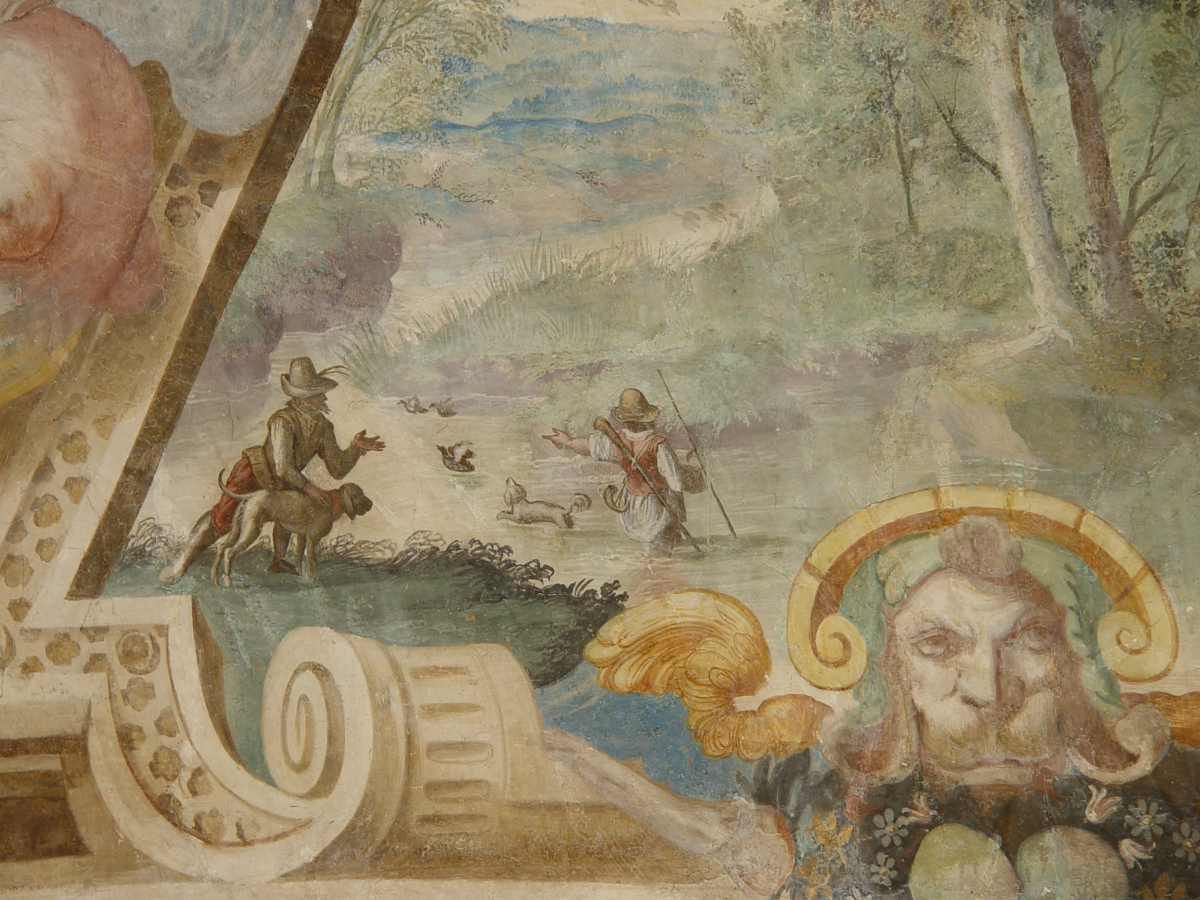
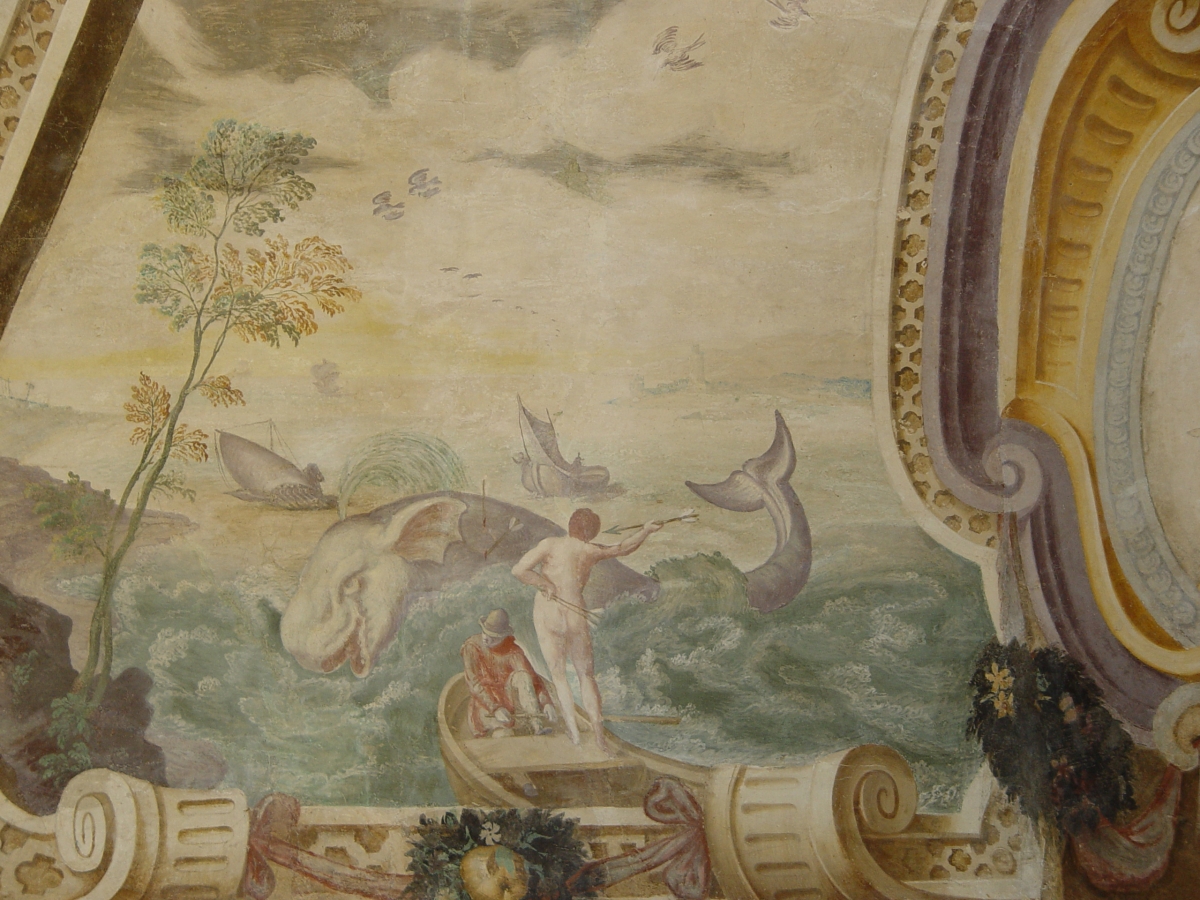
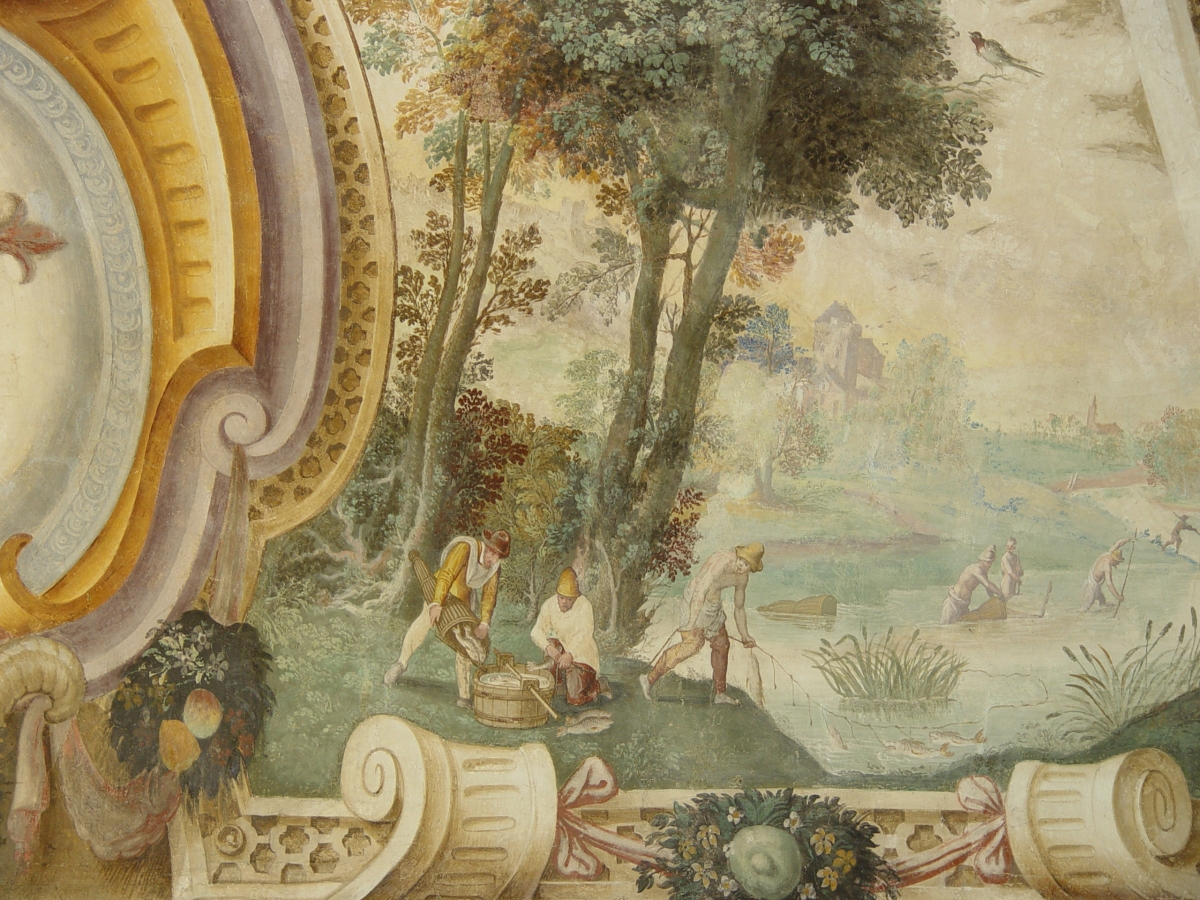
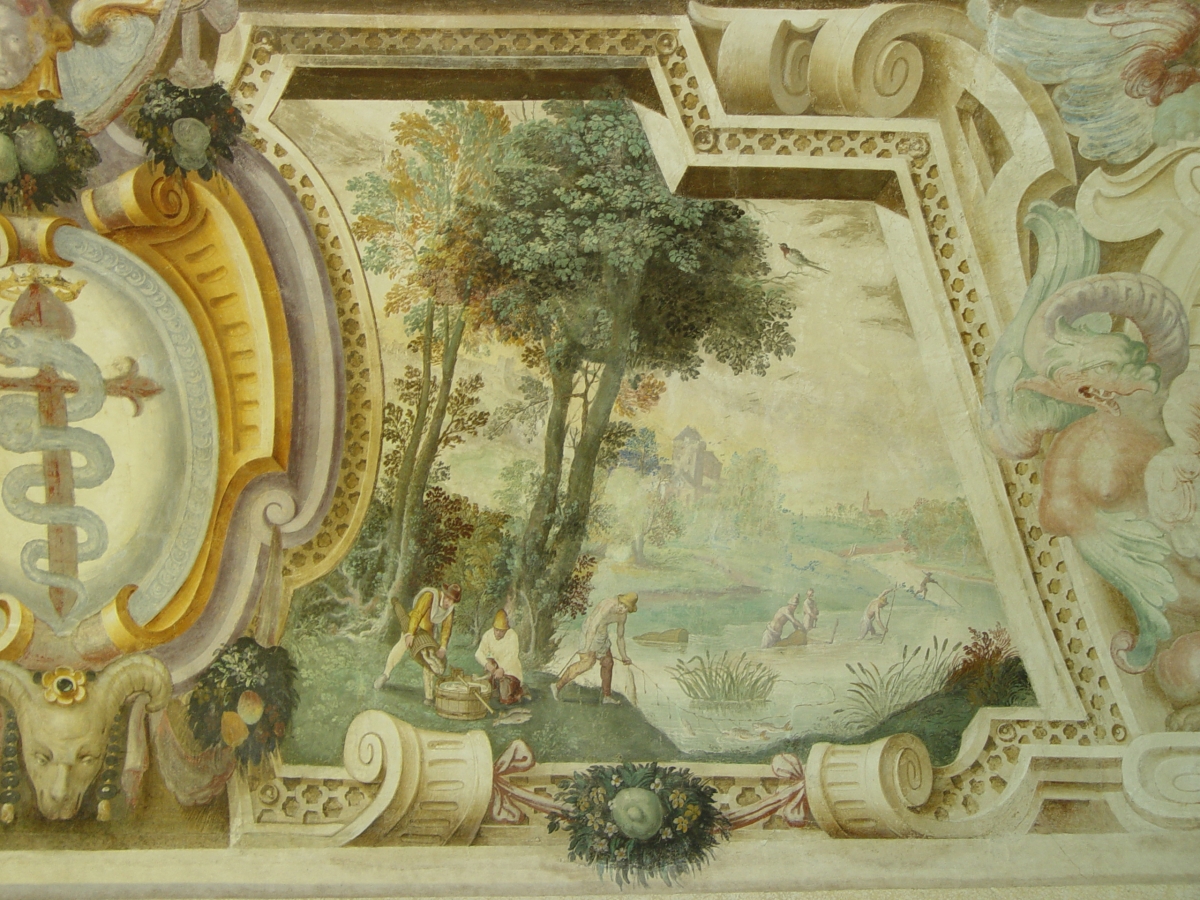
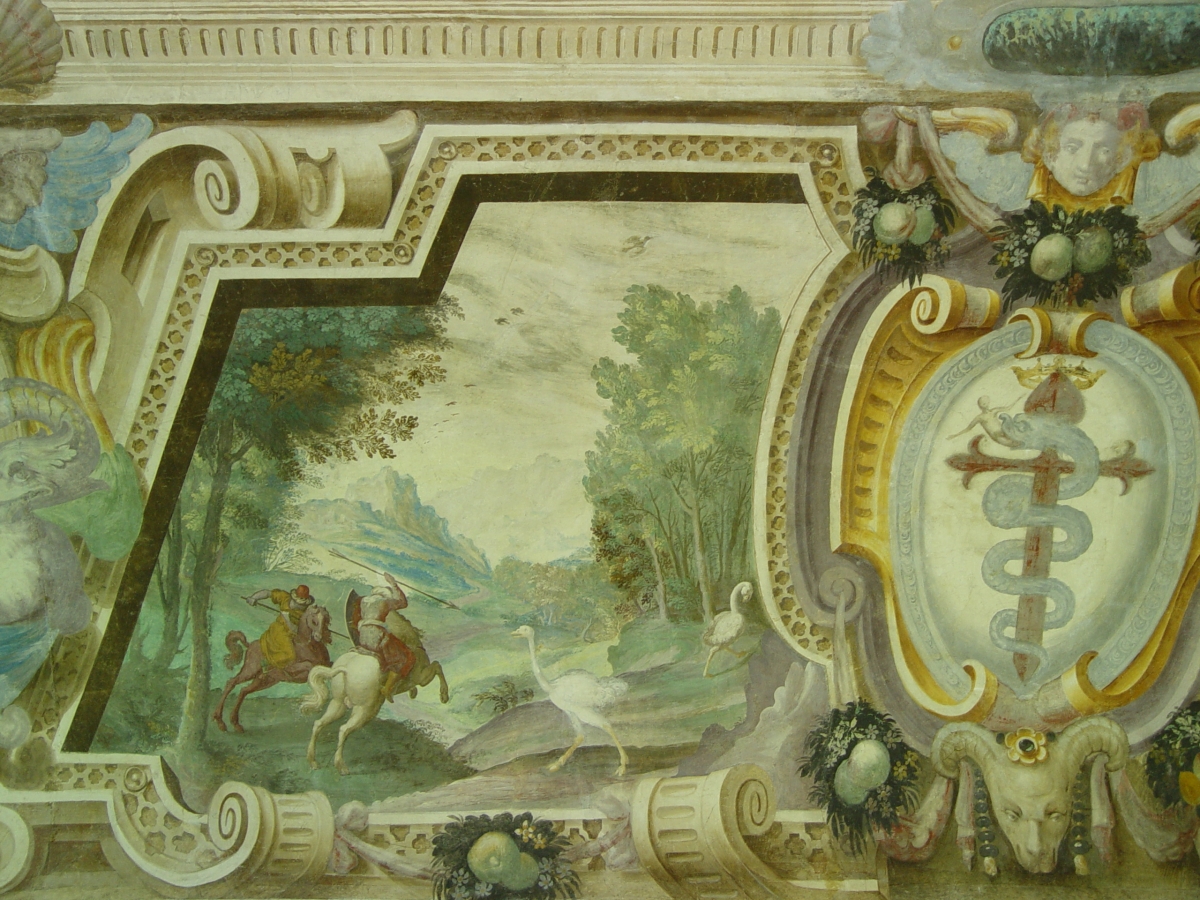
In corrispondenza dei due lati lunghi della sala, il medaglione centrale è circondato da due ricche cornici mistilinee contenenti un’interessante variante del simbolo dei Visconti: il caratteristico Biscione che divora il bambino avvolge infatti le sue spire intorno ad una spada di colore rosso, sormontata da una corona dorata. Ai lati degli stemmi, racchiuse tra ampie cornici architettoniche decorate con animali fantastici e teste grottesche, sono invece inserite scene di caccia, per terra e per mare, segno di grande varietà stilistica e interpretativa. Nelle pitture, infatti, sono raffigurate numerose tecniche di caccia caratteristiche di differenti aree del mondo che mostrano la bravura dell’artista nel dipingere scene che spaziano dalle battute di caccia nei boschi per catturare un toro imbizzarrito, all’esotico inseguimento di struzzi bianchi a cavallo o, ancora, dalla tradizionale pesca su fiume, alla cattura alle balene in mare aperto.
La campagna decorativa risale probabilmente ad un arco temporale compreso tra gli ultimi anni del XVI secolo e i primi anni del XVII. La critica tende ad assegnare l’esecuzione degli affreschi alla regìa di Camillo Procaccini (1561-1629), già attivo nel Ninfeo tra il 1587 e il 1589, che qui si fece quasi sicuramente affiancare da aiuti per la realizzazione delle volte di tutte le stanze del piano terra dell’ala cinquecentesca. Le poche carte note dell’amministrazione di Pirro I Visconti Borromeo, registrano tra il 1602 e il 1603 i nomi degli artisti Agostino Lodola e Giovan Battista Maestri, detto il Volpino, che probabilmente collaborarono con l’artista emiliano. La straordinaria qualità delle scene di caccia, che non si limitano alla tradizionale pesca con le reti o alla caccia con i cani ma restituiscono un certo gusto fiabesco e un interesse per il “raro e meraviglioso” tipico dell’epoca, hanno portato la critica a suggerire l’intervento anche del fratello di Camillo, il più giovane Carlo Antonio Procaccini (1571-1630), maestro sia nel campo della natura morta che dei paesaggi..
The “Hall of Mirrors,” another important hall on the ground floor, takes its name from the two large mirrors positioned on the minor walls, and like other areas of the lower floor has a Venetian terrace floor, which contrasts with the grand fresco decoration that spans the entire ceiling.
Thid exhibit has the same setup as the “Hall of Enea,” situated on the other side of the “Rotunda of Mercury.” At the centre of the ceiling is a scroll bearing the Latin inscription “Omnia ab empyreo” (“All things come down from heaven”), supported on the sides by four cherubs who seem greatly shortened as seen from below, in a bright gold background. The two phrases refer to the devotion of the patron and owner of Villa Pirro, Visconti Borromeo I, reminding his noble guests of Lainate that all things descend from Heaven and return to heaven; and in a more or less subliminal way, that the power achieved by the owners of the house and the legitimacy of his government corresponded to the divine will. Opposing the family of the Villa Visconti Borromeo Litta of Lainate, therefore, coincided with the opposition to God’s saving plan.
In correspondence with the two longer sides of the hall, the central medallion is surrounded by two rich mixtilinear frames containing an interesting variant of the symbol of the Visconti family: the characteristic serpent devouring a child while coiling its body around a red sword topped by a golden crown. At the sides of the emblems enclosed between wide architectural frames decorated with imaginary animals and grotesque heads; there are also land and sea hunting scenes, a sign of great stylistic and interpretive variety. The frescoes portray numerous hunting techniques typical of many areas of the world that show the artist’s painting skills in creating scenes that go from hunting in the forest and capturing a runaway bull, to exotic pursuit of white ostriches on horseback or the traditional fishing in a river to the capture of a whale in open sea.
The decorative work probably dates back to the period between the late 16th and early 17th centuries. Critics tend to assign the execution of the frescoes to the direction of Camillo Procaccini (1561-1629), who was already actively working on the Nymphaeum between 1587 and 1589 and was certainly assisted in making the ceiling frescoes of all the rooms in the ground floor of this 16th-century wing of the villa.
The few administrative notes of Pirro Visconti Borromeo I, registered between 1602 and 1603, lists the names of artists, Agostino Lodola and Giovan Battista Maestri also called “Volpino” who probably collaborated with the artist from Bologna. The extraordinary quality of the hunting scenes were not only limited to the traditional fishing with nets or hunting with dogs but it had a certain fairy tale-like quality about them which stimulated the viewers’ interest for the “rare and wonderful,” typical of the era, which led the critics to suggest that he had been helped by his younger brother, Carlo Antonio Procaccini (1571-1630), master in still life and landscape paintings.