Accanto alla "Sala degli Specchi" è collocata la "Sala dei Medoni", che trae la sua denominazione dalle particolari mattonelle in cotto lombardo che decorano la parte centrale della pavimentazione, nonché le aree intorno a porte e a finestre, chiamate appunto “medoni”.
L’impasto caratteristico del cotto prodotto manualmente in Lombardia è detto anche “nocciolato” per la presenza sulla superficie delle mattonelle di alcune macchie dovute alla mescolanza di argille di nature diverse. Essendo poi l’impasto lavorato manualmente con metodi rudimentali (zappe e badili), al momento della pressione all’interno degli stampi era possibile che rimanessero delle bolle d’aria imprigionate nell’impasto, da cui la presenza di fori più o meno grandi sulle piastrelle, poi ridotti dalla levigatura o dall’usura per calpestio.
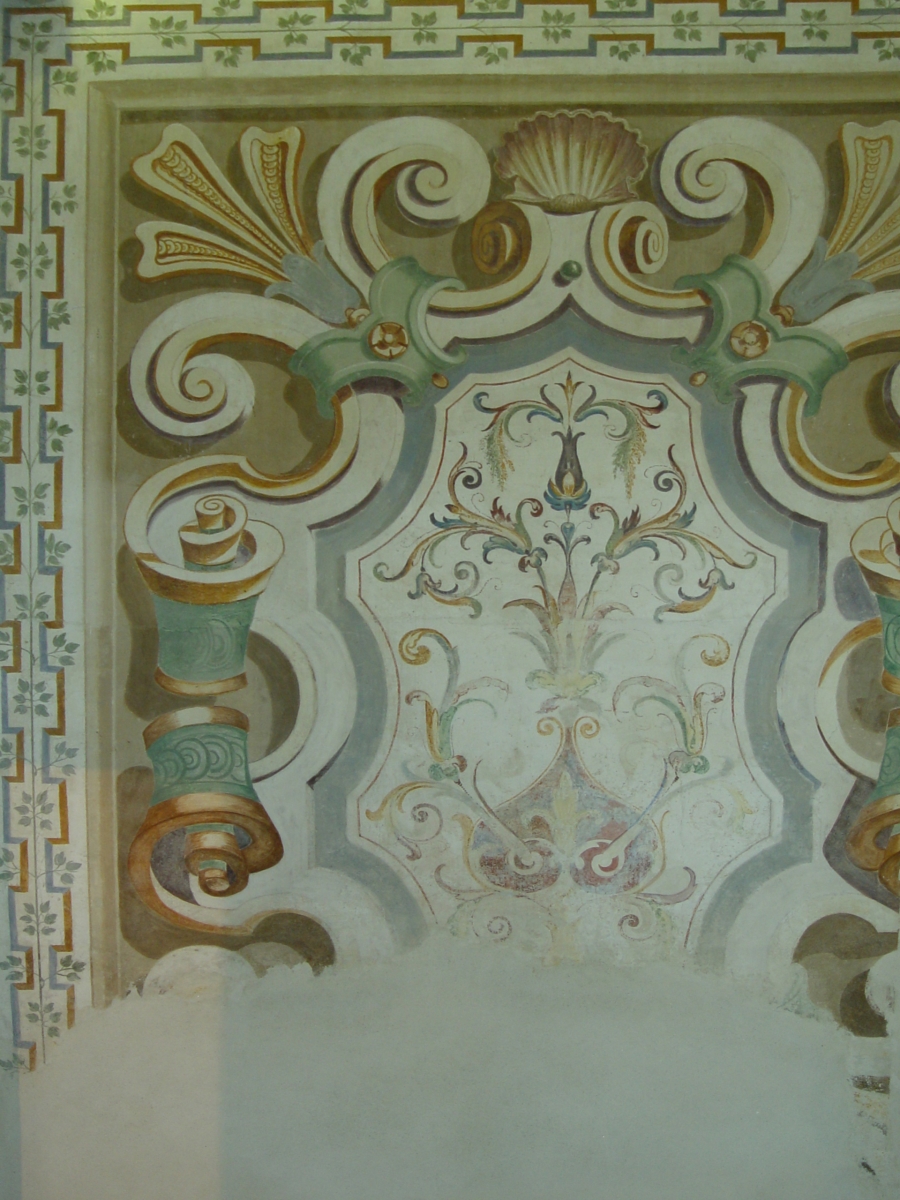
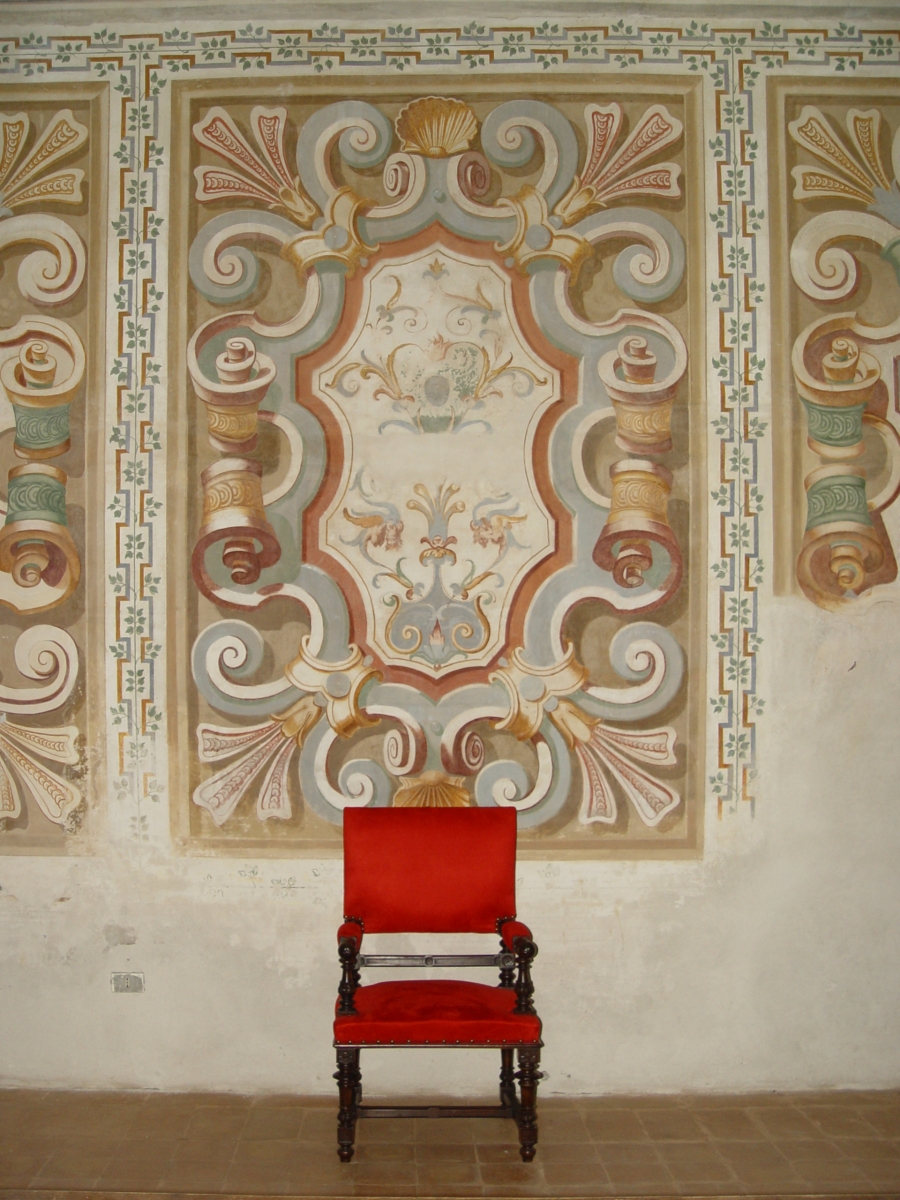
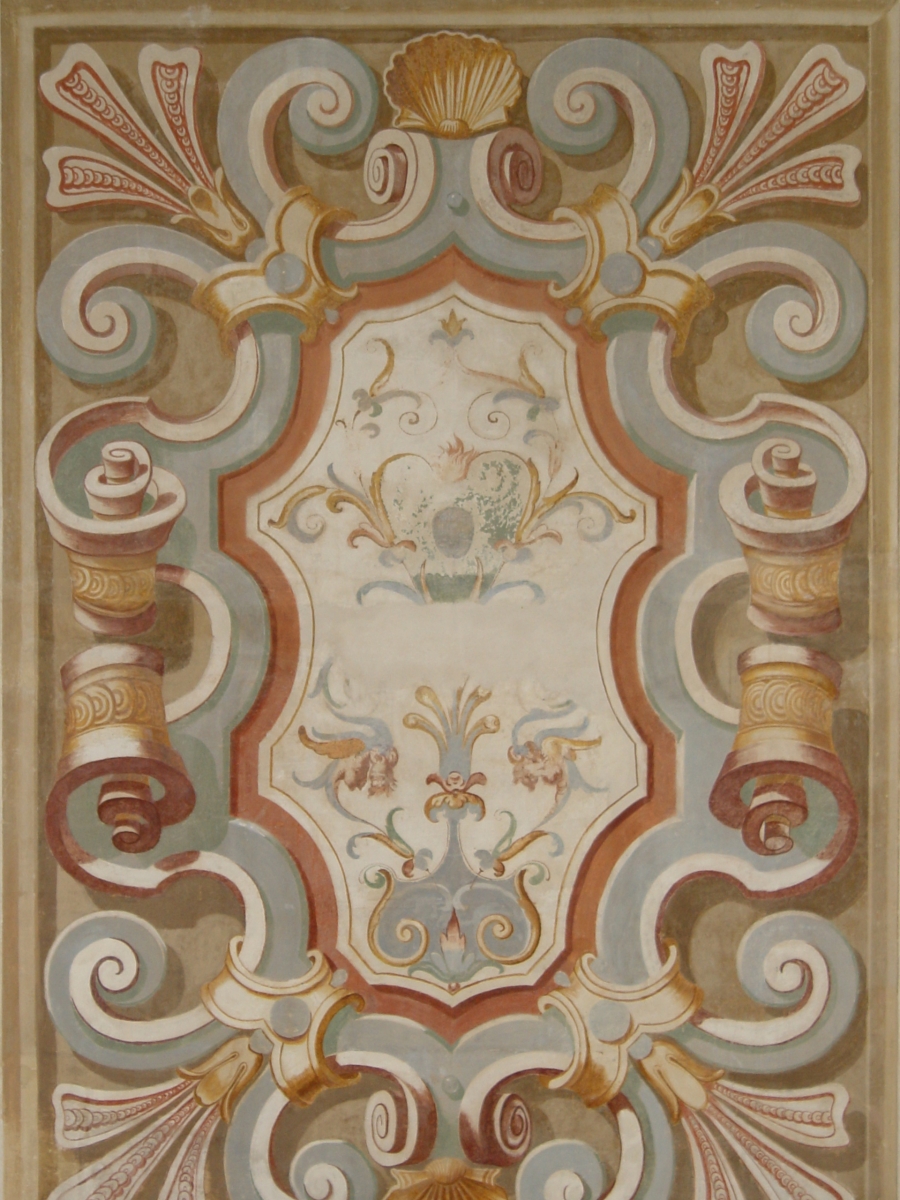
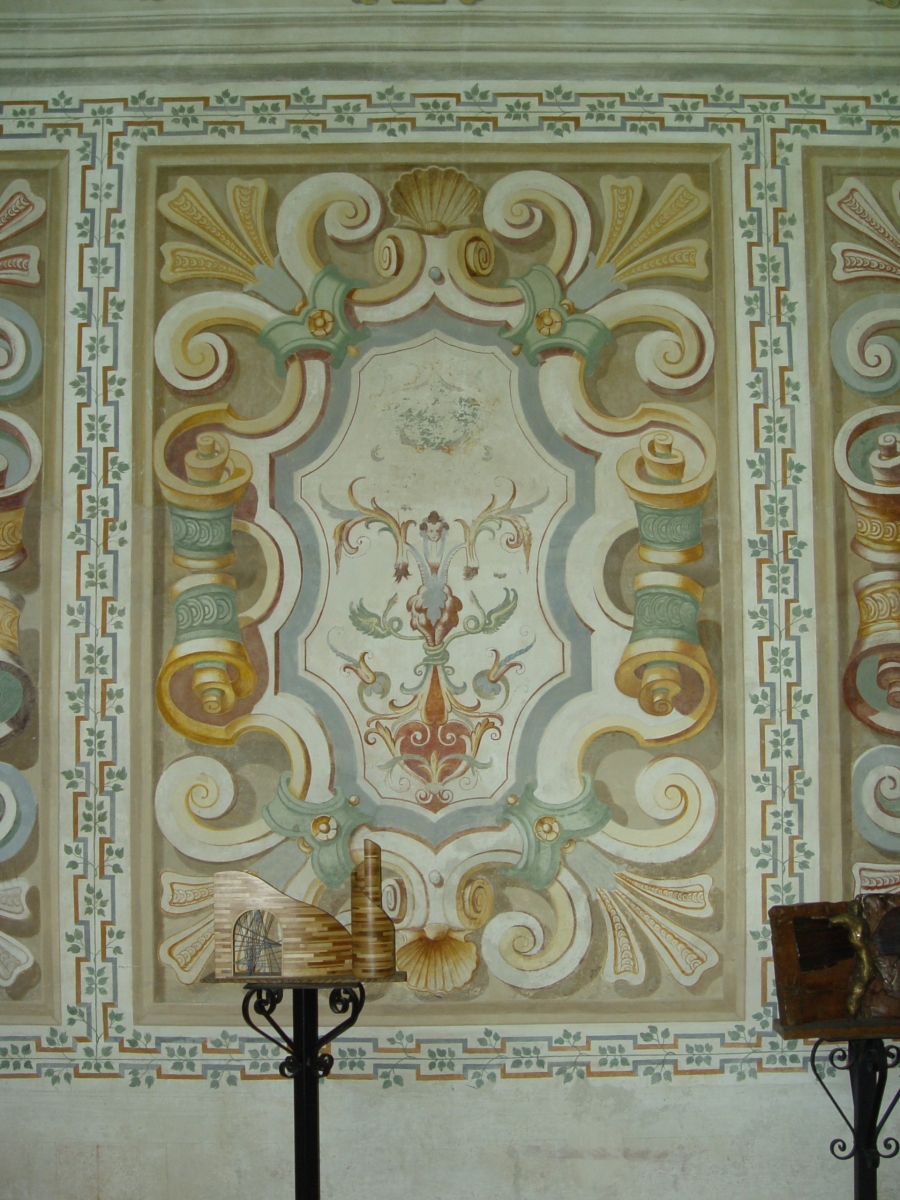
Le pareti della sala sono decorate ad affresco, scandite da motivi ornamentali geometrici e vegetali che circondano ampie riquadrature rettangolari contenenti cornici mistilinee di differenti colorazioni. Tali incorniciature, caratterizzate da ricchi profili a volute con conchiglie alle due estremità inferiore e superiore, contengono a loro volta un’ulteriore decorazione a racemi vegetali e floreali, arricchita dalla presenza di piccole teste di putti, uccelli e animali fantastici o mostruosi. Questo tipo di decorazione ben concorda con il motivo a grottesche già ampiamente utilizzato nei soffitti e nelle pareti del Ninfeo, la cui campagna di decorazione fu portata avanti tra il 1587 e il 1589 dal pittore emiliano Camillo Procaccini (1561-1629), con la collaborazione di aiuti e maestri mosaicisti.
Le bizzarrie ornamentali, alternate ad ornati a grottesche e motivi all’antica, corrispondevano infatti al gusto del committente del complesso, Pirro I Visconti Borromeo, nonché a quello dell’intero ambiente artistico lombardo che a partire dall’inizio del XVI secolo fece grandissimo uso di questo tipo di soggetti. Il nuovo repertorio derivato dalle scoperte archeologiche romane, che all’epoca apparivano come grotte sotterranee (da cui il nome “grottesche”), venne infatti impiegato da scultori, orefici, intagliatori e pittori di tutta Europa, diffondendosi anche grazie ai numerosi repertori incisi e stampati a partire dalla metà del Cinquecento. A Milano in particolare, si diffuse non soltanto su pareti e volte di chiese, ville e palazzi, ma anche e soprattutto presso le botteghe dell’artigianato di lusso e nelle fiorenti industrie artistiche produttrici di armi, che elaborarono le idee più singolari nel campo della grottesca e degli ornati. Non è infatti un caso che Giovanni Paolo Lomazzo (1538-1592), consigliere di Pirro I Visconti Borromeo nella redazione del complesso iconografico della villa, si fosse cimentato in gioventù proprio nella “composizione di grottesche” presso un intagliatore di ferro e materiali preziosi, e che draghi, bisce, arpie, centauri e altre creature leggendarie fossero i protagonisti delle sue fantasie di scrittore.
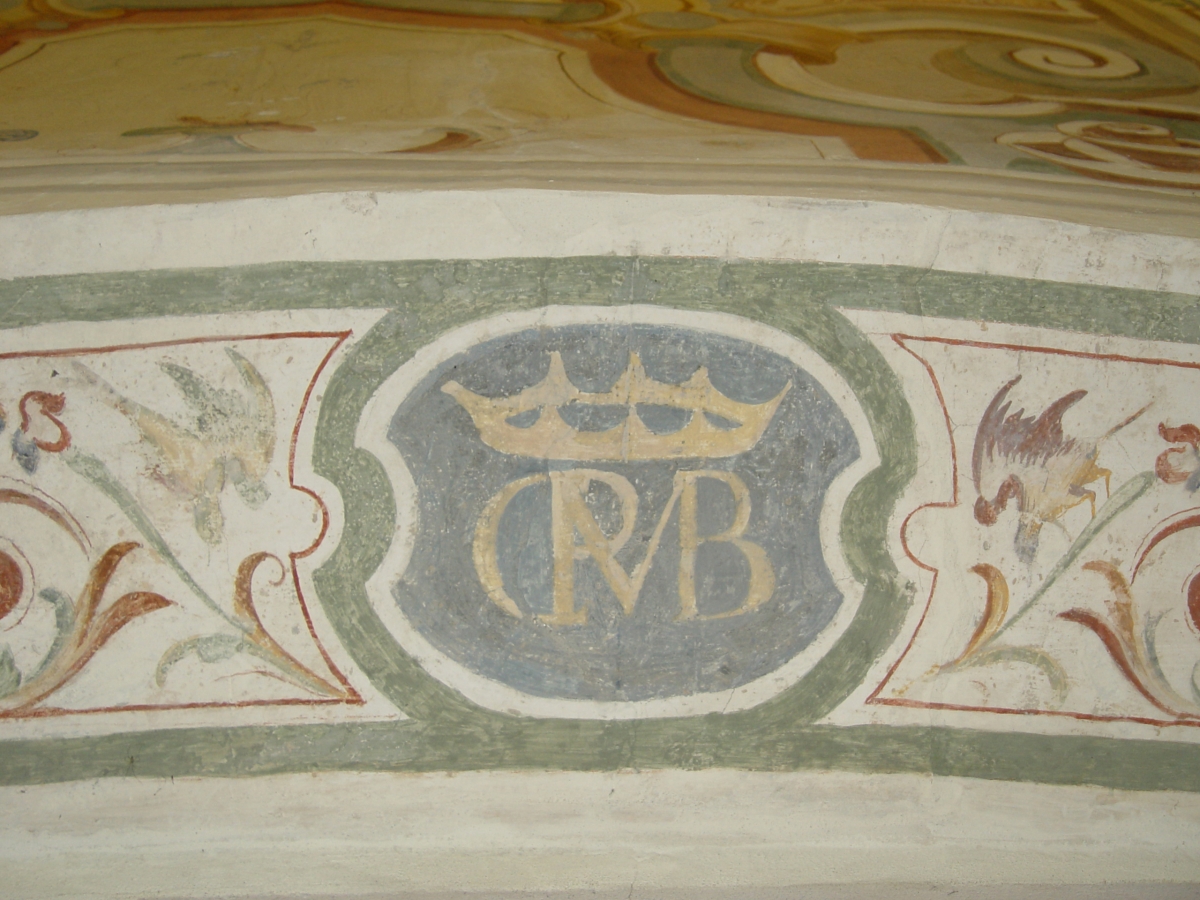
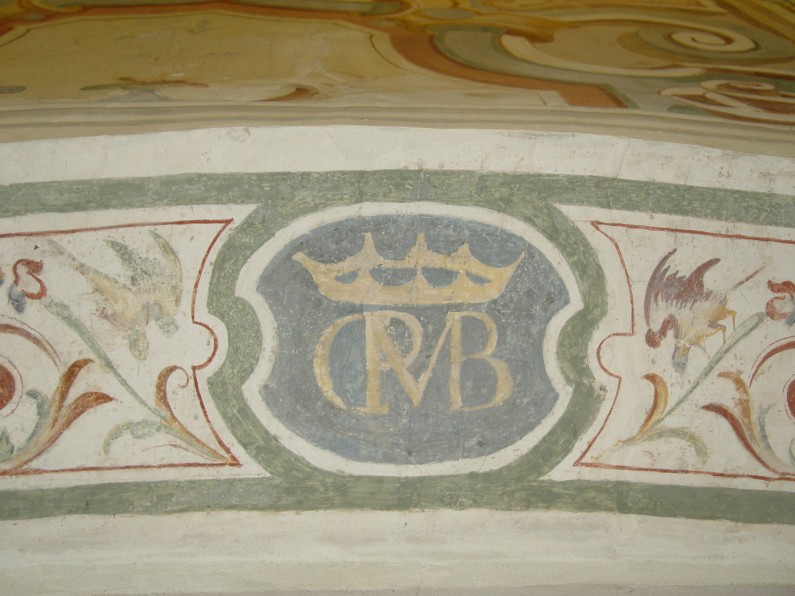
Oltre a queste decorazioni la sala presenta, sulle voltine delle porte, la sigla in lettere capitali “CPVB”, riferibile alle iniziali del conte Pirro I Visconti Borromeo.
Next to the "Hall of Mirrors" is the "Medoni Hall", which derives its name from the particular Lombard cotto tiles decorating the central part of the floor, as well as the areas around the doors and windows, called precisely “medoni”.
The characteristic paste of the cotto produced manually in Lombardy is also defined as “nutty’ due to the appearance on the tile surface of some blots arising from the mixture of different types of clay. Given that the paste is processed manually with rudimental methods (hoes and shovels), upon pressing the paste into the moulds, some bubbles of air could have remained in the mixture, producing little or big holes on the tiles, that were then reduced by smoothing or deterioration due to treading.
The walls of the hall are decorated with frescoes, laid out with geometrical and plant motifs surrounding the ample rectangular frames containing mixtilinear cornices of different colours. The frameworks, characterised by rich spiral profiles with shells at the two upper and lower extremities, contain in turn an ulterior decoration of plant and floral branches, enriched by the presence of cupid heads, birds, and fantastic or monstrous animals. This type of decoration matched well with the grotesque motifs, already widely used in the ceilings and walls of the Nymphaeum, the decorative campaign of which came about between 1587 and 1589 by the Bolognese painter, Camillo Procaccini (1561-1629), with the collaboration of mosaic operators and masters.
The ornamental oddities alternated with grotesque and ancient motifs, corresponded in fact to the taste of the commissioner of the complex, Pirro I Visconti Borromeo, and that of the entire Lombard artistic environment. The new assemblage from the 16th century onwards, made great use of these types of subjects. The new assemblage derived from the Roman archaeological discoveries that, in those times appeared as underground grottos (from which the word grotesque derives) was in fact used by sculptors, jewel makers, engravers and painters throughout Europe, and spread also due to the numerous artefacts engraved and moulded starting from the mid-16th century. Particularly in Milan, it spread not only on the walls and vaults of churches, villas and mansion but also and above all in the luxury handicraft workshops and flourishing artistic industries producing weapons, that elaborated the most singular ideas in the field of grotesque and embellishment works. It was thus not surprising that Giovanni Paolo Lomazzo (1538-1592), counsellor of Pirro I Visconti Borromeo, in the description of the iconographic complex of the Villa, tried his hand in his youth, precisely in the “composition of grotesque works” as an apprentice of an engraver in iron and precious materials, and that dragons, snakes, harpies, centaurs and other legendary creatures were the protagonists of his imaginations as a writer. Beside these decorations, the hall presents on the small vaults of the doors, the inscription in capital letters “CPVB,” referring to the initials of count Pirro I Visconti Borromeo.