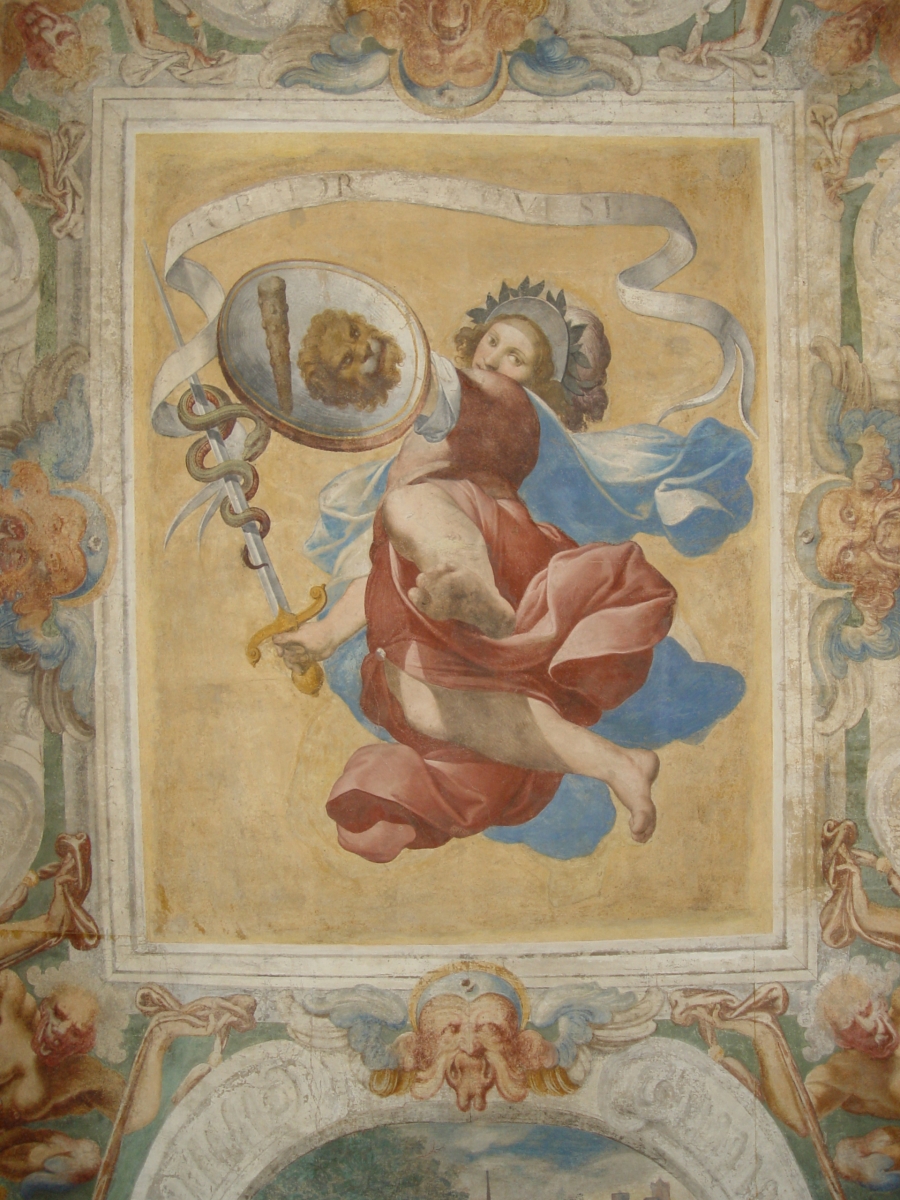
Straordinario esempio della ricchezza della decorazione dell’ala cinquecentesca della villa, la “Sala della Fortezza” viene così chiamata per l’affresco eseguito al centro del soffitto raffigurante un’allegoria dell’omonima Virtù. Il dipinto viene ritenuto dalla critica opera dell’artista emiliano Camillo Procaccini (1561-1629), attivo nel Ninfeo nell’ultimo quarto del XVI secolo, e che, probabilmente, eseguì insieme ai propri collaboratori la regia decorativa degli affreschi del piano terra dell’edificio.
La figura femminile della “Fortezza” è qui rappresentata in un ardito scorcio, mentre si eleva su un fondale dorato. La fanciulla regge tra le mani una spada avvolta dalle spire di un serpente e uno scudo su cui campeggiano una testa di leone e una clava, probabilmente allusive alle imprese di Ercole, eroe mitologico noto per la sua forza.
La giovane indossa un abito di colore rosso, le cui pieghe le ondeggiano attorno alle gambe viste dal sottinsù. Sulle spalle porta un ampio manto azzurro chiaro e la testa, in parte nascosta dietro la spalla, appare coronata da un elmetto metallico ornato di foglie. La figura è sormontata da un lungo cartiglio la cui scritta latina oggi appare ormai illeggibile.
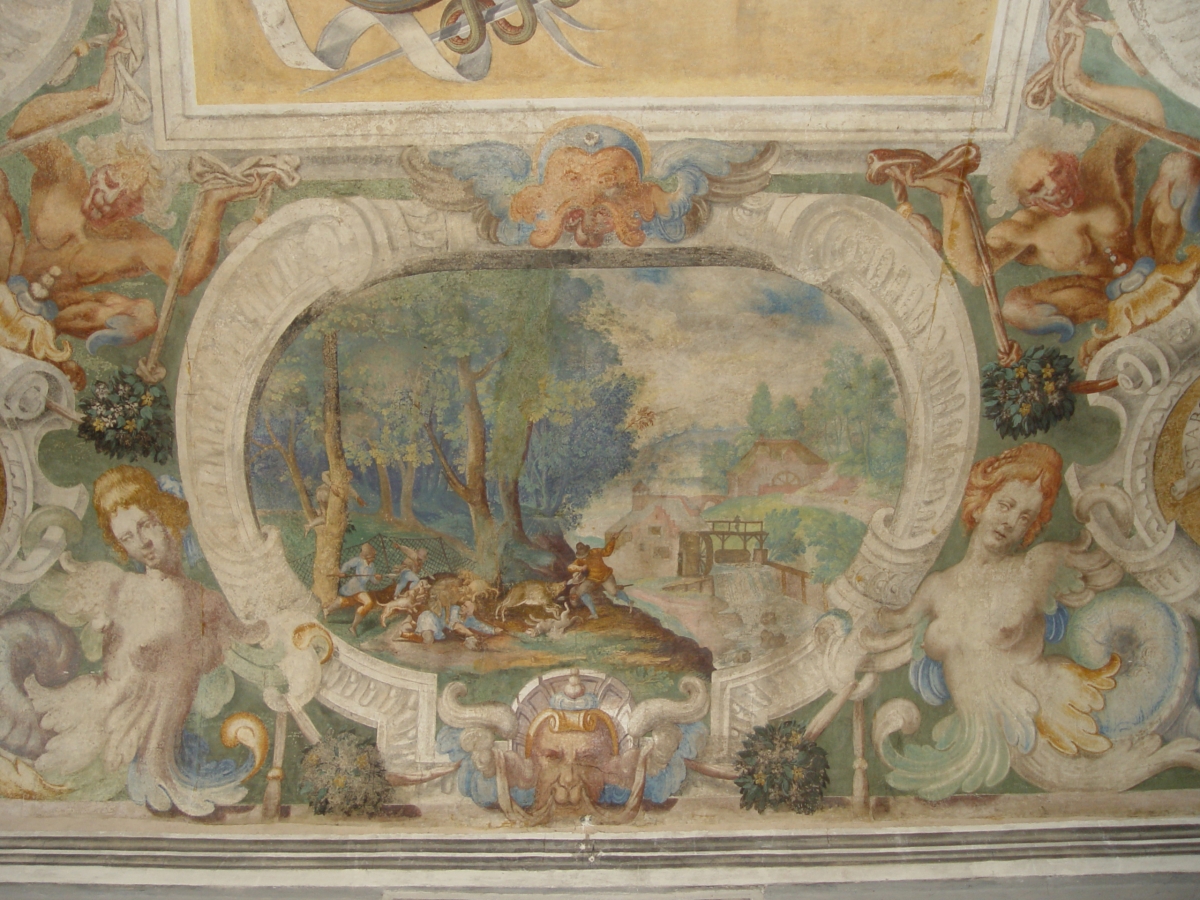
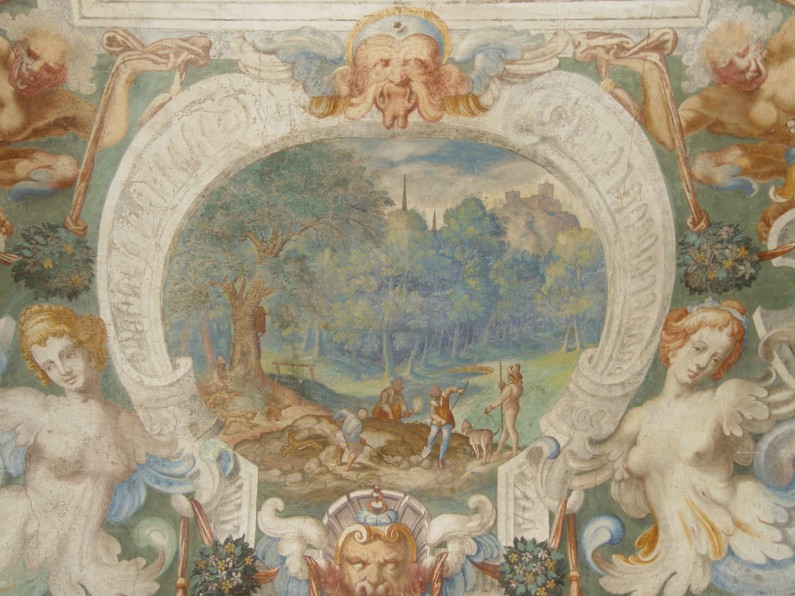
Non meno interessanti sono le “teste caricate” dipinte da Camillo ai lati del riquadro centrale. L’artista, forte dell’esperienza maturata tra Parma e Bologna, giunse in una Milano estremamente curiosa nei confronti delle esasperazioni fisionomiche, fin dalle prime prove condotte da Leonardo da Vinci con le sue “Teste grottesche”. L’intera volta infatti, si presenta particolarmente ricca dal punto di vista decorativo, con presenza di elementi vegetali e floreali, creature mostruose e leggendarie ed ampie cornici all’antica che inquadrano scene paesistiche. Questi paesaggi bucolici, accesi da toni e luci cangianti soprattutto nella trattazione delle fronde degli alberi e nei borghi che si stagliano sullo sfondo, tradiscono un certo gusto nordico per le vedute fantastiche, riconducibile alla circolazione nella seconda metà del Cinquecento delle opere degli artisti fiamminghi Paul Bril e Jan Brueghel, favoriti in Lombardia anche dalle committenze del cardinale Federico Borromeo. La particolare vitalità di questi paesaggi, condotti non senza conoscere l’atmosfera dei “paesi di maniera” dipinti nell’Emilia della fine del XVI secolo, ha fatto propendere la critica per un’assegnazione al fratello minore di Camillo, Carlo Antonio Procaccini (1571-1630), apprezzato sia come paesaggista che come pittore di nature morte. Più difficile diventa invece identificare i brani pittorici affidati ai meno celebri Agostino Lodola e Giovan Battista Maestri, detto il Volpino, documentati al fianco del Procaccini intorno al 1602-1603 in alcune note di pagamento dell’amministrazione di Pirro I Visconti Borromeo.
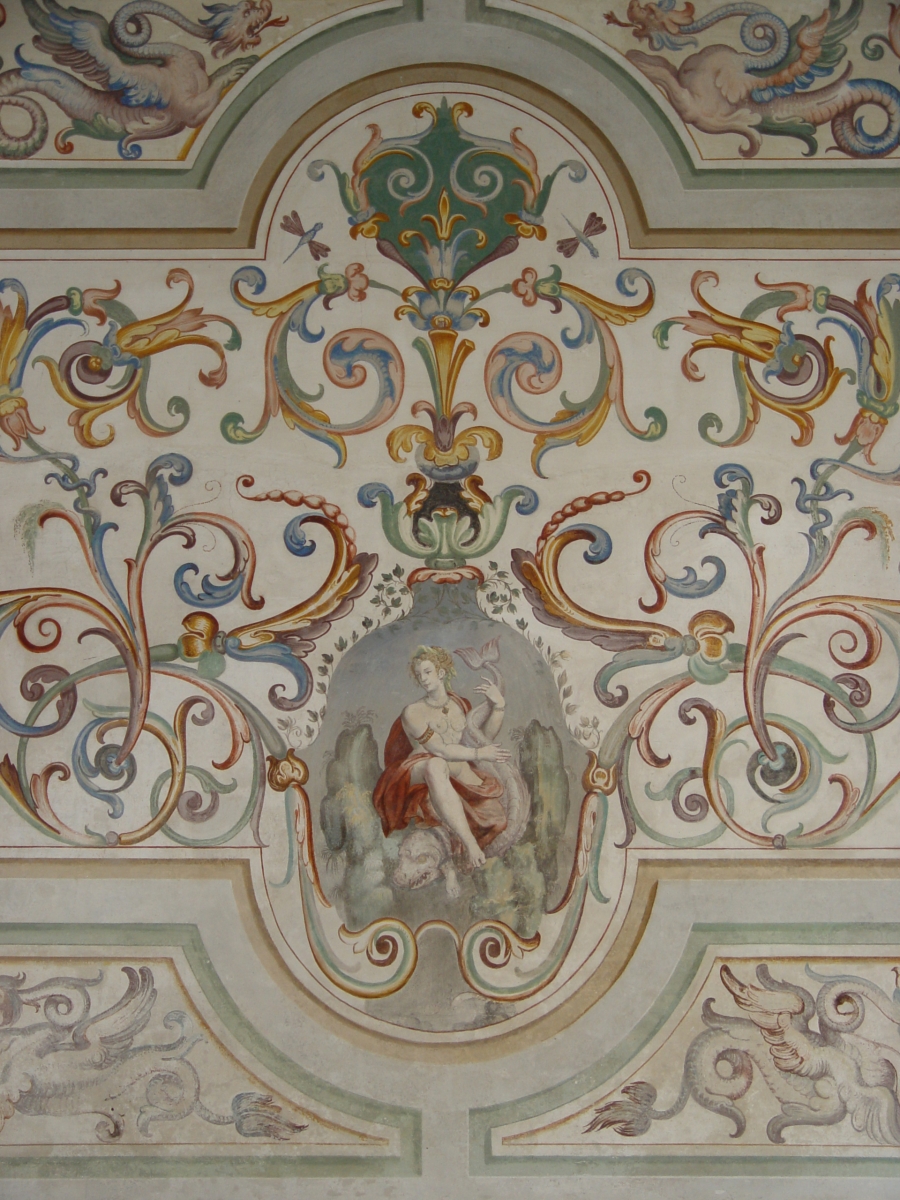
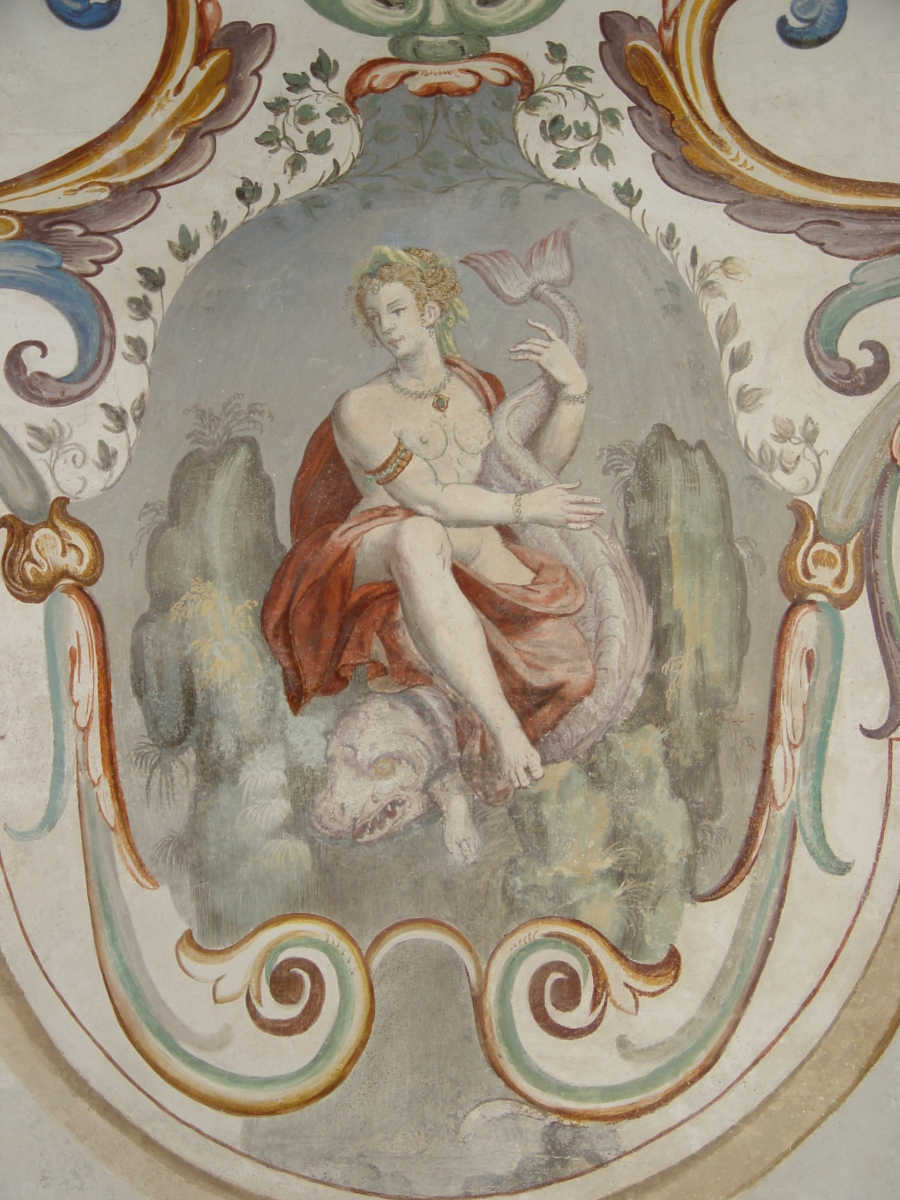
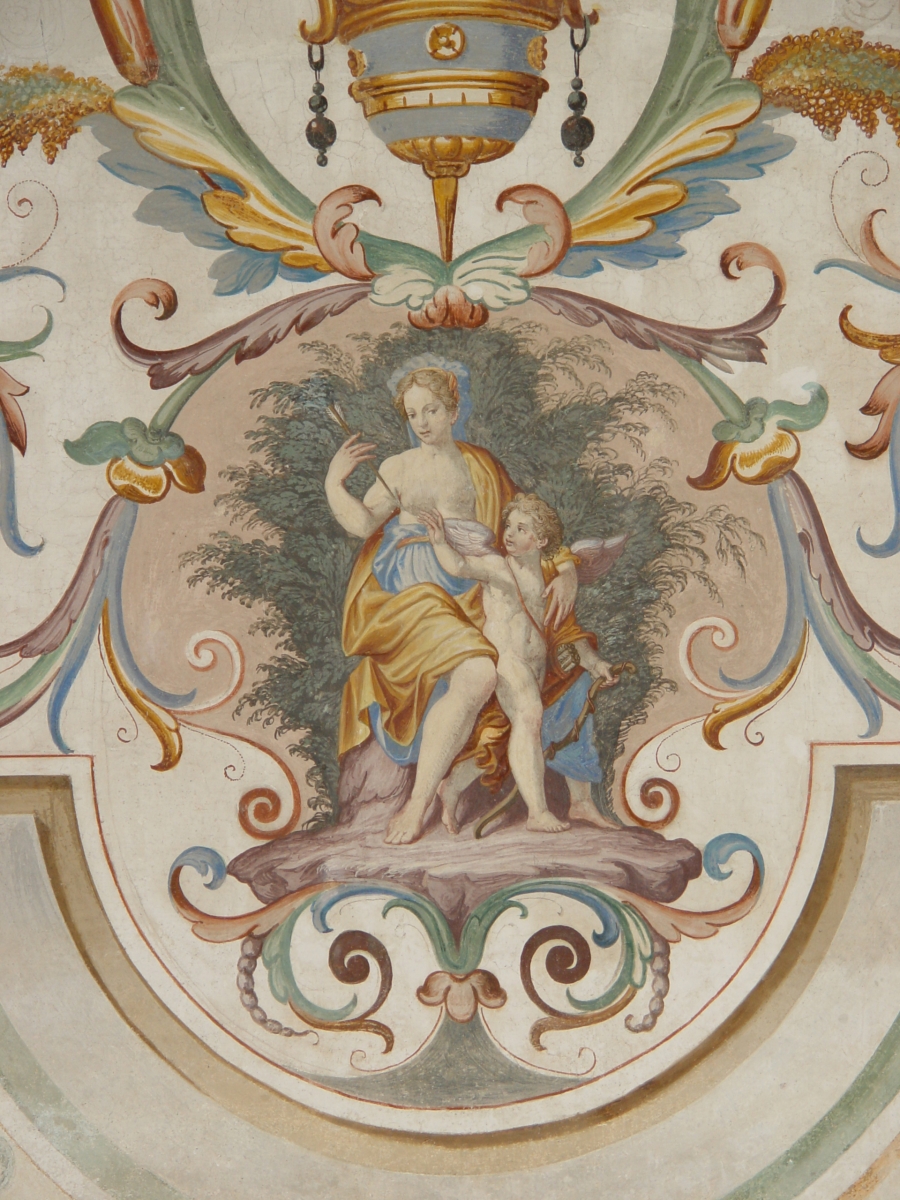
La decorazione della sala prosegue anche sulle pareti, dove ampi cornici geometriche divise in riquadri polilobati racchiudono coloratissime ornamentazioni a volute e racemi floreali, che si chiudono intorno a raffigurazioni allegoriche di divinità mitologiche. Fra di esse si citano l’immagine di Cupido, con arco e faretra, intento a recuperare una freccia tenuta tra le mani di una giovane donna seduta accanto a lui, che lo tiene tra le braccia; e la raffigurazione di una nereide (forse Galatea), una ninfa del mare riccamente ingioiellata seduta su un gigantesco mostro marino in cima ad una grotta, che ricorda le forme dell’attiguo Ninfeo. Anche la cappa del camino appare dipinta con la raffigurazione simbolica dei quattro elementi: al centro di un verde prato è raffigurato un ardente falò, le cui fiamme stanno per spegnersi sotto la pioggia portata da una nuvola raffigurata nella parte superiore della composizione. L’immagine è sovrastata da un cartiglio recante la scritta latina in lettere capitali “Auget” (“aumenta”), probabilmente riferibile alla grandezza della famiglia Visconti Borromeo.
The “Hall of Fortitude” is an extraordinary example of the richness of the decorations of the 16th century wing of the Villa, Its name derives from the fresco set in the centre of the ceiling depicting an allegory of the Virtue of Fortitude.
Critiques retain that the painting is the work of Bolognese artist Camillo Procaccini (1561-1629), who worked on the Nymphaeum during the last quarter of the 16th century, and who probably supervised, together with his helpers, on the decorative setup of frescoes on the ground floor of the building. The feminine figure of Fortitude is represented here in a striking view, while she rises against a golden background. The young girl holds a sword in her hands, wrapped by the coiling serpent and a shield on which the head of a lion and a club are depicted, probably alluding to the endeavours of Hercules, mythological hero known for his strength. The girl is wearing a red dress, folding in waves around her legs, and viewed from below. On her shoulders is a wide light blue mantle and her head is partly hidden, behind her shoulder. She is crowned with a metallic helmet adorned with leaves. The figure is surmounted by a long title block bearing a Latin inscription which is now illegible.
Likewise interesting are the “loaded heads” painted by Camillo on the sides of the central frame. The artist, drawing from his experience gained in Bologna at the Carracci workshop, went to Milan led by his great curiosity toward exaggerations of physical features, especially after the first trials conducted by Leonardo da Vinci with his “grotesque heads.” The entire vault, in fact, is particularly rich from the decorative point of view, with the presence of plant and floral elements, monstrous and legendary creatures and wide ancient-style cornices framing out landscape scenes. These bucolic landscapes, with their bright hues and pure lights especially in painting the fronds of trees and in the villages that stand out in the background, betray a certain Nordic taste for fantastic panoramas, traceable to the circulation in the second half of the 16th century of the works of the Flemish artists Paul Bril and Jan Brueghel, popular in Lombardy also by the commissions of Cardinal Federico Borromeo. The particular liveliness of these landscapes, that could not be done without the knowledge of the atmosphere of the “mannerism countryside” painted in Emilia at the turn of the 16th century, led critiques to attribute the work to the younger brother of Camillo, Carlo Antonio Procaccini (1571-1630), appreciated both as a landscape and still life painter. The more difficult task instead is that of identifying the pictorial pieces entrusted to the less renowned Agostino Lodola and Giovan Battista Maestri, so-called Volpino, documented together with Procaccini around 1602-1603 in some payment receipts by Pirro I Visconti Borromeo’s administration.
The decoration of the multi-lobed hall includes very colourful scroll-like and floral-twine embellishments, that frame the allegorical portrayals of mythological divinities. Among these is the image of Cupid, with arch and quiver, intent in picking up an arrow in the hands of a young woman seated beside him and who is embracing him; and the portrayal of a Nereid (perhaps Galatea), a sea nymph, heavily bejewelled, seated on a gigantic sea monster at the top of a grotto that recalls the form of the adjacent Nymphaeum. Also the hood of the chimney is painted with the symbolic representation of the four elements: in the centre of a green lawn, is a lively fire which is about to be extinguished by the rain brought by a cloud drawn in the upper part of the picture. The image is dominated by a title block bearing the Latin inscription in capital letters “Auget” (“intensify”), probably referring to the grandeur of the Visconti Borromeo family.