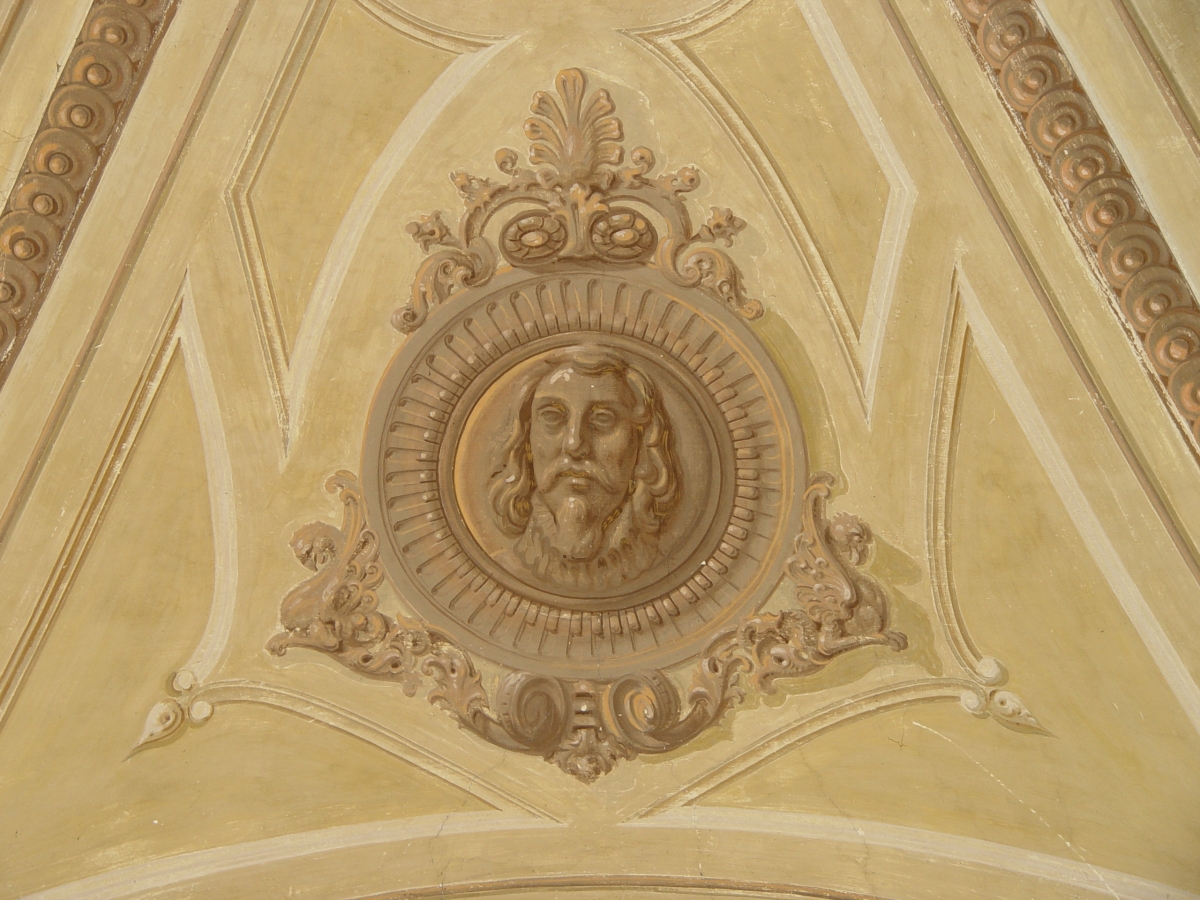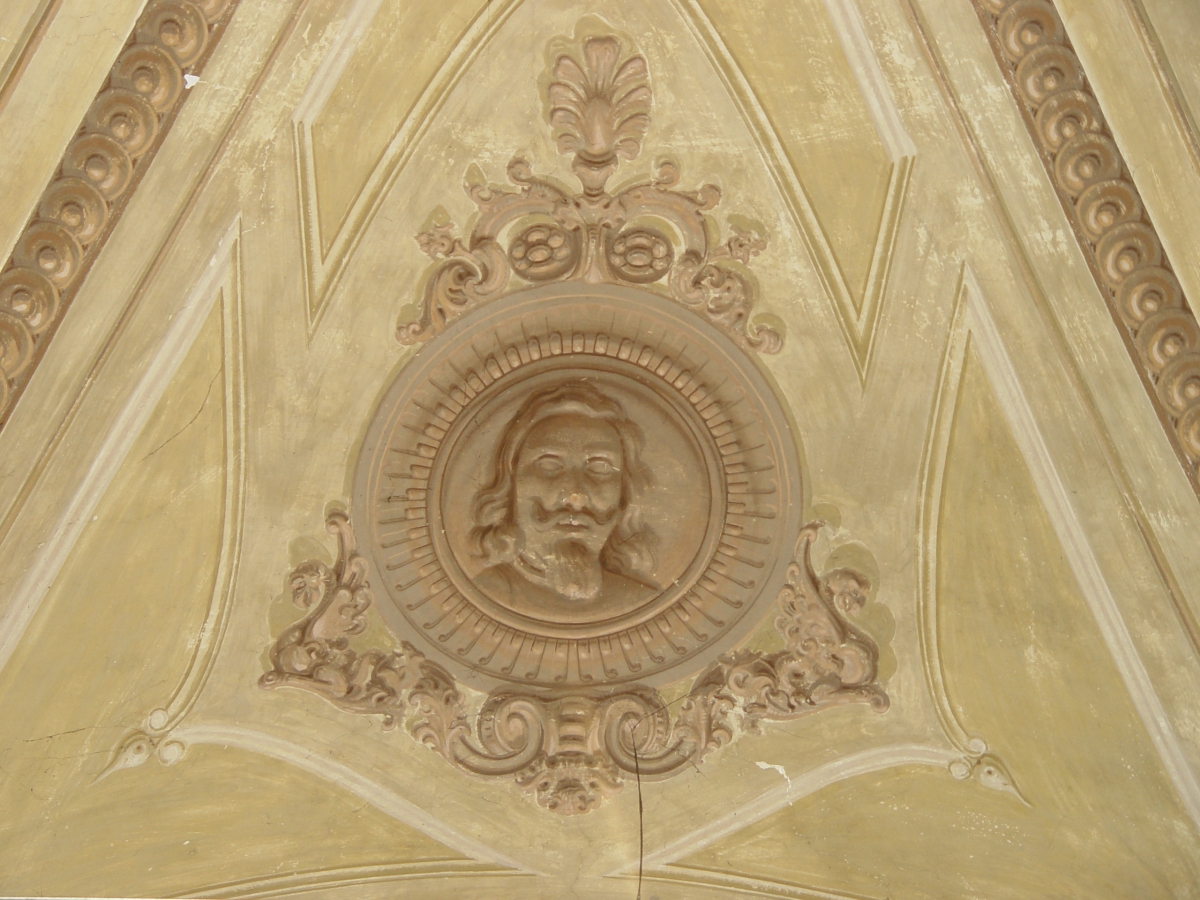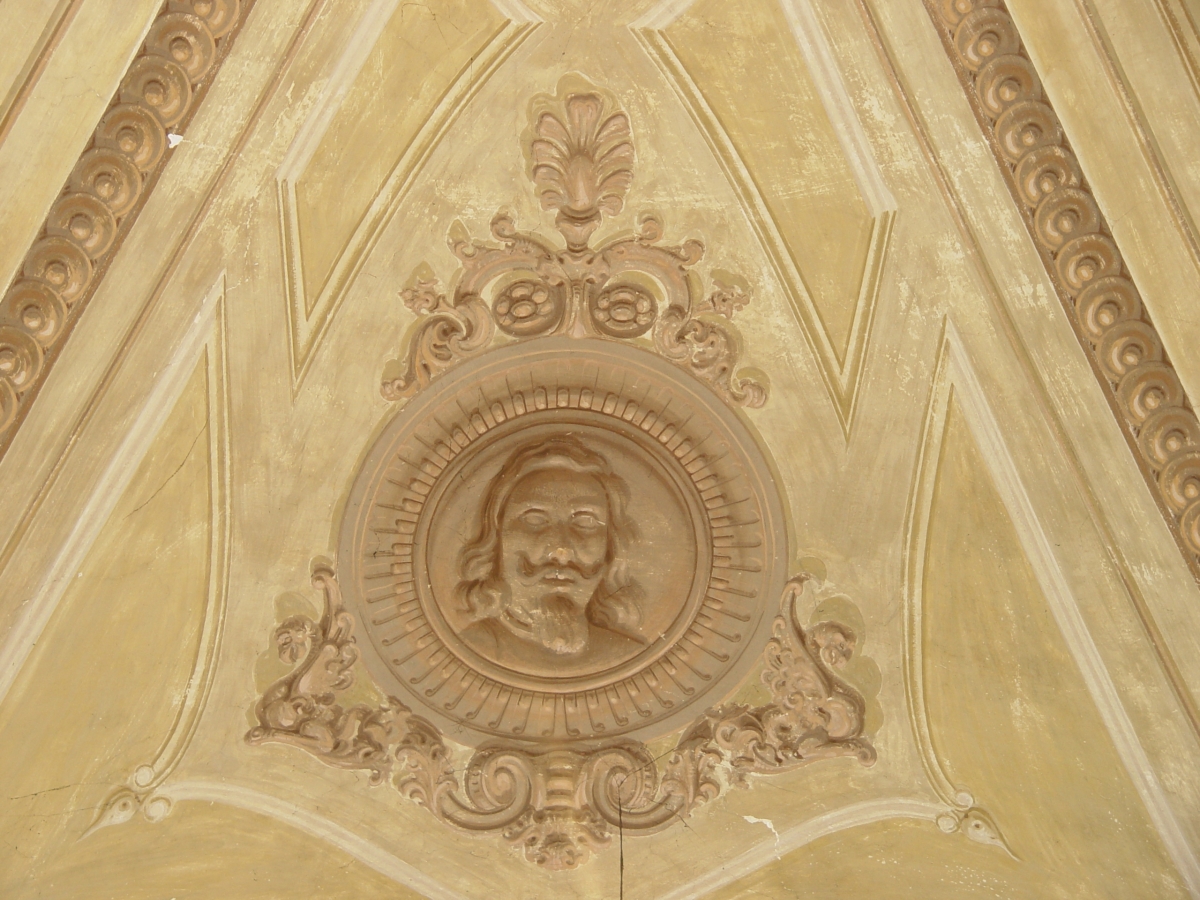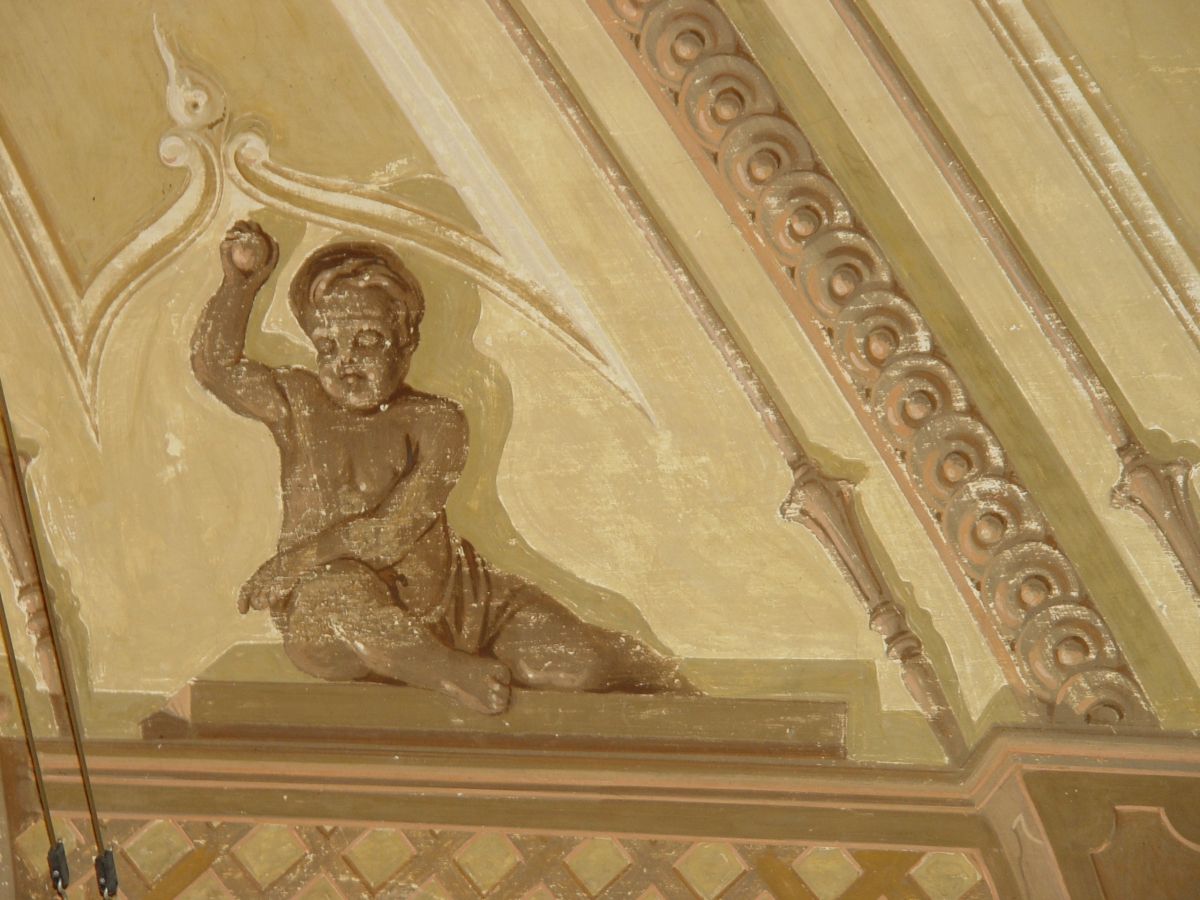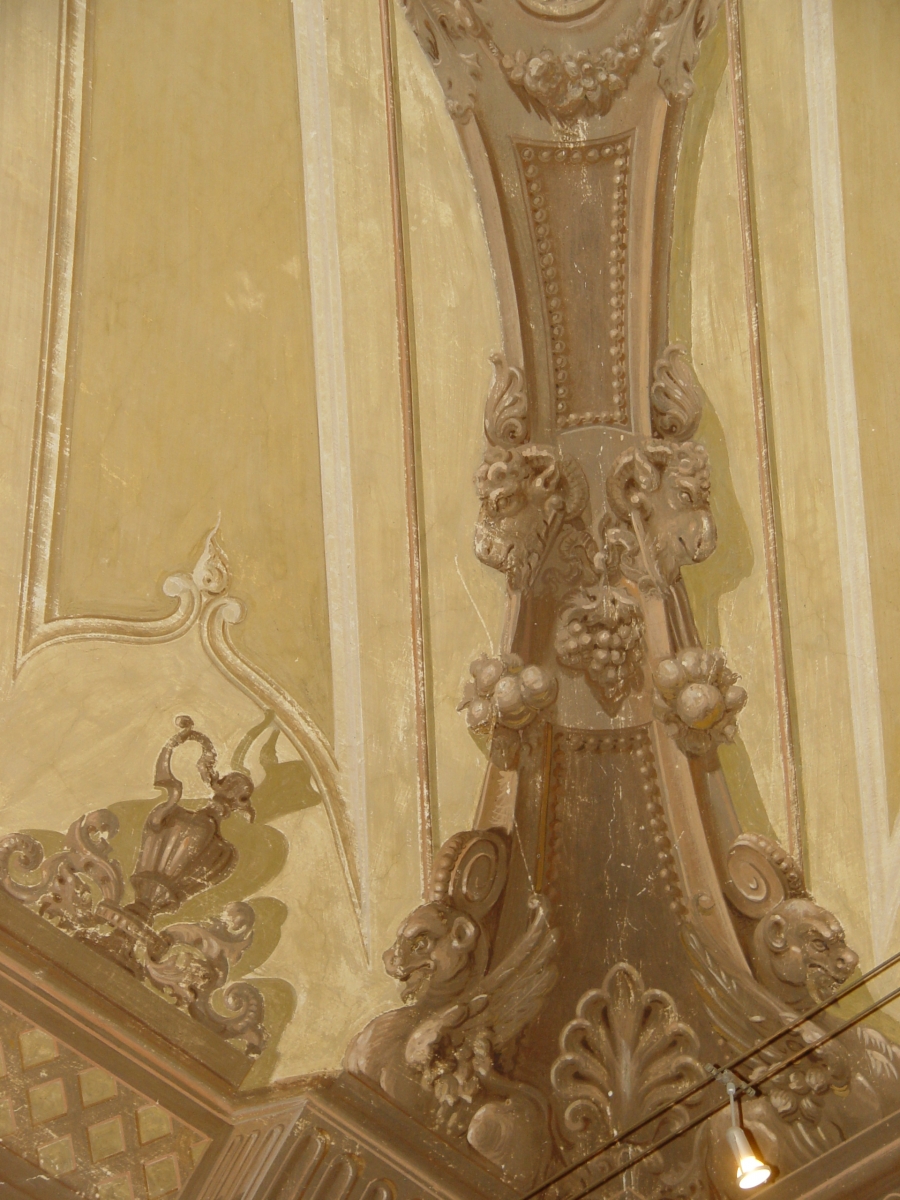
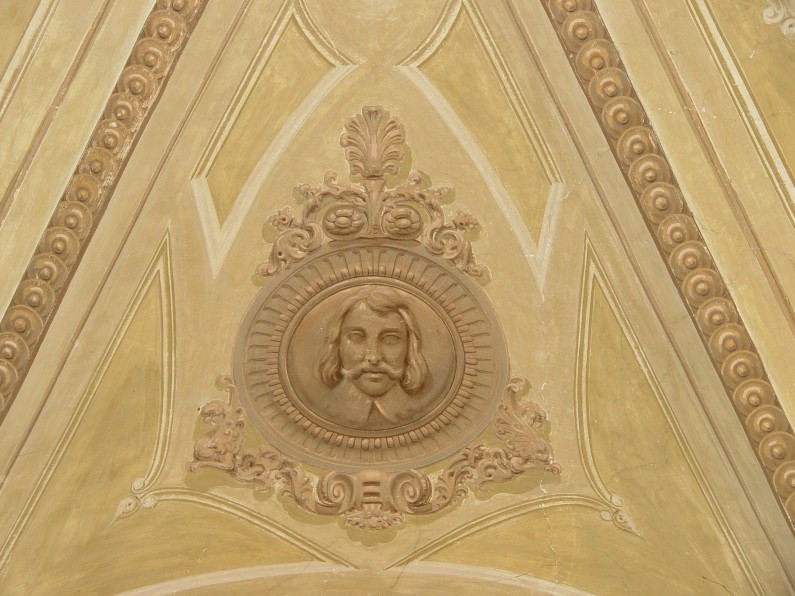
Ultima sala significativa del piano terra dell’ala settecentesca, la “Sala delle Assi” si apre sugli ambienti cinquecenteschi e deve il suo nome al ricordo dell’omonimo salone collocato al piano terra del Castello Sforzesco di Milano, affrescato sul soffitto da Leonardo da Vinci per conto del duca Ludovico il Moro, che oggi è inserito nel percorso di visita del Museo d’Arte Antica.
Il motivo ad affresco riprodotto sulle pareti di Villa Visconti Borromeo Litta a Lainate richiama, infatti, l’originale copertura a tavole di legno che diede il nome alla sala milanese. Al contrario di essa, tuttavia, il soffitto è qui decorato con un affresco che riproduce una tovaglia ricamata, al centro della quale è appeso un lampadario in ferro battuto novecentesco.
Ad oggi non si conosce l’esatta funzione della sala all’epoca della costruzione dell’ala settecentesca, poiché tutte le stanze furono più volte riprese e modificate dalla metà del Settecento senza lasciarne traccia documentaria. La villa, infatti assunse l’aspetto definitivo tra il 1784 e il 1796, talvolta modificando radicalmente l’utilizzo degli ambienti esistenti. Anche i primi inventari noti del XVIII secolo non colmano queste lacune. Nel primo inventario redatto per ragioni fiscali nel 1734, ad esempio, il numero di locali risulta minore rispetto a quelli realmente esistenti, in quanto vennero descritte solo le stanze dove erano presenti mobili da requisire a fronte del debito fiscale contratto dalla famiglia Visconti Borromeo. Nel successivo inventario del 1753, redatto dopo la morte di Giulio Visconti Borromeo dalle figlie maritate ai Litta, risultano ubicate al piano terra alcune camere da letto, una serie di stanze riservate alle donne e una sala per la conversazione, che oggi è molto difficile da riconoscere nell’esatta collocazione.
The “Hall of Panels” is the last important hall on the ground floor of the 18th-century wing, and opens out to the 16th-century venues.
It owes its name to the hall by the same name located on the ground floor of the Sforzesco Castle in Milan, with ceiling frescoes achieved by Leonardo da Vinci and commissioned by Duke Ludovico il Moro, and today part of the itinerary of visitors in the Ancient Art Museum. The fresco motif reproduced on the walls of Villa Litta in Lainate, resemble in fact, the original lining of wooden panels that gave the Milanese hall its name. Unlike this hall, the ceiling here is decorated with a fresco reproduced with an embroidered panel, at the centre of which hangs a 20th-century lamp in wrought iron.
Up to today we do not know the exact function of the hall at the time of the construction of the 18th-century wing, since all the rooms were renovated and modified from the mid-18th century onwards, without leaving any documental trace. The Villa in fact, assumed its definitive aspect between 1784 and 1796, and was at that time radically modifying the use of the actual rooms. Also the first known inventories of the 17th-century are not able to give the missing information. Even in the first inventory drafted for tax purposes in 1734, for example, the number of rooms is less than what really exists, since they only described the rooms that contained furniture to be acquired in the face of the tax debts incurred by the Visconti Borromeo family. In the succeeding inventory of 1753, recorded by the daughters married to the Litta after the death of Giulio Visconti Borromeo, on the ground floor there are some rooms, a series of rooms reserved for the women and a parlour or sitting room, the location of which cannot be precisely identified.