La facciata nord del Ninfeo era in origine separata dal giardino da sei colonne in marmo arricchite da sculture in bronzo ad altezza naturale raffiguranti divinità mitologiche: due di esse, una “Venere” ed un “Bacco”, vennero acquistate all’inizio del Novecento da Andrew W. Mellon, sottosegretario al tesoro del Presidente degli Stati Uniti d’America, per la sua collezione privata e sono oggi conservate alla National Gallery di Washington. Le altre quattro, raffiguranti Giove, Giunone, Plutone e Proserpina, risultano invece disperse.
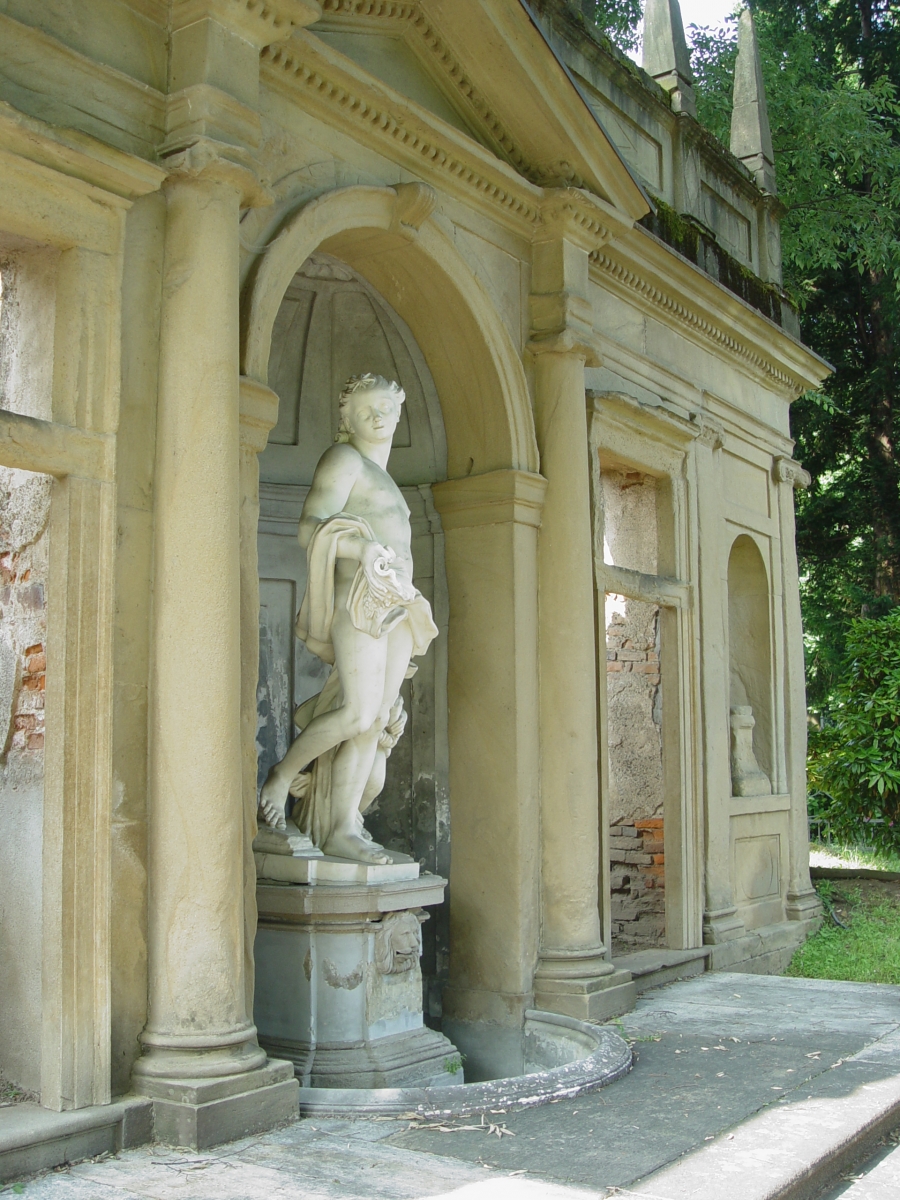
Il fronte nord dell’edificio, costituito da due lunghe pareti simmetriche ricoperte di arenaria, risulta dunque ad oggi fortemente impoverito del suo patrimonio scultoreo, ridotto a due sole sculture allegoriche in marmo bianco collocate all’interno di nicchie poste alle due estremità del complesso, al di sopra di due piccole vasche con fontana.
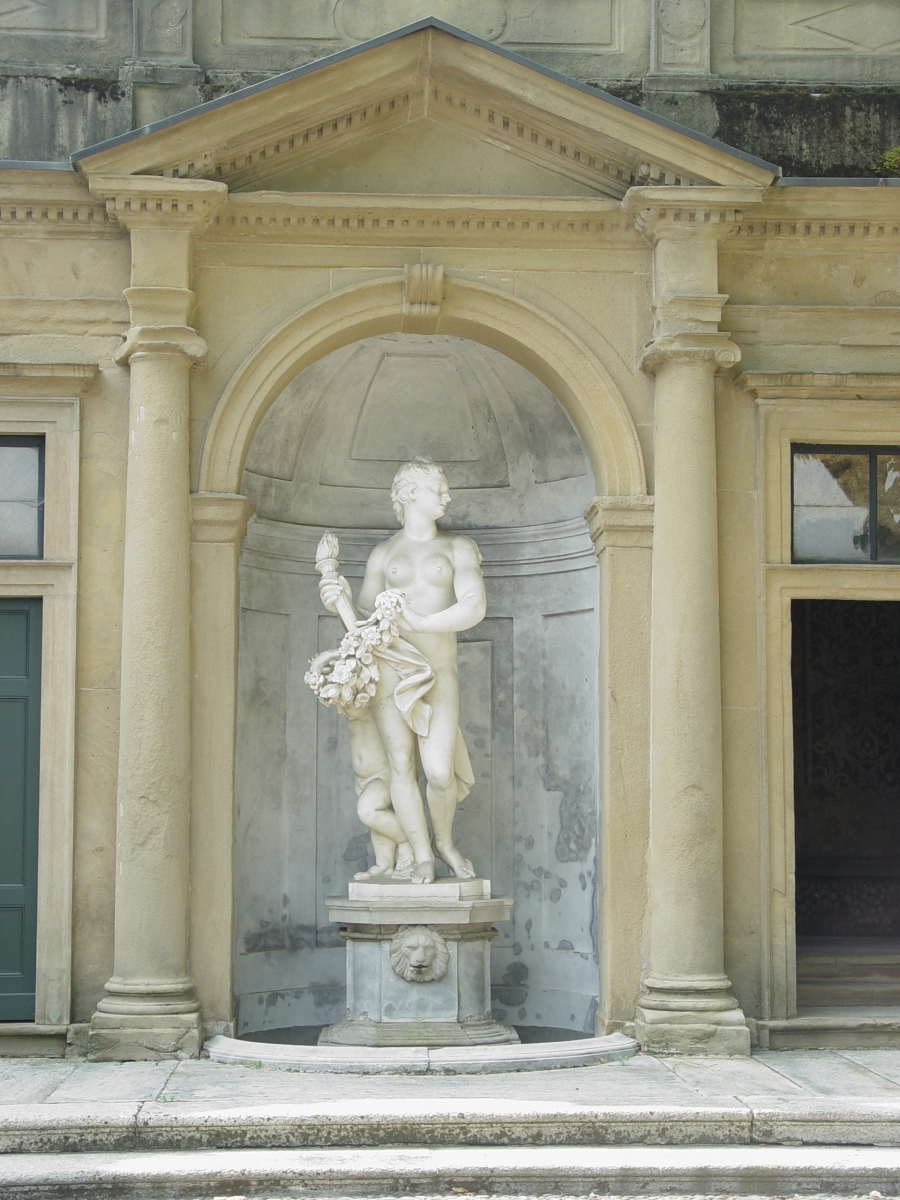
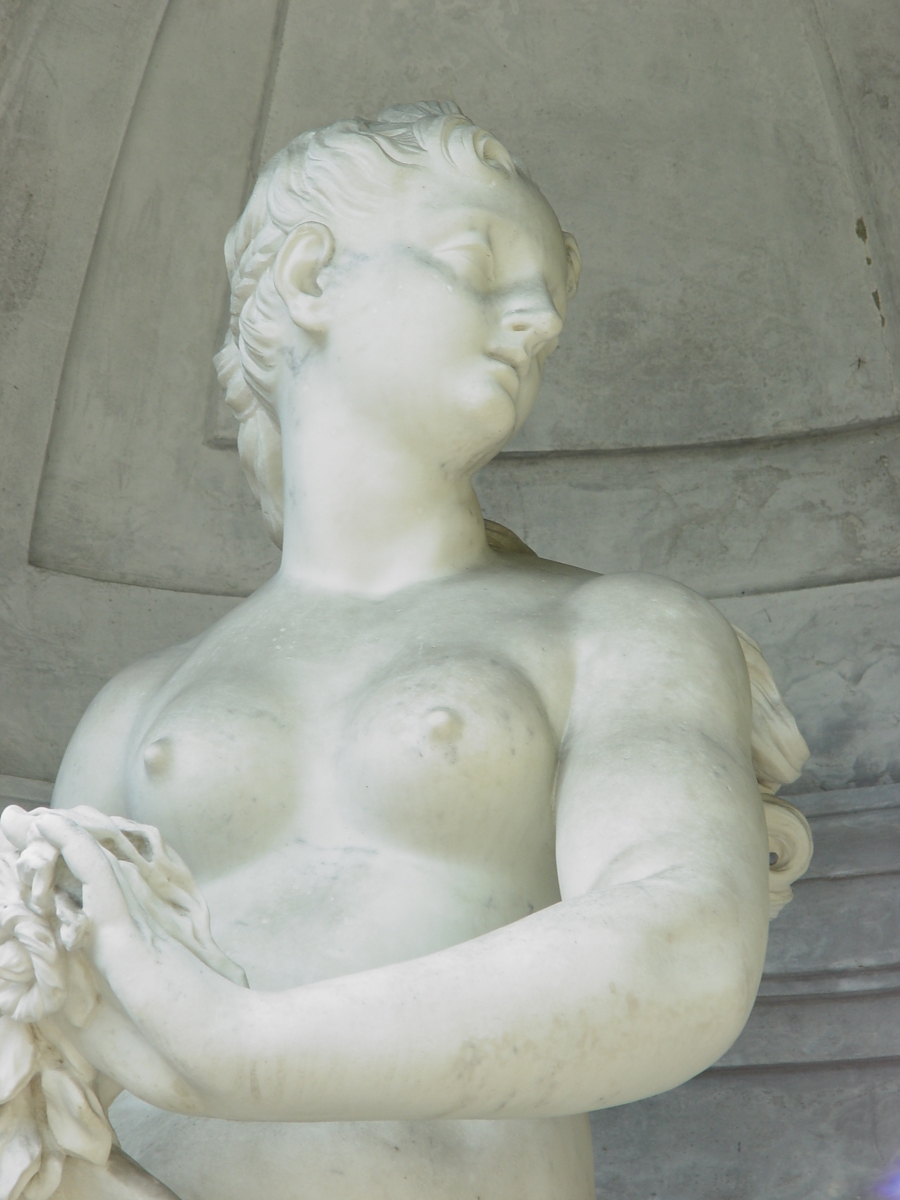
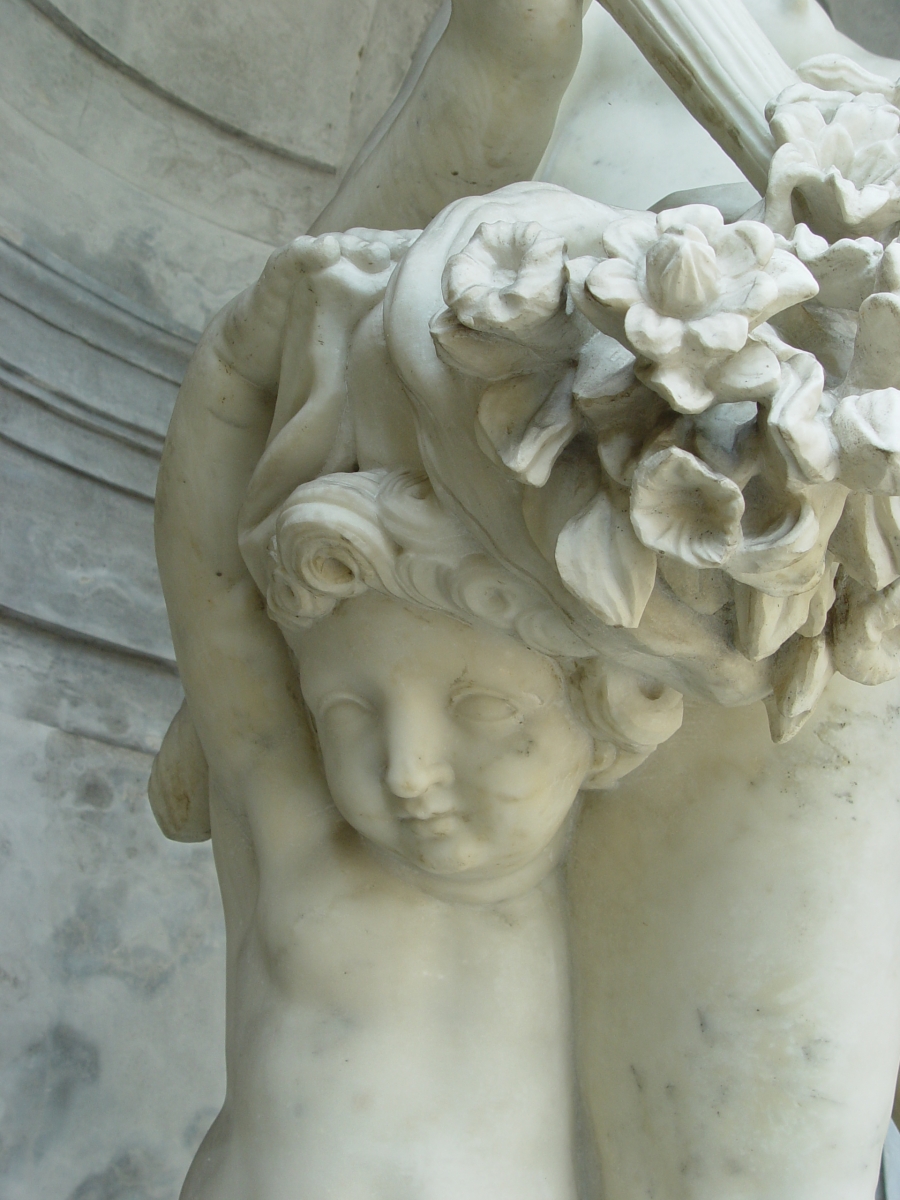
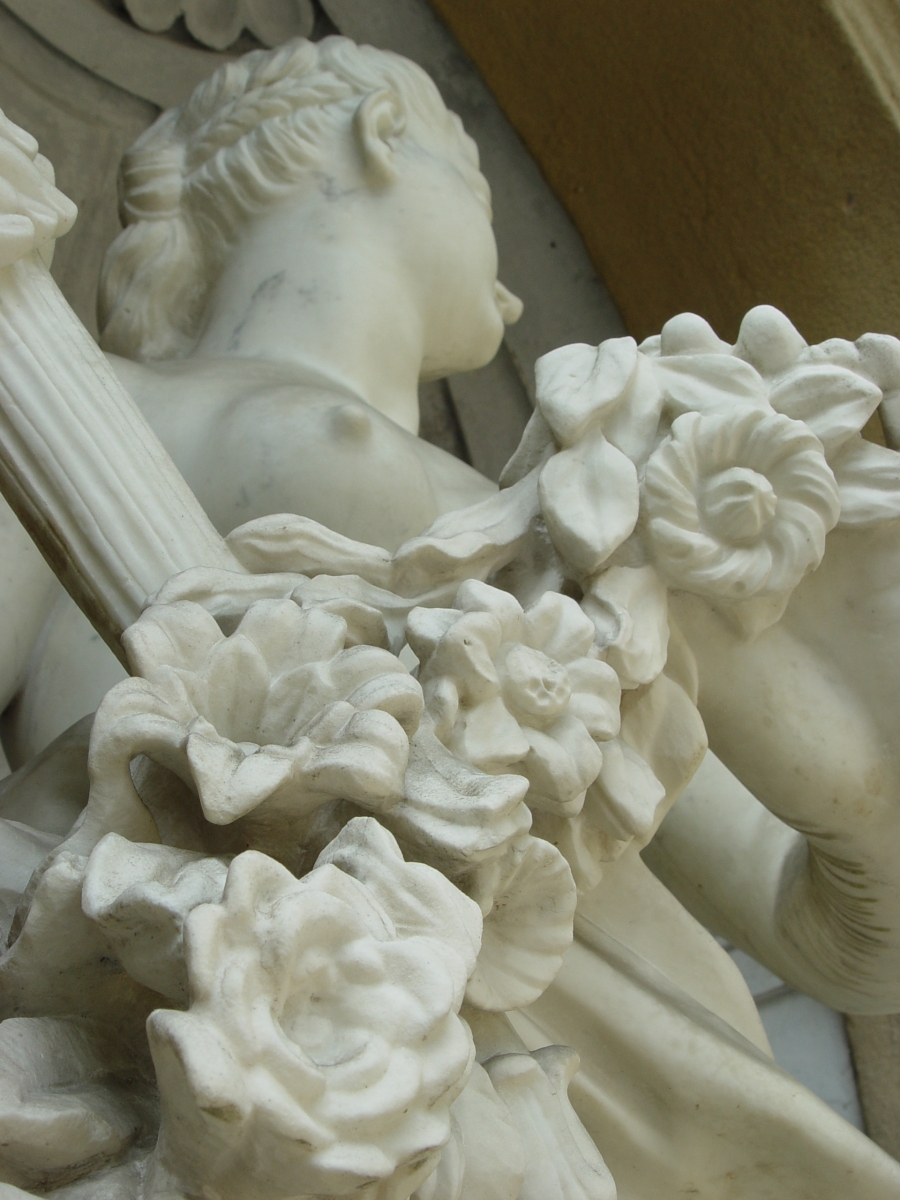
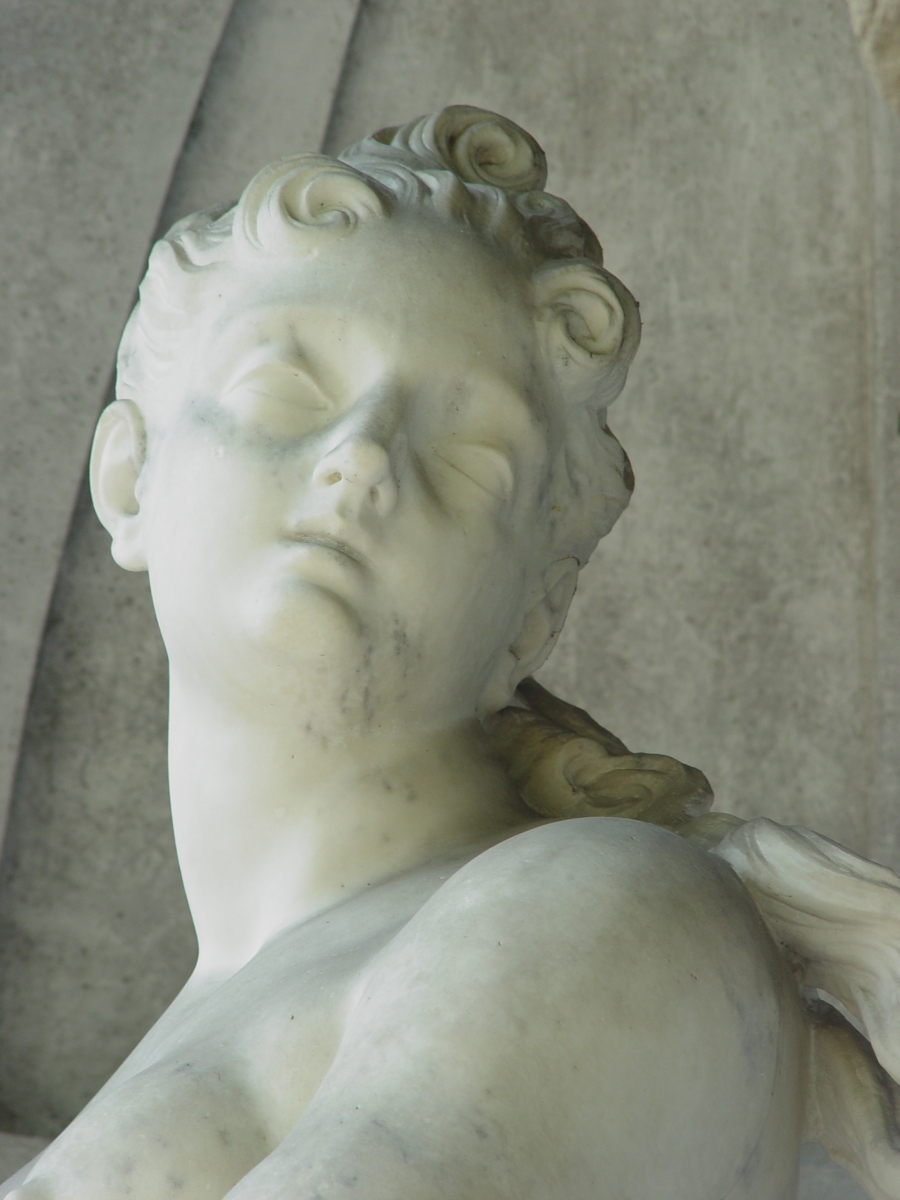
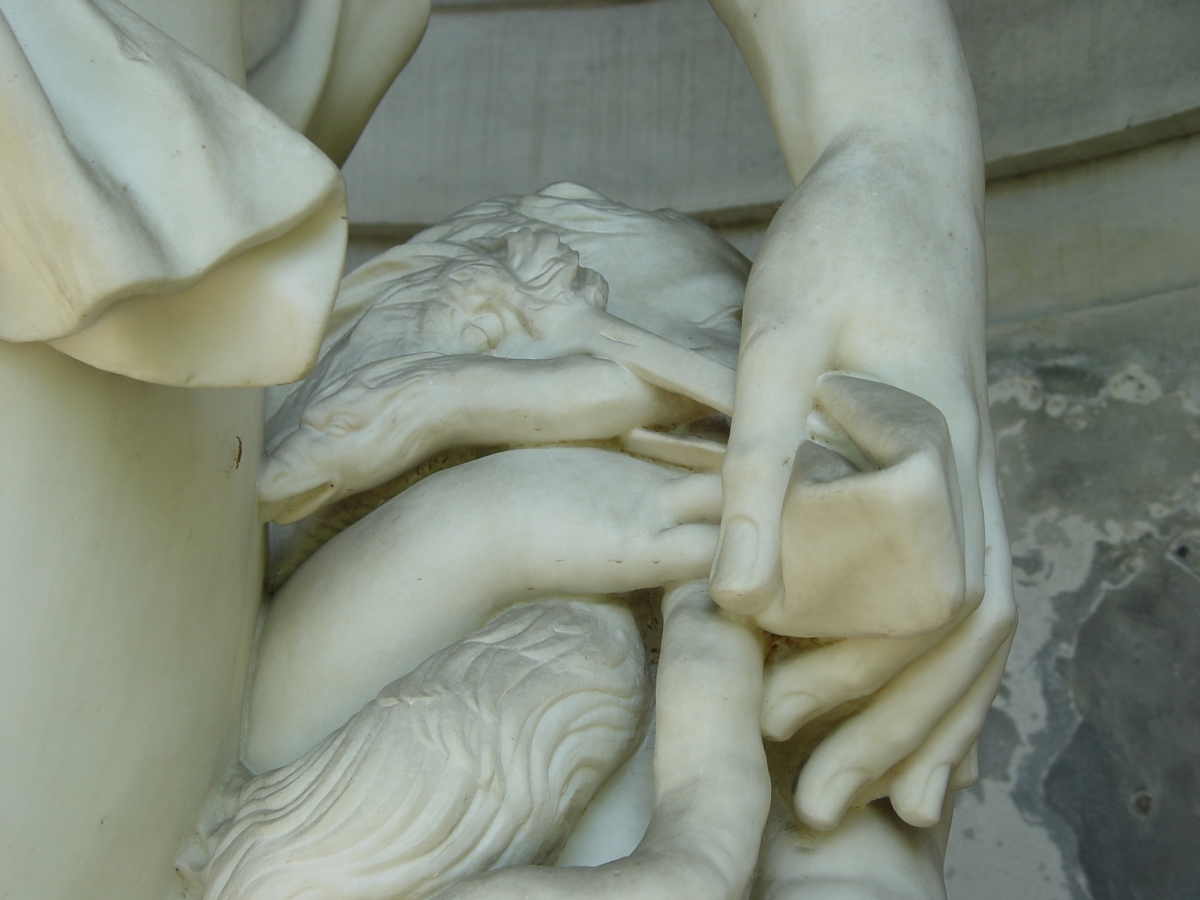
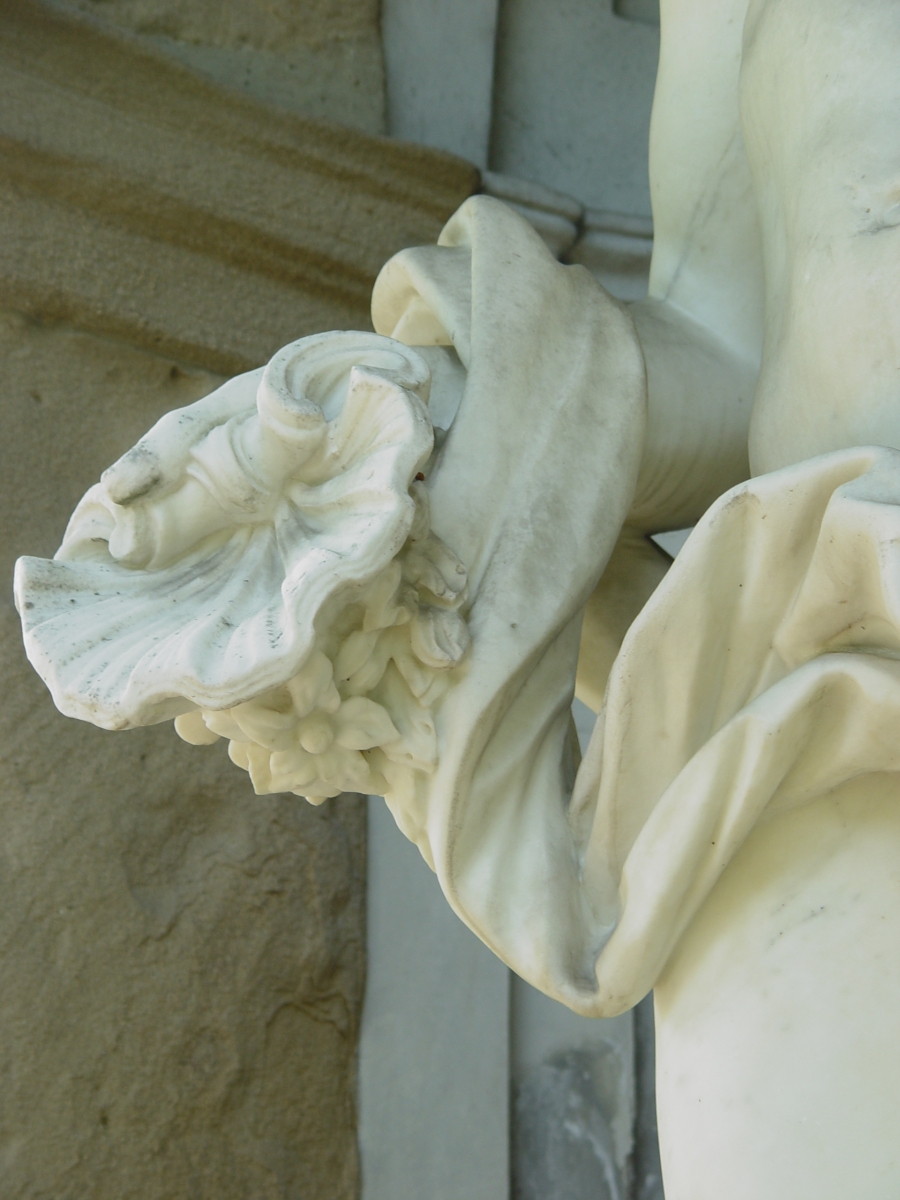
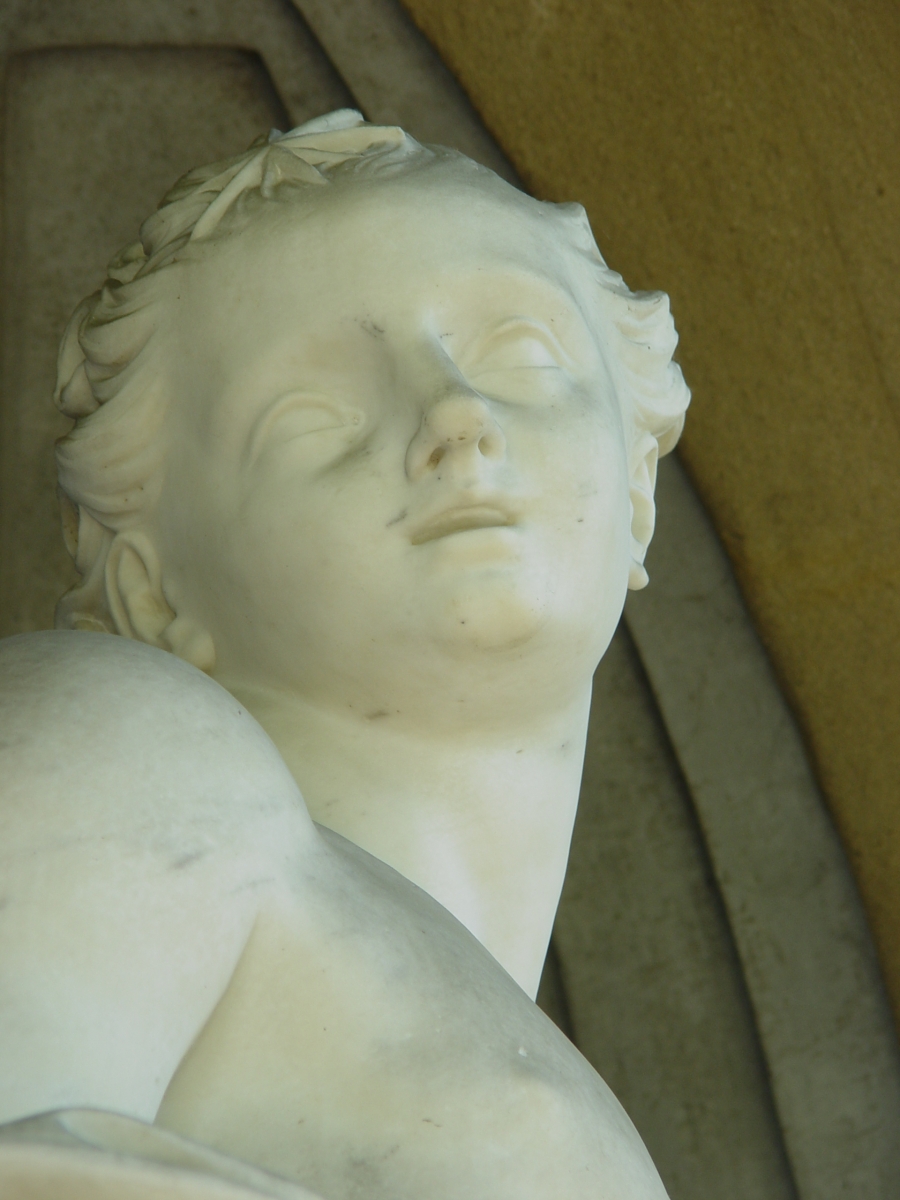
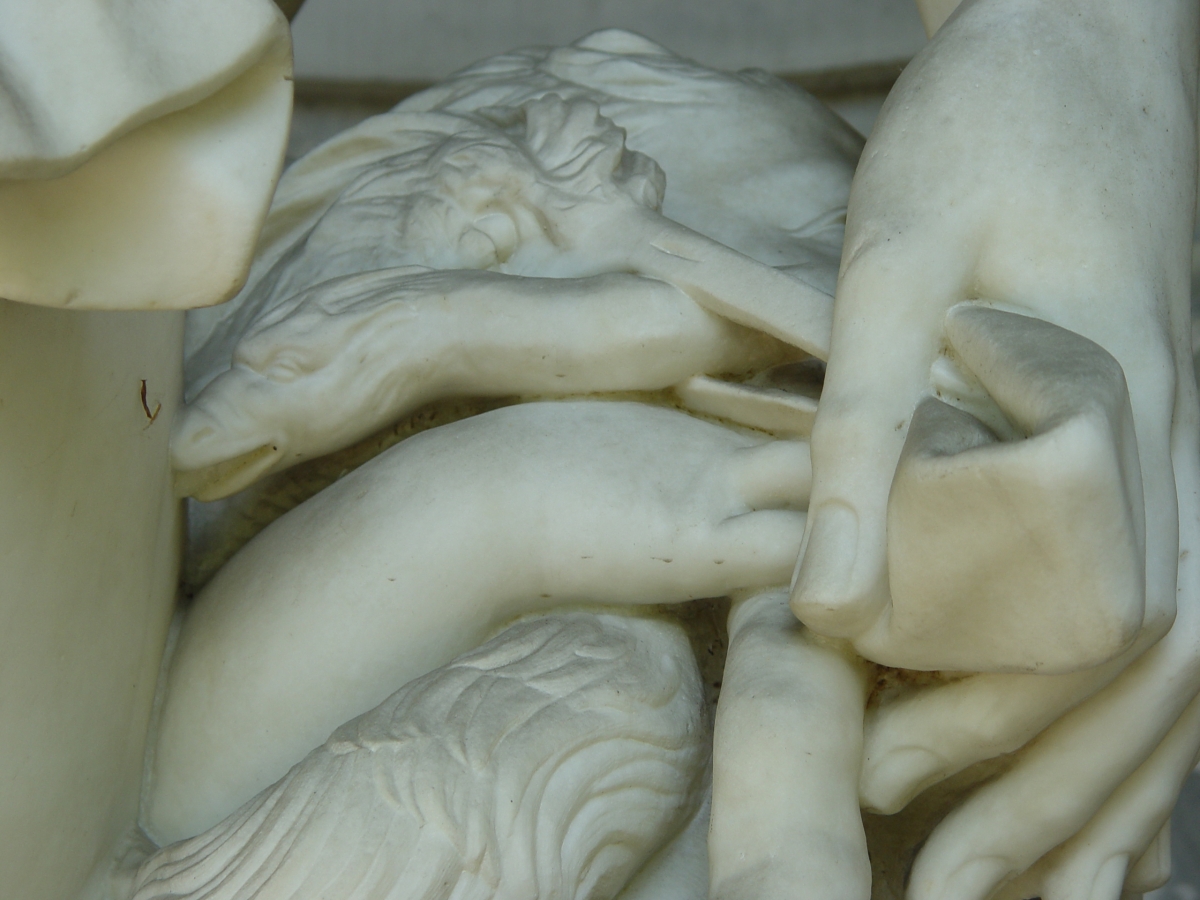
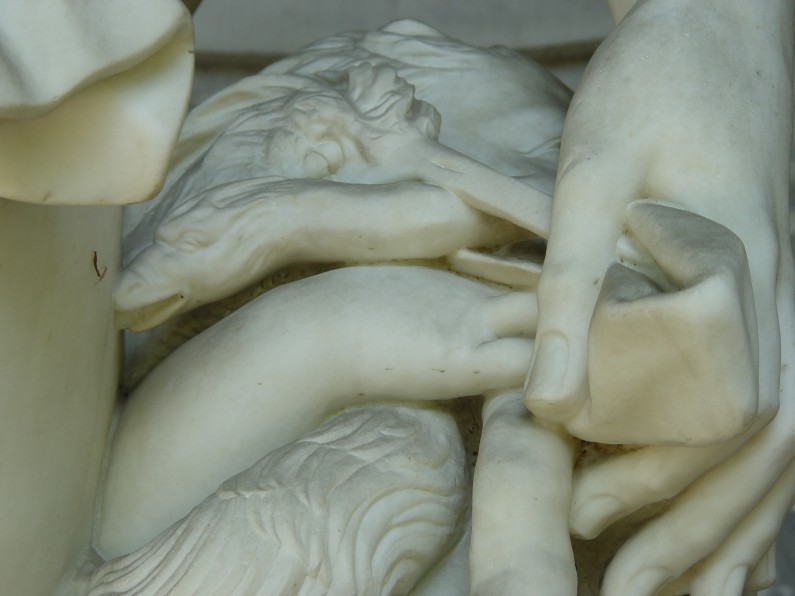
Nella nicchia ad est è raffigurata l’immagine del “Mattino”, rappresentato simbolicamente da una giovane donna in posizione frontale, col il volto rivolto verso destra e i lunghi capelli intrecciati dietro la nuca. Il corpo nudo della fanciulla è coperto solo sul ventre dal lembo di un panneggio che gira intorno al suo corpo, nascondendo anche le natiche, sorretto da un piccolo putto nudo posto dietro la sua gamba destra. La figura tiene entrambe le braccia sollevate dinnanzi a sé: nella mano destra regge una fiaccola accesa, mentre con la sinistra sostiene delicatamente una corolla di fiori. Nella nicchia ad ovest, è invece raffigurata l’immagine del “Vespro”, rappresentato da un giovane in posa frontale, con il volto rivolto verso sinistra. L’uomo, nudo, ha il ventre coperto da un sottile panneggio che corre intorno alla sua figura sostenuto dal braccio destro e dalla mano sinistra. Nella mano destra, sporta in avanti, il giovane regge una conchiglia cui sono legati alcuni fiori e foglie. Dietro la sua gamba sinistra è nascosta la figura di un putto, che regge tra le braccia un groviglio di rami su cui è appollaiato un volatile, di cui si intravede il piumaggio tra le braccia del bambino.
Il tema dei due momenti opposti della giornata, alba e tramonto, è uno dei soggetti iconografici più rappresentati in scultura fin dall’antichità, con precisi riferimenti simbolici e religiosi alla mitologia pagana. All’interno del Ninfeo, nel cosiddetto “Atrio del sedile”, altre due sculture in stucco poste sopra una montagnola in travertino raffigurano il medesimo soggetto: si tratta di copie dell’“Aurora” e del “Crepuscolo” scolpiti da Michelangelo Buonarroti tra il 1524 e il 1527 all’interno della Sagrestia Nuova di S. Lorenzo a Firenze, ad ornamento della tomba di Lorenzo il Magnifico.
The north façade of the Nymphaeum was originally separated from the garden by six marble columns adorned with bronze sculptures of natural height depicting mythological gods: two of them, a “Venus” and a “Bacchus” were bought at the beginning of the 20th century by Andrew W. Mellon, Secretary of the Treasury of the United States, for his private collection and are now kept at the National Gallery in Washington. The other four, depicting Jupiter, Juno, Pluto and Proserpina are dispersed.
The north façade of the building consists of two long walls covered with symmetrical sandstone, and which today is heavily depleted of its sculptural heritage, down to only two allegorical sculptures in white marble placed inside niches at the two ends of the complex, above two small basins with fountains.
In the niche to the right is a depiction of “Morning,” symbolized by a young woman facing forward with her face turned to the right and her long hair twisted behind her head. The naked body of the girl is covered only by a piece of drapery on the belly, which turns around her body, hiding the buttocks supported by a small naked cherub positioned behind her right leg. The figure holds both arms raised before her: in her right hand is a burning torch, while her left hand gently supports a corolla of flowers. The niche to the left contains an image of “Vesper,” represented by a young man facing forward with his face turned to the left. The naked man has his belly covered with a thin piece of drapery running around his figure, supported by the right arm and left hand. With his right hand, he leans forward, holding a shell tied with some flowers and leaves. A cherub holding a nest with a perched bird in his hands, as can be seen from the plumage on the cherub’s arms, is hidden behind the young man’s leg.
The theme of the two opposed moments of the day, sunrise and sunset, is one of the most iconographic subjects represented in sculpture since ancient times, with precise symbolic references to religious and pagan mythology. Inside the Nymphaeum, in the “Atrium of the seat,” two sculptures in plaster placed on a travertine mound depict the same subject: these are copies of the “Aurora” and the “Twilight” sculpted by Michelangelo between 1524 and 1527, which can be found in the New Sacristy of San Lorenzo in Florence, used to adorn the tomb of Lorenzo the Magnificent.