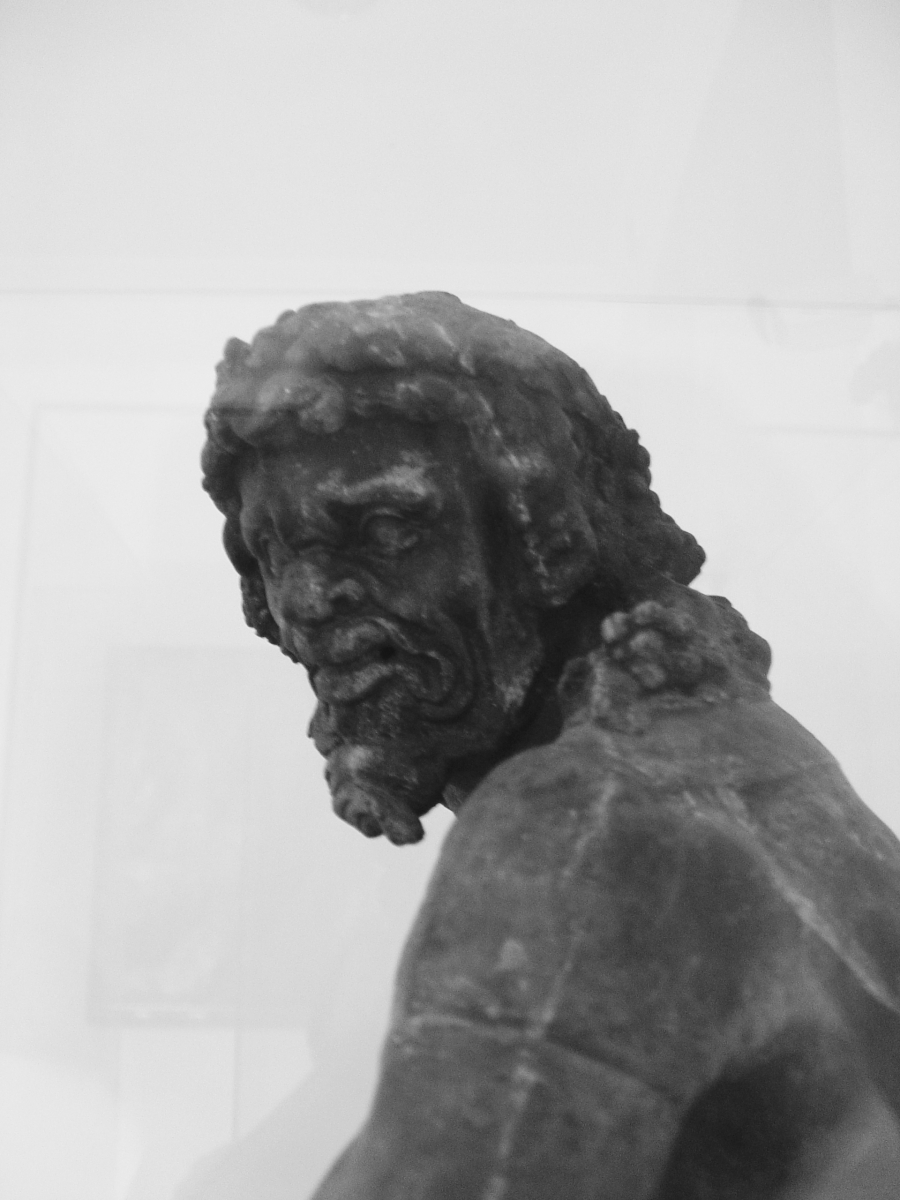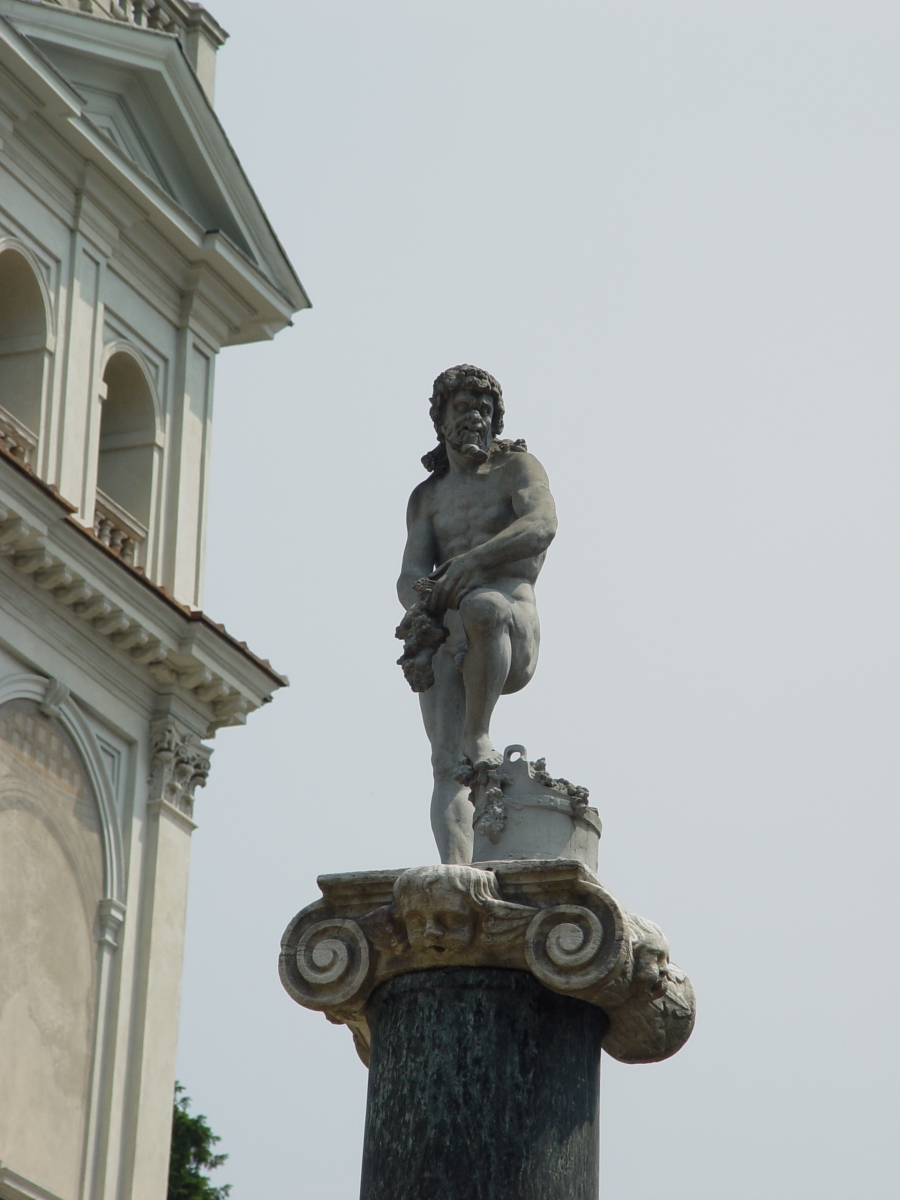
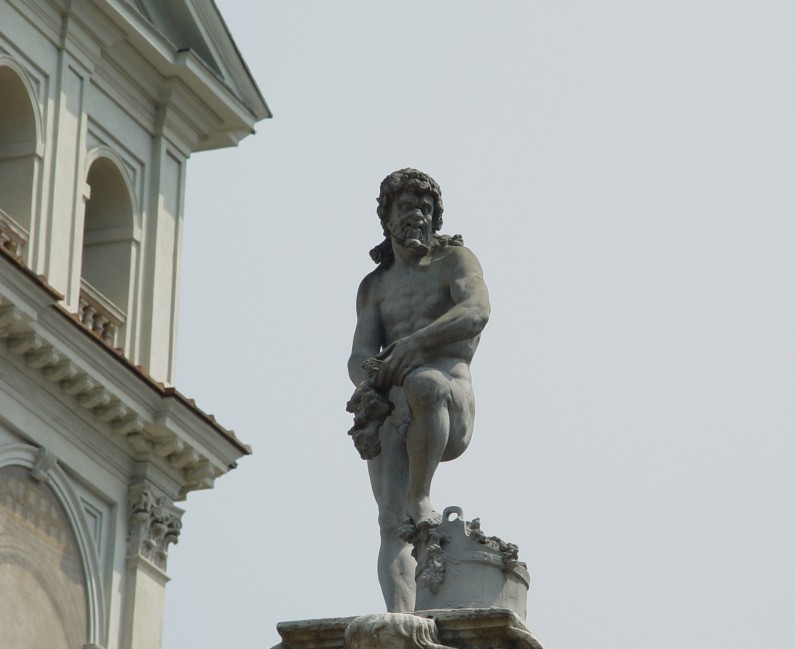
La scultura in piombo rappresenta una figura maschile in piedi, priva di vesti, con la testa rivolta verso destra. Tra le mani l’uomo regge dei grappoli d’uva, probabilmente raccolti dal secchio pieno appoggiato a terra, sotto il suo piede sinistro. Il soggetto è stato variamente identificato come la divinità romana Bacco o, a causa del suo volto stranamente deformato e mostruoso, come Sileno, una divinità minore dei boschi, figlio del dio silvestre Pan e di una ninfa.
Spesso raffigurato con attributi fisionomici animaleschi, questo personaggio era, nella tradizione mitologica greca, l’educatore di Dioniso giovinetto, da cui la frequente rappresentazione in stato di ubriachezza. Le leggende narrano infatti che dopo aver svolto il suo compito di accompagnare il giovane dio nel suo cammino di crescita, Sileno si abbandonò completamente al vizio del bere.
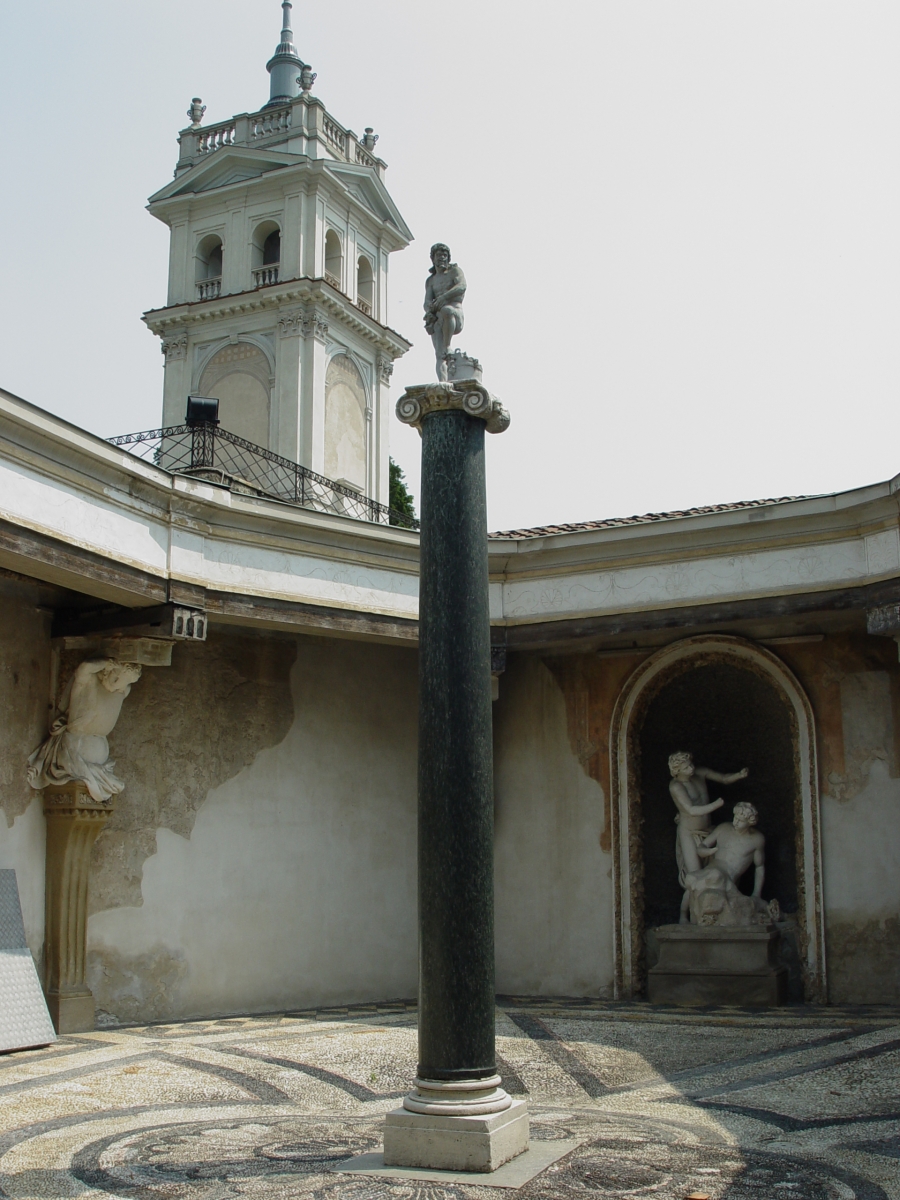
L’opera collocata all’interno del “Corridoio delle statue”, originariamente era posizionata all’interno del “Cortile delle Piogge” del Ninfeo di Villa Litta, un ambiente dalla forma ottagonale ricco di giochi d’acqua. Qui, al centro della piccola corte, si staglia una liscia colonna, sopra la quale oggi spicca la versione marmorea dell’opera.
Recentemente alcuni storici hanno ipotizzato che la scultura oggi custodita all’interno della villa, costituisca una copia di una più antica statua. Il dato si raccorda, dunque, con quanti riconoscono nella scultura raffigurante Bacco-Sileno venduta dalla casa d’aste Sotheby’s di Londra nel dicembre 2008 un’opera proveniente dalle collezioni di Villa Visconti Borromeo Litta. In questo caso si tratta di una scultura alta circa un metro venduta come opera di un artista fiammingo prossimo agli scultori olandesi Adriaen de Vries (1560-1626) o Willem Danielsz van Tetrode (1530-1587), conosciuto in Italia anche con il nome di Guglielmo Fiammingo. Quest’opera, acquistata nella prima metà del Seicento dai nobili di Lainate per arricchire la collezione di sculture presenti in villa, apparterebbe alla lunga lista di opere confluite in collezioni museali e private di tutto il mondo, a seguito delle dispersioni novecentesche, che solo recentemente sono state restituite dalla critica ad una produzione lombarda del modello e della relativa fusione in bronzo.
Le relazioni esistenti tra queste tre statue, la scultura posta nella “Galleria delle Statue”, la copia marmorea collocata nel “Cortile delle Piogge” del Ninfeo e l’opera cinquecentesca venduta a Londra, meriterebbero, tuttavia, studi più approfonditi. Questi, oltre ad aiutare a comprendere ulteriormente il patrimonio artistico disperso afferente alla villa lainatese, contribuirebbero anche alla conoscenza del collezionismo artistico delle famiglie nobili lombarde del XVI-XVII secolo e della passione dimostrata dai musei e amanti dell’arte della prima metà del XX secolo nei confronti degli artisti italiani e stranieri attivi in Lombardia nei secoli precedenti.
The lead sculpture is a naked male figure standing with his head turned to the right. The man is holding some grapes in his hands, probably picked from the bucket resting on the ground under his left foot. The subject has been variously identified as the Roman god, Bacchus, or because his face is strangely deformed and monstrous, as Silenus, a minor god of the woods, son of the god, Pan, and a woodland nymph.
Often depicted with animal physiognomy, this character of Greek mythology, was the tutor of Dionysus as a youth, hence his frequent representation in a drunken state. Legends narrate that after completing his task of accompanying the young god in his journey of growth, Silenus abandoned himself completely to the vice of drinking.
The sculpture positioned in the Hall of Sculptures, was originally placed in the “Courtyard of the Rains” of the Nymphaeum of Villa Visconti Borromeo Litta, an environment rich in the octagonal fountains. In the centre of the small courtyard stands a smooth column, where a marble version of this sculpture rests. Recently, some historians have speculated that the sculpture now kept inside the villa, was a copy of an ancient statue. The figure is linked, therefore, to the sculpture of Bacchus-Silenus sold by the auction house, Sotheby’s, in London in December 2008 as part of the artwork collection of Villa Visconti Borromeo Litta. In this case, the sculpture is about a meter in height sold as the work of a Flemish artist close to Dutch sculptors, Adriaen de Vries (1560-1626) and Willem van Danielsz Tetrode (1530-1587) known in Italy as Guglielmo Fiammingo. This work which was bought in the early 17th century by the nobles of Lainate to enrich the collection of sculptures of the villa, belonged to a long list of works that have emerged in museums and private collections around the world following the dispersions of the 20th century. It was only recently recognized by critics as the model made in Lombardy and its bronze casting.
The relationship between these three statues, the sculpture placed in the Gallery of the Statues, the marble copy placed in the Courtyard of the Rains of the Nymphaeum and the 16th-century work sold in London, deserve a more detailed study. In addition to helping in the further understanding of the artistic heritage of the Villa in Lainate that has been lost, these would also contribute to the knowledge of the art-collecting tendencies of the noble families of Lombardy of the 16th and 17th centuries and the passion shown by museums and art lovers in the first half of the 20th century for Italian and foreign artists active in Lombardy in previous centuries.