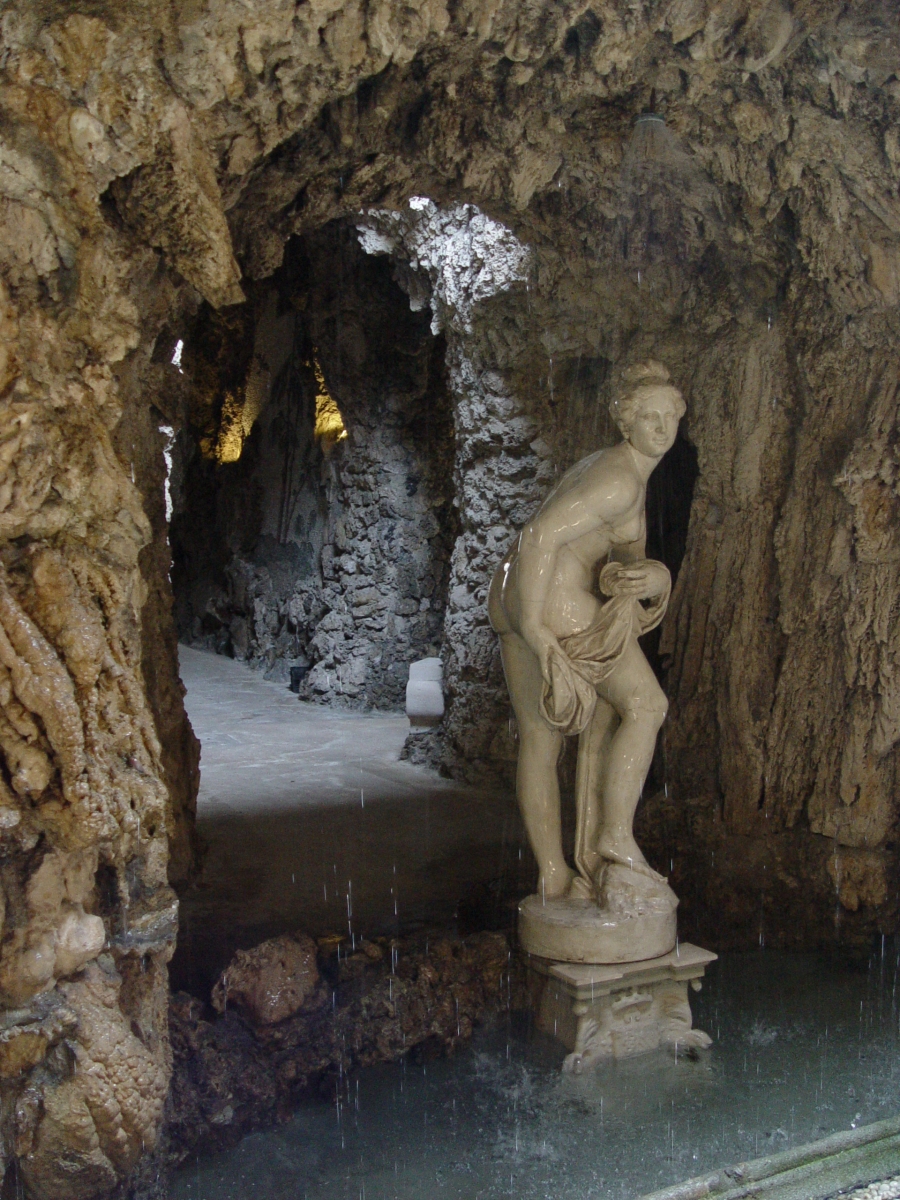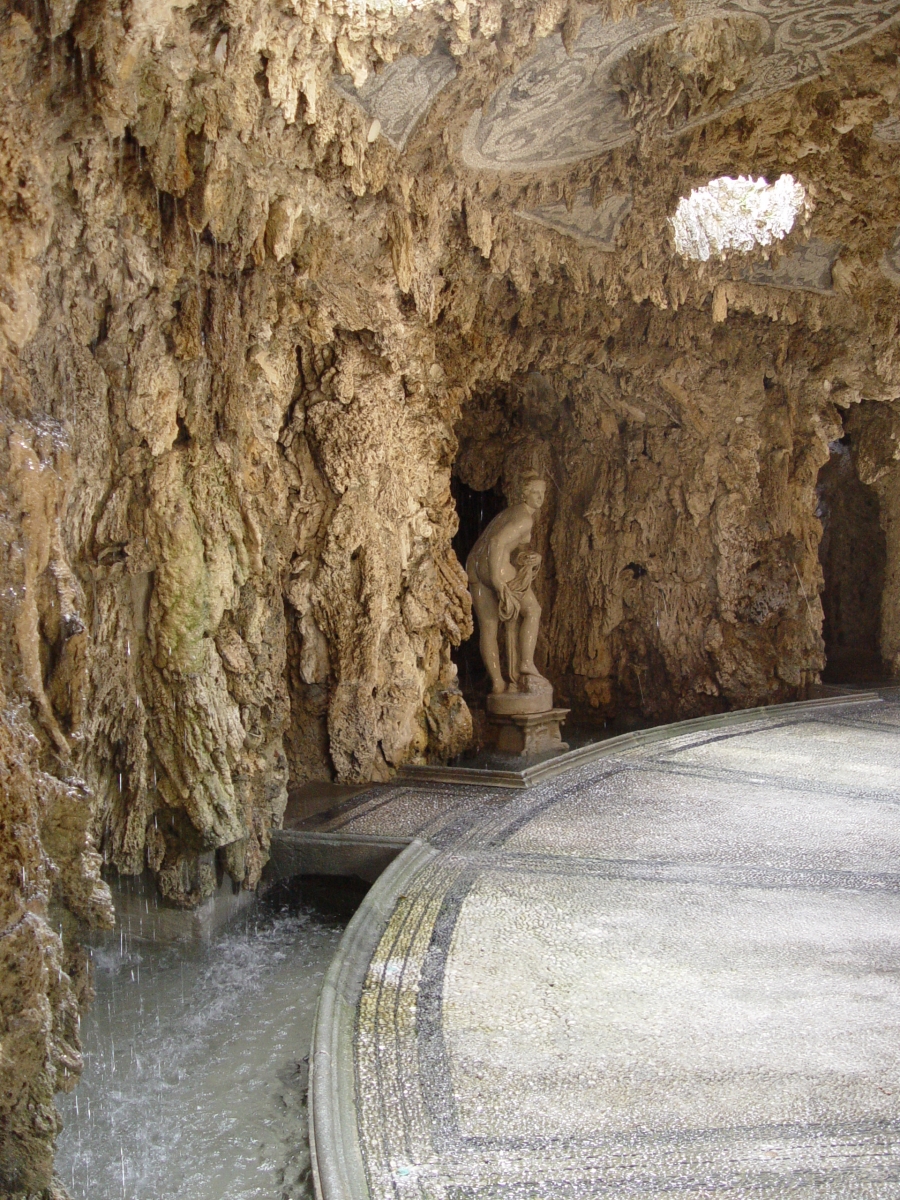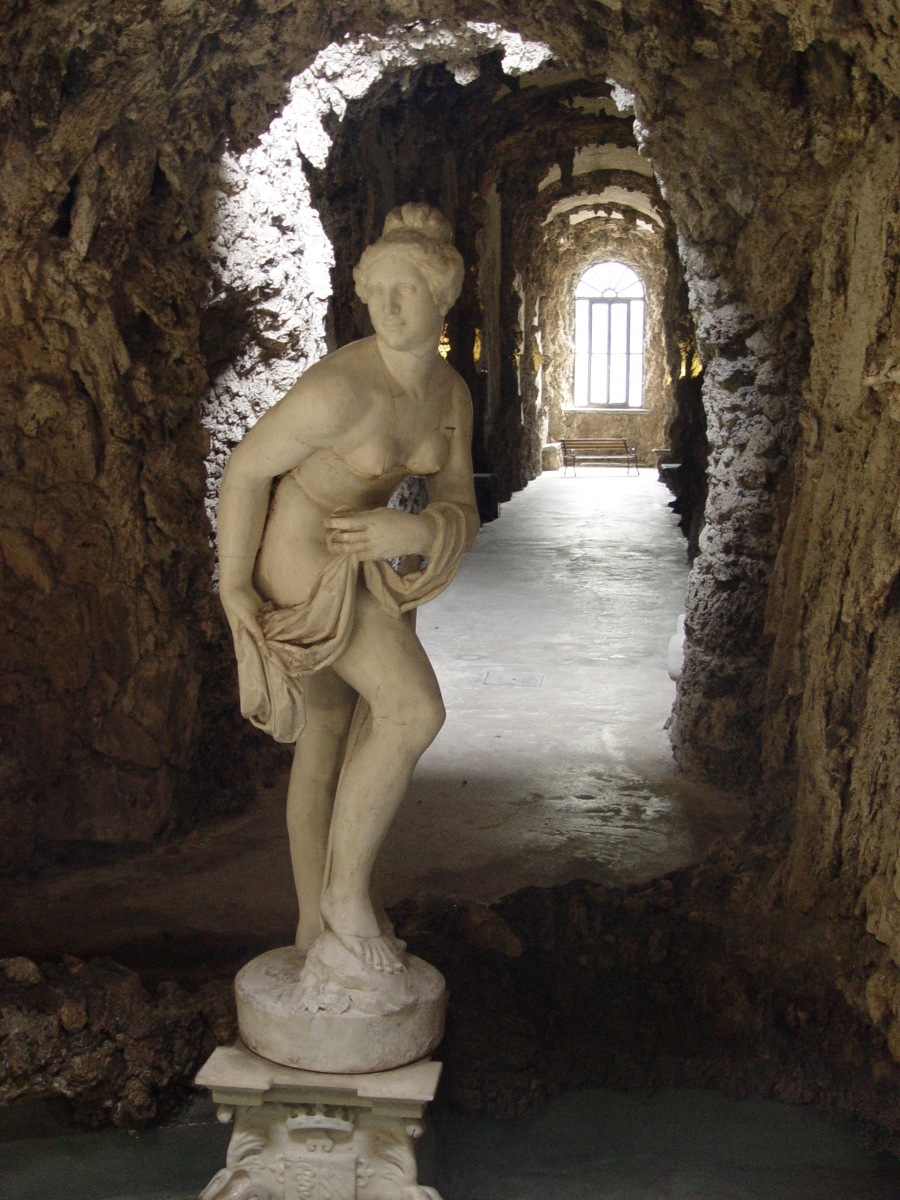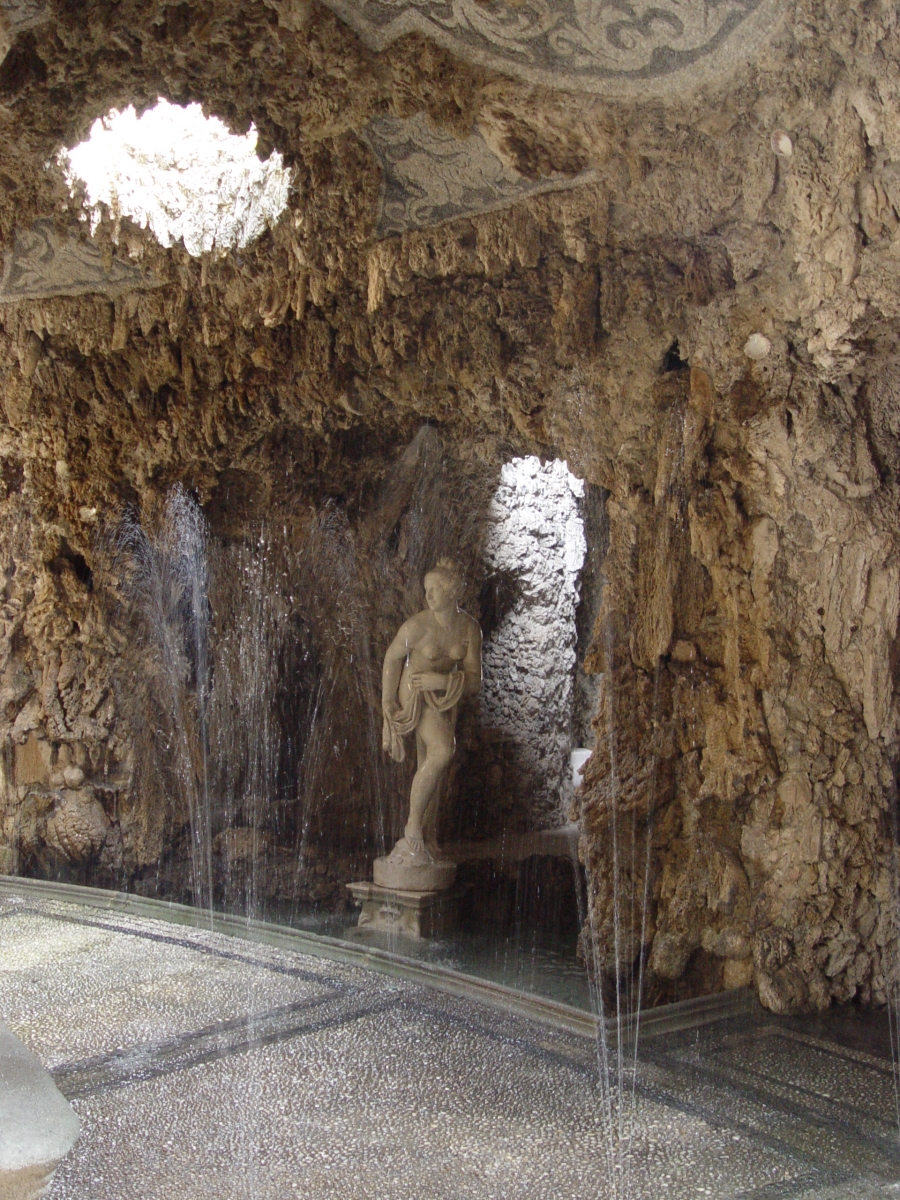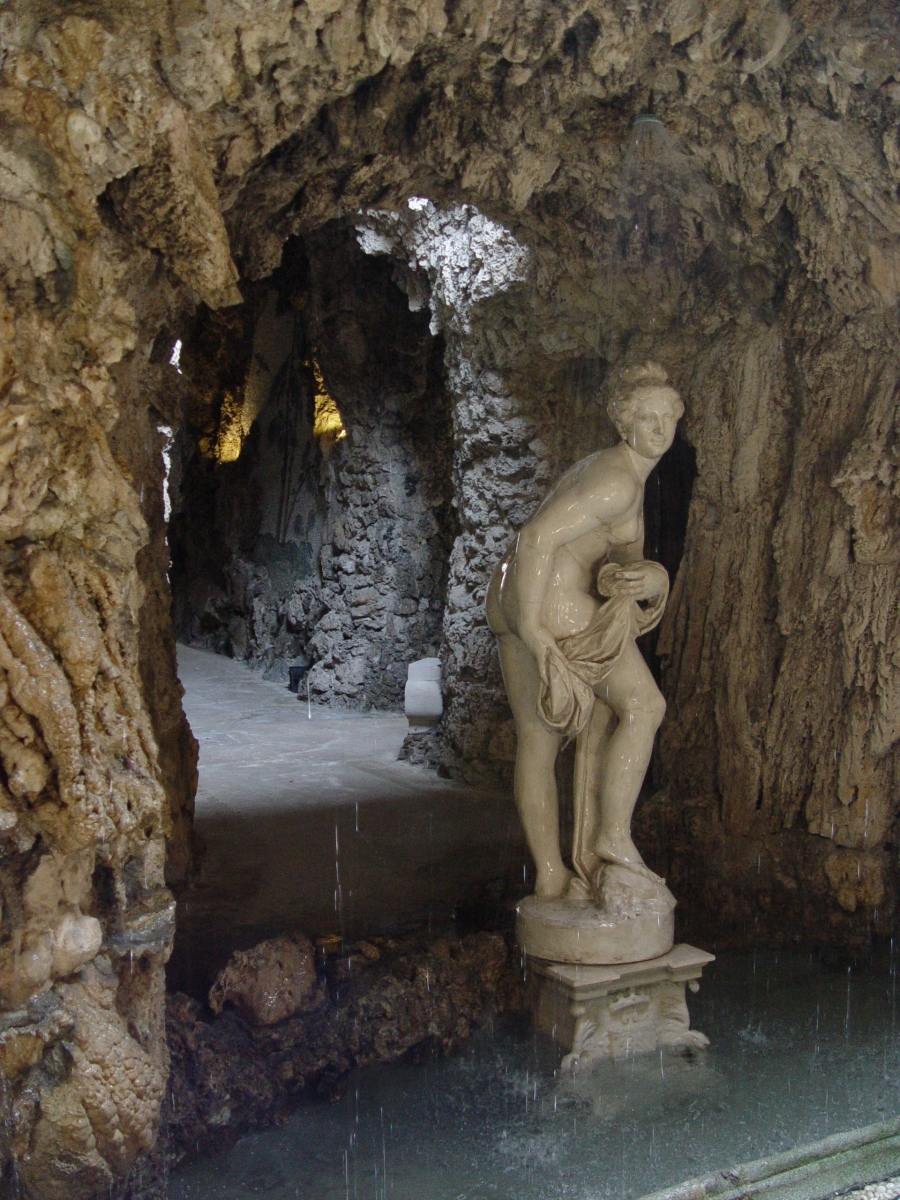
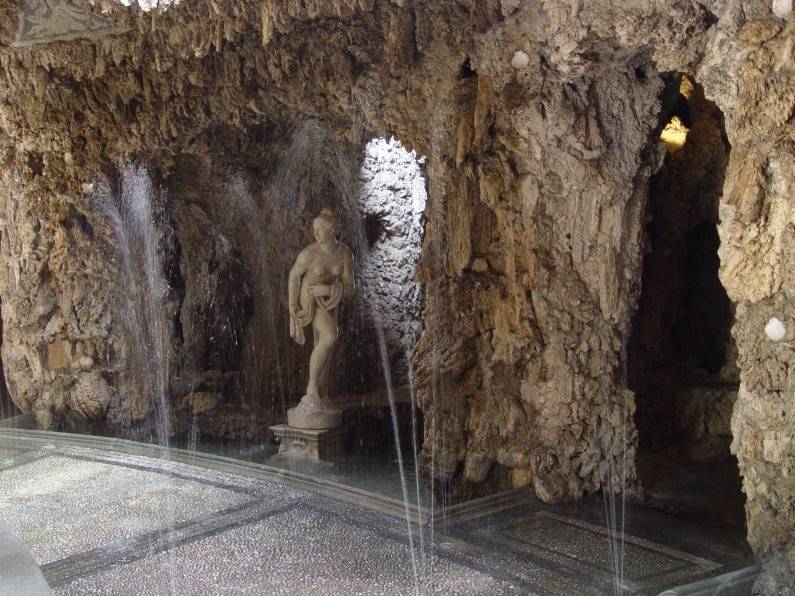
La statua della “Venere al bagno” costituisce una tra le più pregevoli sculture del “Corridoio delle statue”, che originariamente era collocata nelle “Grotte Vecchie” del Ninfeo, nel quale oggi è presente una copia identica all’originale. Questa scultura era stata scolpita per essere scenograficamente disposta nell’emiciclo delle grotte naturali situato nella zona orientale del Ninfeo, insieme ad altre due figure di Naiadi-Veneri realizzate intorno al 1589 da Giulio Cesare Procaccini su disegno dello scultore Francesco Brambilla il Giovane.
Questa “Venere al bagno” viene invece assegnata dalla critica ad un altro scultore attivo nel complesso, il comasco Marco Antonio Prestinari (morto nel 1621), sulla base delle similitudini con l’“Adone”, da lui scolpito nel marmo nel 1602 per il giardino del Ninfeo e oggi conservato al Musée du Louvre di Parigi. In entrambe queste opere, infatti, Prestinari traduce i modelli del Brambilla con un linguaggio differente da quello procacciniano e più vicino alle sculture del celebre artista Giambologna, di cui riprende in maniera evidente l’opera “Venus Urania” (1575), oggi conservata al Kunsthistorisches Museum di Vienna. Tutte queste sculture tradiscono una certa suggestione della “Leda” di Leonardo, così come poteva essere percepita studiando il cartone dell’artista allora conservato a Milano nella Collezione Leoni (e oggi perduto), oppure le numerose traduzioni pittoriche fatte dagli allievi del maestro fiorentino. Sicuramente Giovanni Paolo Lomazzo, regista insieme a Pirro I Visconti Borromeo del piano iconografico e decorativo del Ninfeo, doveva aver sostenuto una certa vena leonardesca negli scultori attivi all’interno della villa. In particolare nei suoi numerosi scritti appare chiaro come egli considerasse “Leda” come un vertice di perfezione estetico-culturale e come un supremo modello da seguire per raffigurare Venere, i cui volti regolari e affilati presentano il caratteristico ed enigmatico sorriso delle dame leonardesche, così come la stessa attenta definizione delle morbide acconciature a ciocche ondulate.
Splendido esempio di scultura cinque-seicentesca, la scultura della Venere si è guadagnata negli anni l’appellativo popolare di “Vegia Tuntona”, che nel dialetto locale significa “Vecchia Tentatrice”. Le tradizioni orali, infatti, raccontano che i lainatesi, che non avevano accesso agli ambienti della villa e del parco pertinenziali, si arrampicavano appositamente sul muro esterno del Ninfeo per guardare all’interno dell’unica finestra aperta sulla città, dalla quale si poteva scorgere in controluce la sagoma sinuosa della dea in posa lasciva mentre veniva bagnata dagli spruzzi d’acqua, apparendo come un’irresistibile tentatrice, immobile e irraggiungibile.
The statue of “Venus in the bath” is one of the most prestigious sculptures of the “Corridor of Statues” which was originally placed in the “Old Grottos” of the Nymphaeum which today has a copy of the original.
This sculpture had been produced so as to be scenically placed in the semicircle of the natural grottos located in the eastern zone of the Nymphaeum, together with two other figures of Naiadi-Veneri achieved around 1589 by Giulio Cesare Procaccini based on the design of the sculptor, Francesco Brambilla the Younger. This “Venus in the bath” was instead attributed by critiques to another sculptor, Marco Antonio Prestinari from Como (deceased in 1621) who had worked on the complex, on the basis of its similarities with the statue, “Adonis,” which he sculpted in marble in 1602 for the Nymphaeum garden and today kept in the Louvre Museum in Paris. In both works, in fact, Prestinari translated the models of Brambilla with a different language from that of Procaccini and which came closer to the style of the famous artist, Giambologna, a style that was repeated in an evident manner in the work, “Venus Urania” (1575), today kept at the Kunsthistorisches Museum in Vienna. All these sculptures betray a certain resemblance to the “Leda” of Leonardo, as can be seen upon studying the carton model of the artist, then kept in the Leoni Collection in Milan (but today lost), or in the numerous pictorial traditions executed by the pupils of the Florentine master. To be sure, Giovanni Paolo Lomazzo, director, together with Pirro I Visconti Borromeo of the iconographic and decorative plan of the Nymphaeum, must have sustained a certain leonardesque tendency in the sculptors working in the Villa. In particular, in his numerous writings, it is clear how he sees the “Leda” as the vertex of aesthetic-cultural perfection and a supreme model to be followed to portray Venus, whose regular and sharp features present the characteristic and enigmatic smile of the Leonardo dames, as also the soft hair with wavy curls.
A splendid example of 16th-17th century sculpture, Venus gained over the years, the popular name of Vegia Tuntona, which in the local dialect meant “Old temptress” Oral traditions in fact, narrate that the people of Lainate who were not allowed to enter the villa and its park, climbed the external wall of the Nymphaeum to look inside the only window opening out to the town, and from which one could see against the light, the sinuous profile of the goddess in a tempting stance, while she was sprinkled by the spurts of water, appearing like an irresistible temptress, immobile and out of reach.