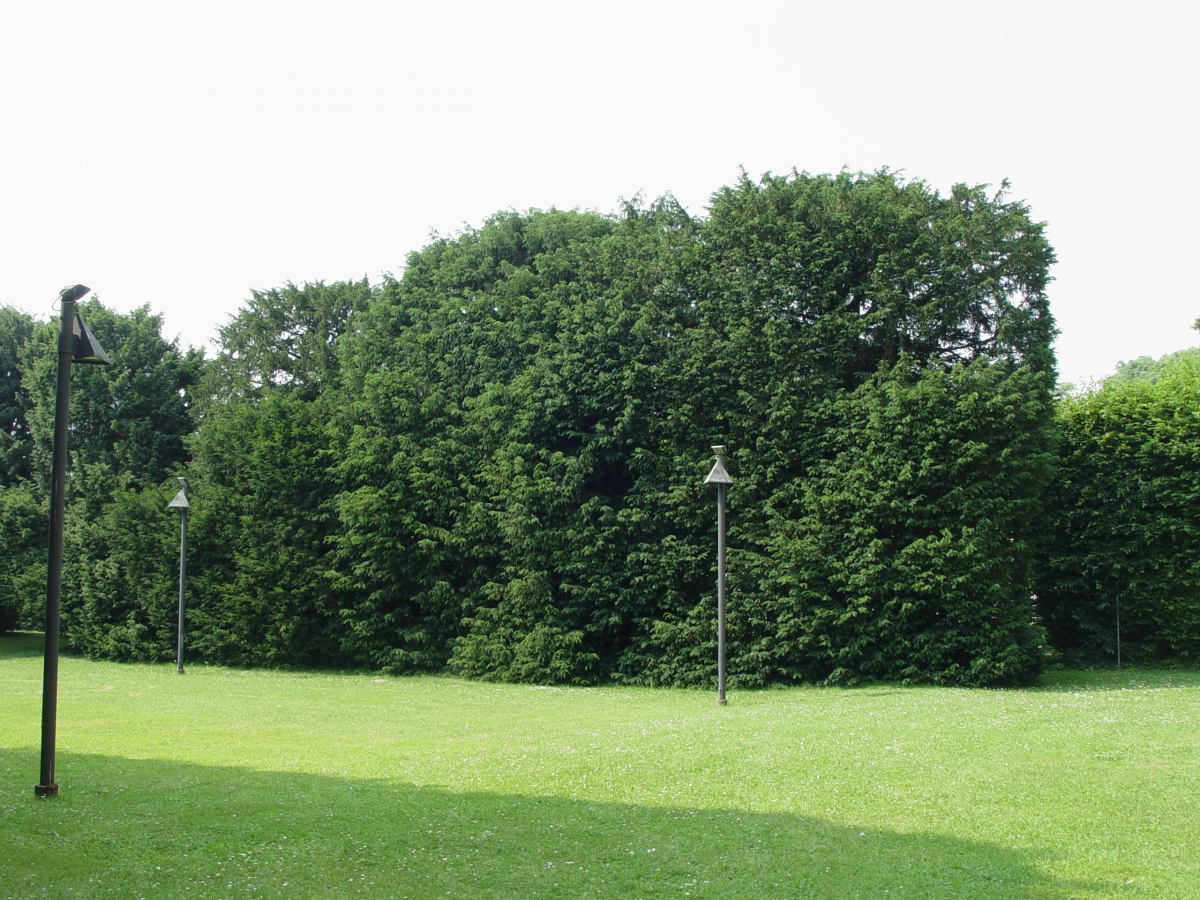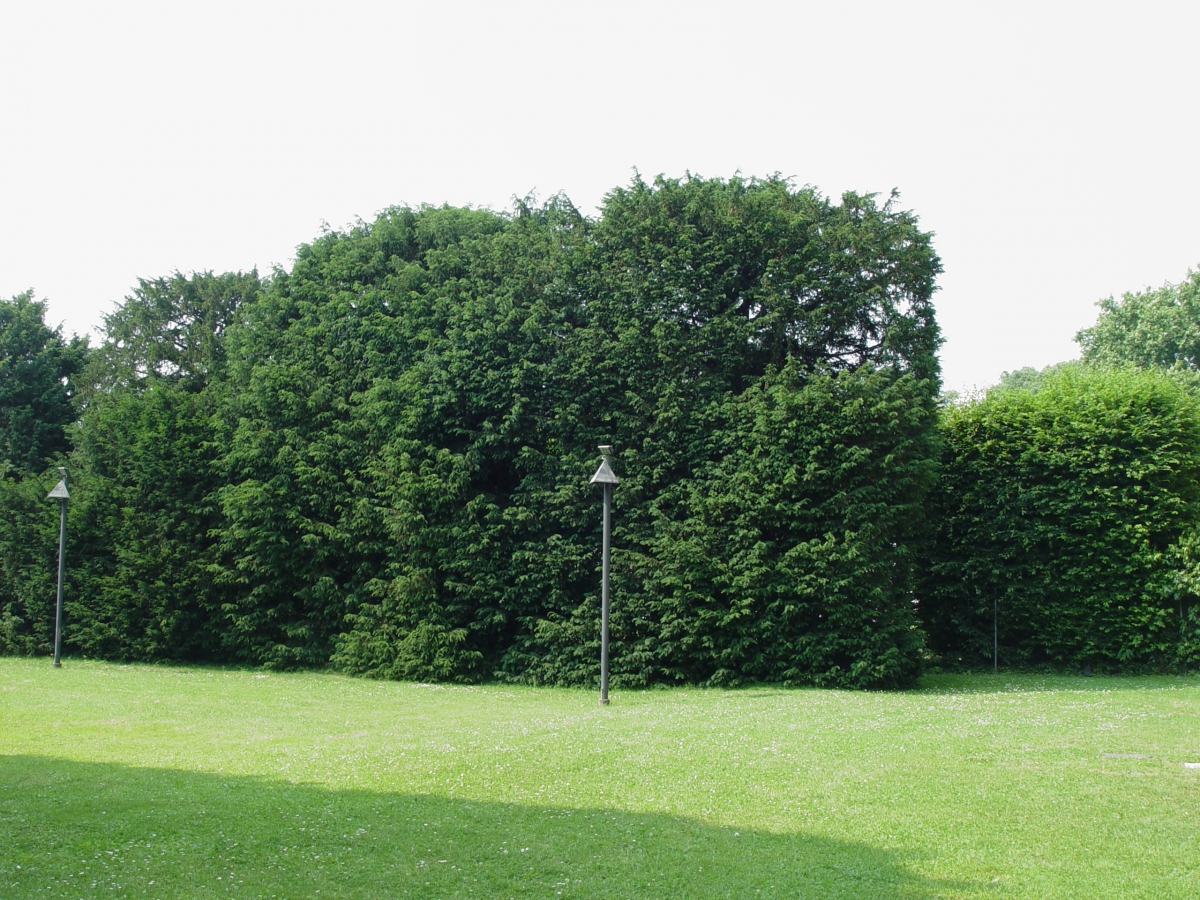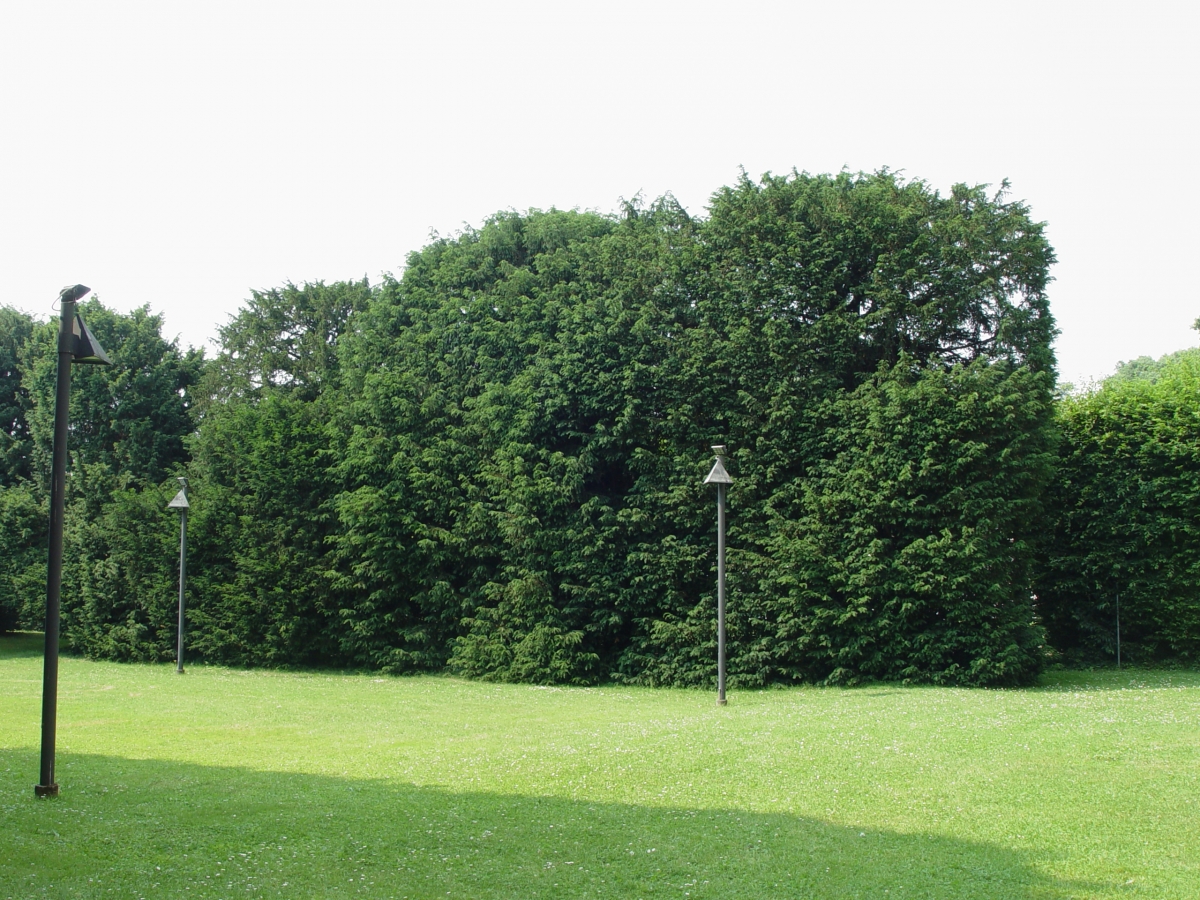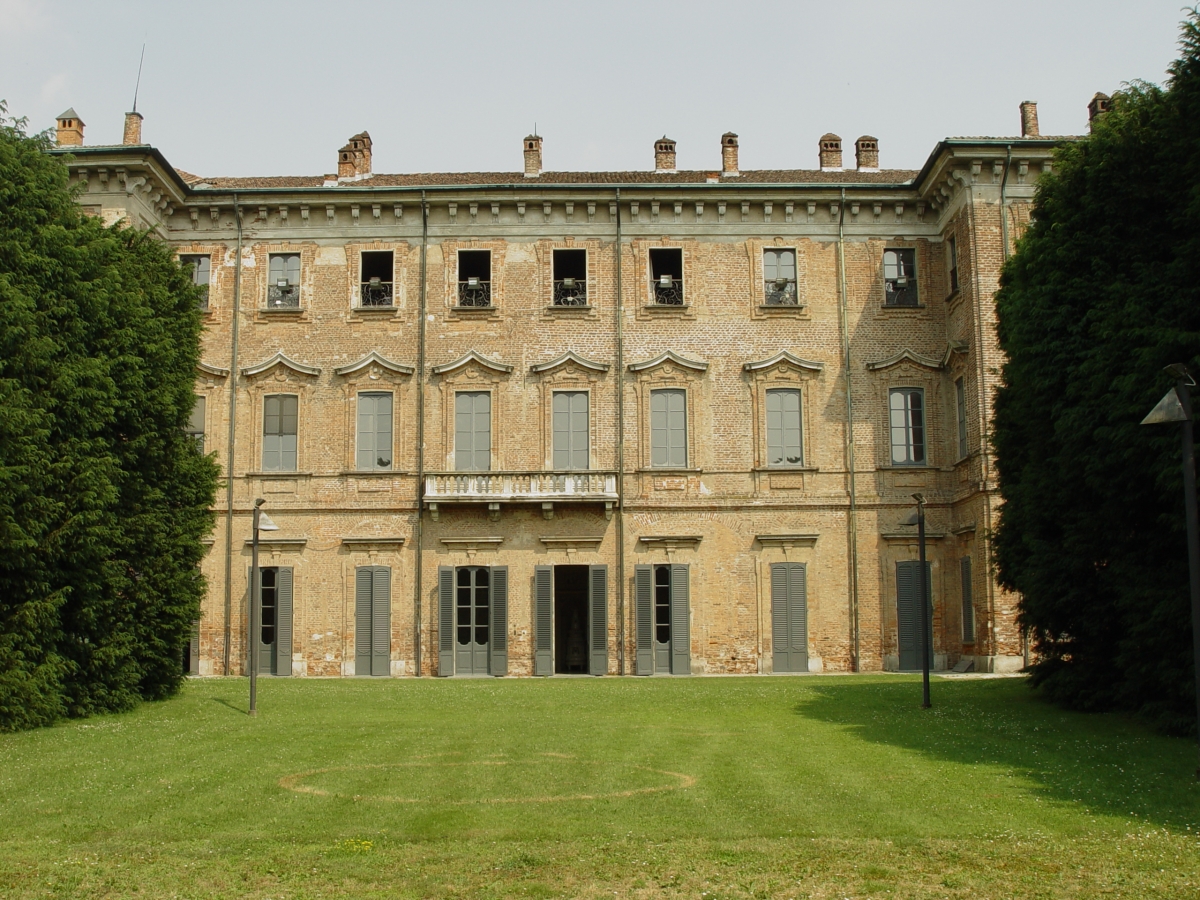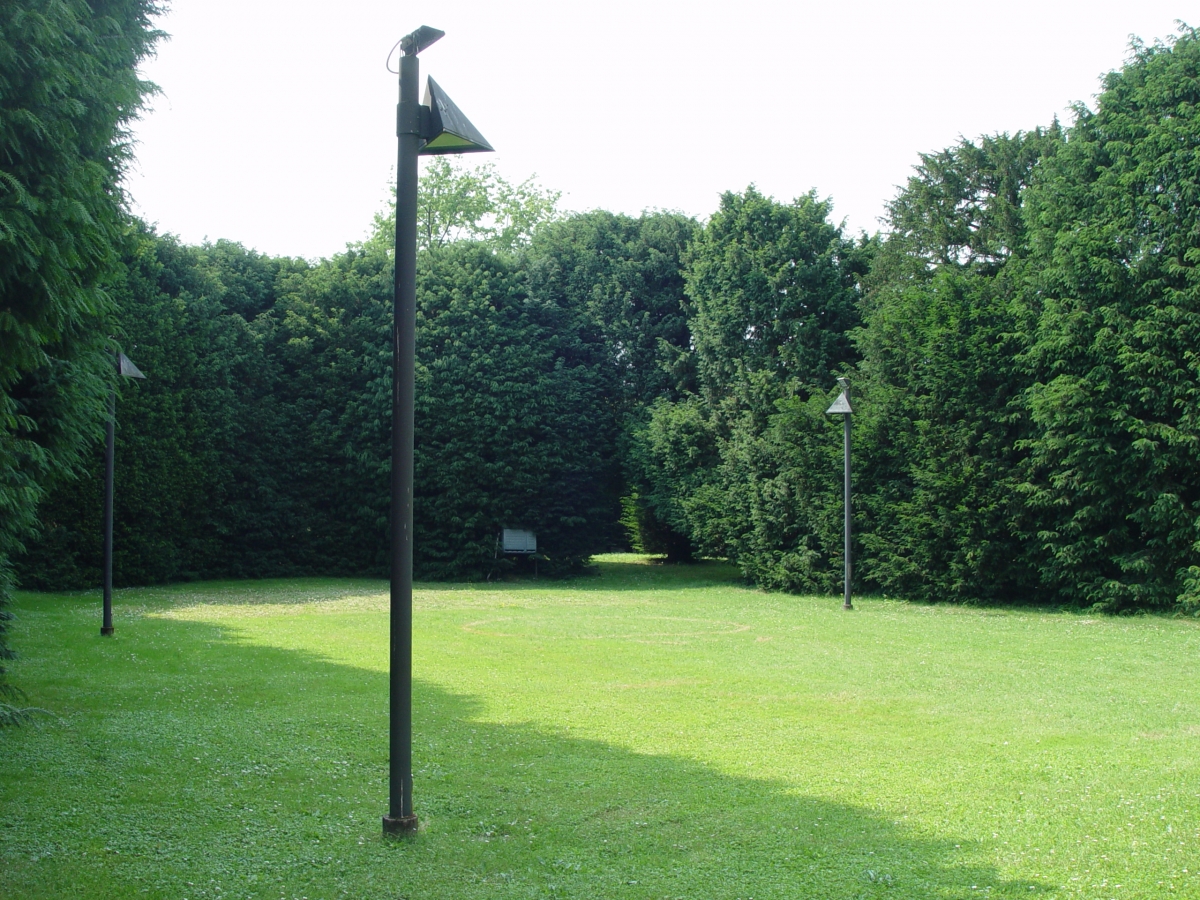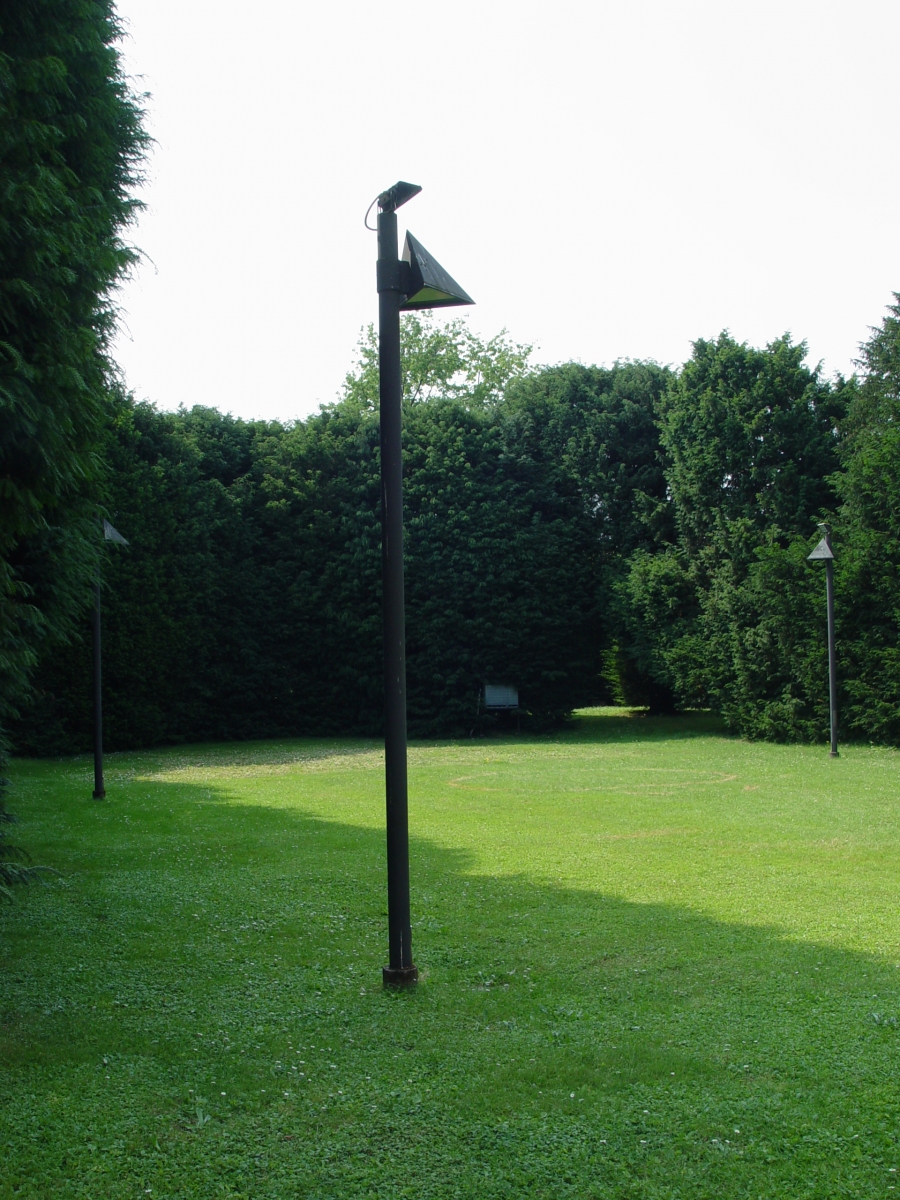
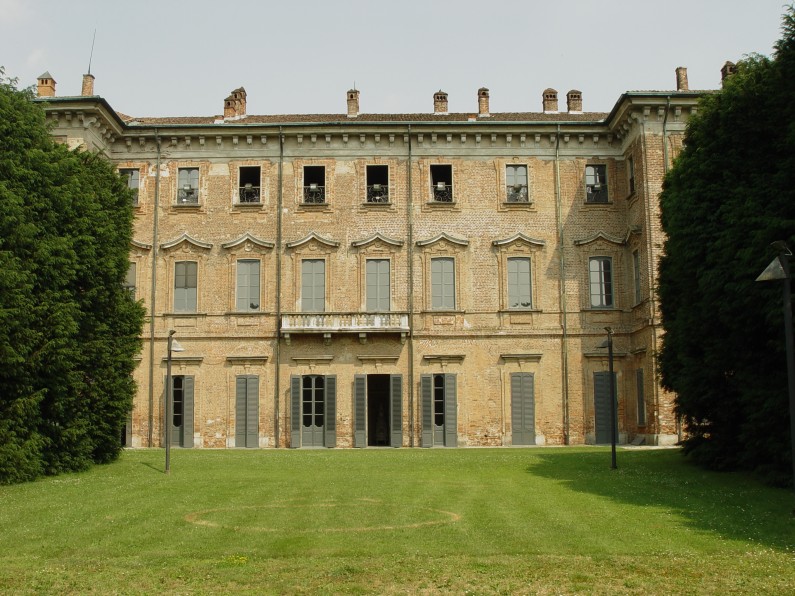
Il "Teatro di verzura" era l’area del parco destinata ai divertimenti campestri, tra cui il gioco delle bocce, e alle feste rurali che il marchese Pompeo IV Litta organizzava in occasione dell’onomastico della moglie Camilla Lomellini Tabarca, unico momento dell’anno in cui alla popolazione del borgo di Lainate era concesso di accedere alla villa. Questa porzione di parco è prospiciente alla facciata ovest del palazzo settecentesco e appare racchiusa da un ampio viale di tassi che durante il XIX secolo si presentavano sagomati a forma di piramide tronca.
La parte terminale, a forma di esedra, ospitava fino agli anni Trenta del Novecento la gigantesca statua in marmo di “Adone”, realizzata intorno al 1602 dallo scultore comasco Marco Antonio Prestinari (m. 1621) e oggi conservata al Musèe du Louvre di Parigi. L’opera, un esuberante nudo maschile, fu realizzata dall’artista ispirandosi direttamente alla posa della “Venus Urania” scolpita intorno al 1575 da Giambologna (oggi al Kunsthistorisches Museum di Vienna), e costituisce uno dei primi lavori documentati del Prestinari, prima che il suo talento venisse scoperto dal cardinale Federico Borromeo, per il quale lo scultore eseguirà un numero cospicuo di ritratti di “Sibille e Profeti”. La scultura fu posta nel “Teatro Naturale” solo dopo il 1720, infatti precedentemente risulta registrata nei documenti in posizione sopraelevata, a ridosso della “Torre delle Acque” e dunque sul lato opposto del complesso. Tale collocazione era debitrice del mito stesso di Adone, colpito a morte da un cinghiale e restituito alla vita dal pianto benefico della dea Afrodite, innamorata di lui, che veniva assimilato alle acque del Ninfeo di Lainate. Ciò verrebbe confermato anche dalla scritta latina presente alla base della scultura “Adonis pene redivivus / Pirrhi vicecomitis borromaei largitate”, secondo la quale sarebbero proprio il mecenatismo di Pirro I Visconti Borromeo (e dunque le “lacrime” delle sue fontane) ad aver riportato in vita lo sfortunato eroe. Indubbiamente infatti, per Pirro, afflitto dalla gotta e prossimo alla morte (che avverrà nel 1604), le acque del Ninfeo dovevano avere davvero un valore “curativo” e la fama ottenuta con l’edificazione del complesso, gli avrebbe garantito vita eterna nella memoria di Lainate.
The “Theatre of the greens” was the area of the park dedicated to rural games such as the “bocce” and countryside feasts which the maquis, Pompeo IV Litta, organised on the occasion of his wife Camilla Lomellini Tabarca’s name-day, the only time of the year in which the population of the village of Lainate was allowed to enter the Villa.
This portion of the park faces the west façade of the 18th century mansion and seems to be enclosed by a broad walkway of yews which in the 19th century were profiled in the shape of cut pyramids.
The terminal part shaped like an exedra, up to the ‘30s hosted the gigantic statue of Adonis, produced around 1602 by the sculptor from Como, Marco Antonio Prestinari (deceased in 1621) and today kept at the Louvre Museum in Paris. The work, an exuberant male nude, was achieved by the artists who drew inspiration from the stance of the “Venus Urania” sculpted around 1575 by Giambologna (today at the Kunsthistorisches Museum in Vienna), and is one of the first works documented by Prestinari, before his talent was discovered by Cardinal Federico Borromeo, for whom the sculptor did a great number of portraits of “Sibyls and Prophets.” The sculpture was placed in the “Nature Theatre” only after 1720. In fact, records had previously described its position in an elevated position, right next to the “Water Tower” and therefore, on the opposite side of the complex. This location was due to the myth of Adonis, who was attacked to death by a wild boar and restored to life through the tears of the goddess Aphrodite who was in love with him, and who was thus assimilated to the waters of the Nymphaeum in Lainate. This would be confirmed also by the Latin inscription found at the base of the sculpture. “Adonis pene redivivus / Pirrhi vicecomitis borromaei largitate,” according to which it was precisely the patronage of Pirro I Visconti Borromeo (and therefore the “tears of his fountains”) that had brought to life the unfortunate hero. Undoubtedly, for Pirro, afflicted by gout and nearing death (in 1604), the waters of the Nymphaeum must have really had a “curative” value and the fame obtained with the building of the complex, should have ensured for him eternal life in the memoirs of Lainate.